







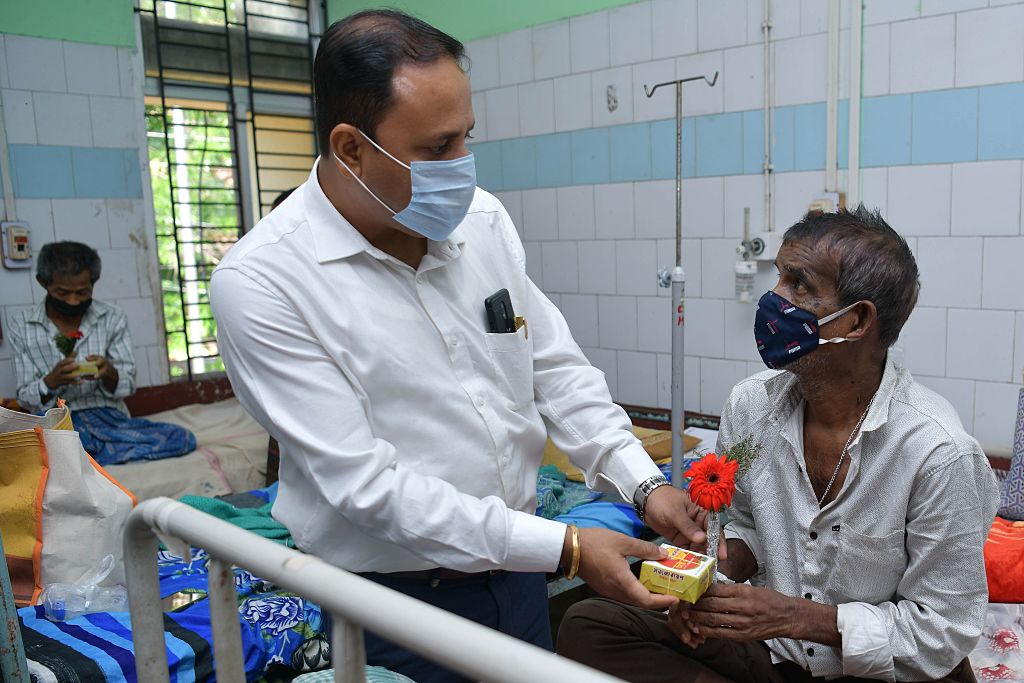
The Joint Squad for Health (JOSH), a nationwide social media campaign, was launched on a pilot basis across 11 states and 55 districts on October 13 to mobilise young people and communities towards tuberculosis (TB) elimination. The campaign brings together MY Bharat volunteers, National Cadet Corps (NCC) cadets and designated Class-I officers to spread awareness about TB, encourage timely screening, early diagnosis and treatment, reduce stigma and promote treatment adherence, particularly among vulnerable and marginalised populations.
India has recorded a 21% decline in new TB cases between 2015 and 2024, compared with a 12% global reduction, while TB-related deaths fell by 28% during the same period. The country’s TB treatment coverage reached 92%, against the global average of 78%, according to the World Health Organization’s Global Tuberculosis Report 2025.
JOSH Campaign to Strengthen Community Participation
The JOSH campaign aims to expand public engagement in TB elimination by encouraging ministries, healthcare institutions, youth organisations, students and citizens to share awareness messages, photographs, videos and stories highlighting community-led action against the disease.
The initiative focuses on identifying undiagnosed cases, encouraging people to seek timely diagnosis and treatment, and addressing the stigma associated with TB. The Ministry of Health and Family Welfare has also held workshops on the TB Mukt Abhiyaan with Members of Parliament and state legislators to strengthen participation in the national effort.
Sustained Progress in TB Elimination
According to a government factsheet, efforts focused on early detection, screening and treatment, supported by technology, stronger community-level healthcare services and affordable treatment, have contributed to India’s progress in combating TB.
Strategic Plan to End TB in India
The Government of India’s National Strategic Plan to End TB (2020–25), announced in June 2020, provides a framework for eliminating tuberculosis in line with Sustainable Development Goal 3. It is built around four pillars — Build, Prevent, Detect and Treat — with a focus on early diagnosis, preventing transmission, providing appropriate treatment and establishing patient-support systems.
National Tuberculosis Elimination Programme
In 2020, the government renamed the Revised National Tuberculosis Control Programme (RNTCP) as the National Tuberculosis Elimination Programme (NTEP), reflecting its ambition to eliminate TB ahead of the global 2030 target.
The programme prioritises high-quality diagnostic testing, community outreach to identify missing cases, prompt treatment, including for drug-resistant TB, and engagement with private healthcare providers. It also provides patient-centric treatment and nutritional support through direct benefit transfers and the Ni-kshay Mitra initiative, alongside contact tracing, preventive treatment for eligible high-risk groups, airborne infection control and a multisectoral approach to addressing the social determinants of the disease.
Pradhan Mantri TB Mukt Bharat Abhiyaan
Launched on September 9, 2022, the Pradhan Mantri TB Mukt Bharat Abhiyaan seeks to accelerate TB elimination by turning it into a people’s movement. The initiative focuses on providing additional support to patients to improve treatment outcomes, strengthening community participation and leveraging corporate social responsibility (CSR) contributions.
Nutritional and Community Support for TB Patients
The Nikshay Poshan Yojana, launched in 2018, provides financial assistance of Rs 1,000 per month to notified TB patients to support their nutritional needs during treatment. Since its launch in April 2018, Rs 4,454.68 crore has been disbursed to 1.38 crore beneficiaries directly.
The Ni-kshay Mitra programme complements this assistance by encouraging individuals, non-governmental organisations, companies, community groups and public representatives to support TB patients through food baskets, psychosocial assistance and vocational support. As of November 12, 2025, 6,77,541 individuals and organisations had joined as Ni-kshay Mitras and distributed more than 45 lakh food baskets. More than two lakh MY Bharat volunteers had also come forward to support the initiative.
100-Day TB Mukt Bharat Abhiyaan
The Ministry of Health and Family Welfare launched the 100-Day TB Mukt Bharat Abhiyaan on December 7, 2024, across 347 high-priority districts in 33 states and Union Territories. The campaign focused on vulnerability mapping, systematic screening of high-risk populations and early diagnosis, with participation from elected representatives, 24 line ministries and Ni-kshay Mitras.
The initiative was subsequently expanded nationwide. By June 2026, the intensified drive had screened more than 28.1 crore people, provided TB preventive treatment to 20 lakh individuals and added 5.7 lakh new Ni-kshay Mitras.
During the campaign’s second phase, launched in March 2026, more than 1.7 lakh Ayushman Arogya Shivirs were organised across 1.2 lakh high-risk villages and wards, with the participation of 32 lakh students and 1.9 lakh MY Bharat volunteers. The campaign’s treatment success rate reached 90%, exceeding the global average of 88%, according to the factsheet.
Shorter Treatment and Preventive Care
India has introduced the BPaLM regimen — comprising bedaquiline, pretomanid, linezolid and moxifloxacin — for patients with drug-resistant TB. The shorter regimen is designed to reduce treatment duration to six months, and more than 15,000 multidrug-resistant or rifampicin-resistant TB patients had been started on it, according to the factsheet.
Alongside treatment, the programme provides TB preventive treatment to eligible individuals to reduce the risk of infection progressing to active disease. The intervention prioritises household contacts, people living with HIV and other vulnerable groups, and is integrated with active case-finding campaigns.
Ayushman Arogya Mandirs Expand Access to Screening
Ayushman Arogya Mandirs serve as community-level healthcare facilities offering accessible and affordable health services. As of October 13, 2026, India had 1,87,250 such centres, including sub-health centres, primary health centres, urban primary health centres and AYUSH facilities.
People experiencing symptoms of TB can approach these centres for screening and diagnosis, strengthening access to care at the grassroots level.
Technology Strengthens Detection and Diagnosis
India has expanded its diagnostic infrastructure to support early detection and treatment, with more than 9,800 rapid molecular testing facilities and 107 culture and drug-susceptibility testing laboratories, according to the factsheet.
The programme also uses more than 500 AI-enabled handheld chest X-ray units for community screening, with another 1,500 being delivered to states and Union Territories. The Ni-kshay digital platform facilitates direct transfers of nutritional assistance, while the TB Mukt Bharat App and the Khushi chatbot help citizens access information on symptoms, track progress and locate diagnostic centres.
The government has also expanded radiographer positions under the National Health Mission and increased the availability of Truenat and CBNAAT diagnostic equipment. The deployment of handheld X-ray units has contributed to a reported 34-fold increase in X-ray screening.
Reaching Remote Communities in Kashmir
In the remote Gurez Valley of Jammu and Kashmir’s Bandipora district, located at an altitude of around 2,400 metres and cut off during winter, the National Tuberculosis Elimination Programme team conducted an intensive screening drive using mobile testing vans and portable X-ray equipment.
Over three days, the team screened 1,250 people and identified more than 250 potential TB cases for further testing. Awareness sessions were also held with the Indian Army, healthcare workers, village representatives and religious leaders, highlighting the role of coordinated community outreach in reaching underserved populations.
AI-Led Initiatives
The government is increasingly integrating artificial intelligence into TB detection, diagnosis and treatment to improve the reach and speed of healthcare delivery. AI-enabled handheld chest X-ray systems are among the technologies being deployed to strengthen community screening, according to the factsheet.
Gearing Towards TB Elimination
India’s efforts to eliminate TB combine institutional support, expanded healthcare infrastructure, technology and grassroots mobilisation. The JOSH campaign adds a youth-led community outreach component to existing initiatives, seeking to encourage early detection, treatment adherence and stigma-free communities.
With continued investment in healthcare services and community engagement, India aims to accelerate progress towards a TB-free nation as part of its broader vision of Viksit Bharat 2047.
—PIB Inputs


