






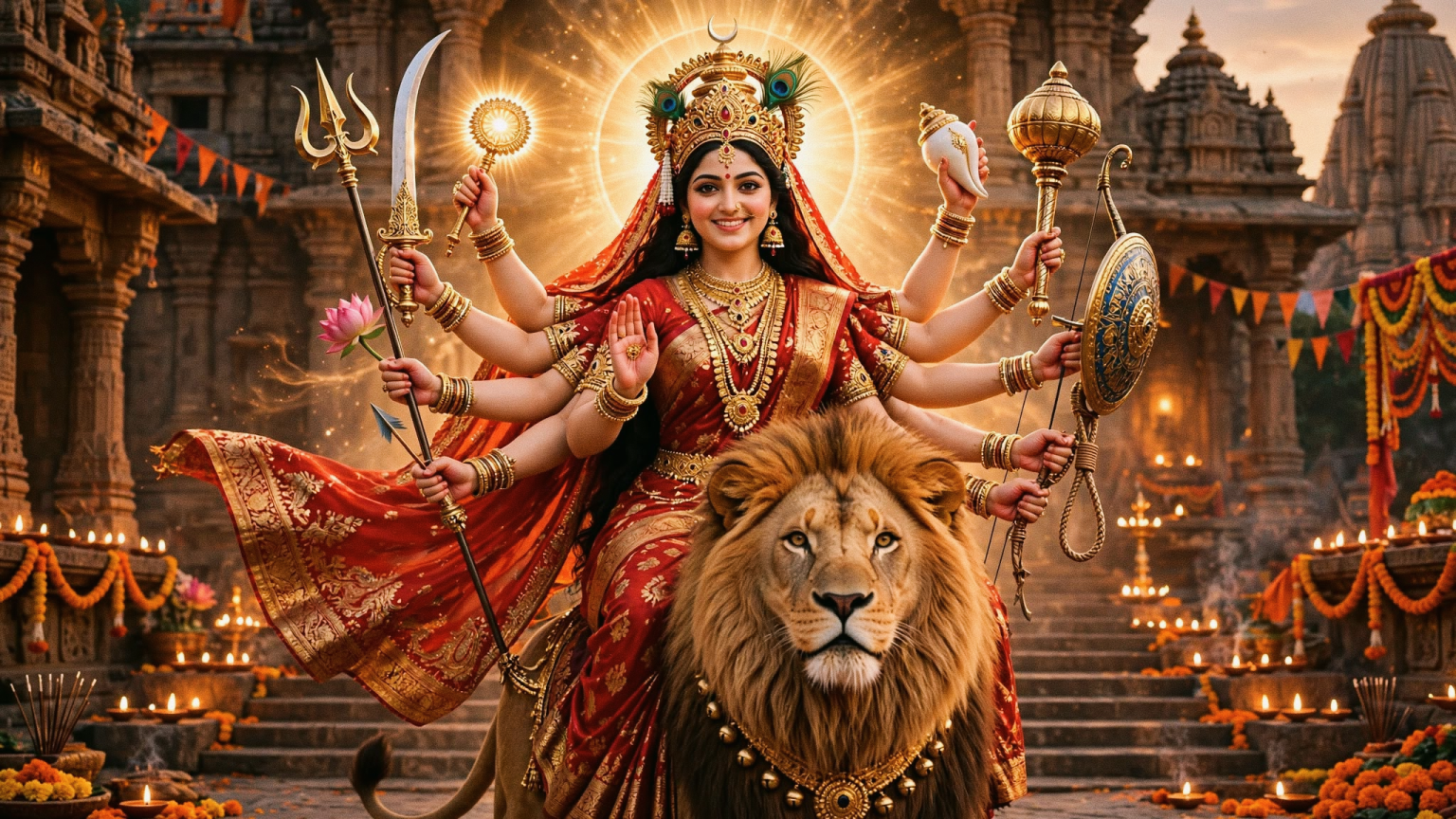
Navratri is regarded as a special festival devoted to the worship of divine power, self-purification and spiritual practice. During the nine-day celebration, devotees worship the nine forms of Goddess Durga.
The tradition of worshipping the Goddess, from Maa Shailaputri to Maa Siddhidatri, represents different expressions of strength and different values in life. According to Hindu scriptures, each form has a distinct significance. Some inspire penance and sacrifice, while others convey courage, motherly love, knowledge, peace and victory over evil.
Through the worship of the nine forms of Durga, devotees seek spiritual growth and inspiration to embrace patience, discernment and positivity.
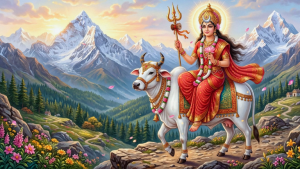
The worship of divine power begins with Maa Shailaputri
On the first day of Navratri, devotees worship Maa Shailaputri, the first form of Goddess Durga. As the daughter of the mountain king Himalaya, she is known as Shailaputri.
According to Hindu scriptures, the Goddess rides a bull and holds a trident and a lotus. Her form symbolises nature, stability and firm resolve.
Worshipping Maa Shailaputri at the beginning of Navratri inspires the understanding that achieving any goal requires a strong foundation, self-confidence and unwavering determination. However difficult the circumstances, a person who moves forward with resolve can continue progressing towards their objective.
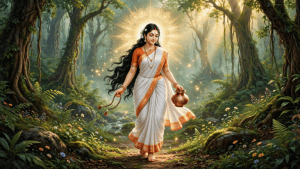
Maa Brahmacharini represents penance and self-restraint
Maa Brahmacharini, a symbol of penance, sacrifice and discipline, is worshipped on the second day of Navratri.
According to Hindu scriptures, Goddess Parvati undertook rigorous penance to attain Lord Shiva as her husband. This ascetic form is known as Brahmacharini. She holds a prayer rosary in one hand and a kamandalu, or water vessel, in the other.
Her form conveys spiritual dedication, patience and self-restraint. Desire alone is insufficient for success; sustained effort and discipline are also necessary. Worshipping Maa Brahmacharini inspires devotees to strengthen this resolve.
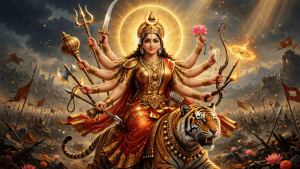
Maa Chandraghanta teaches a balance of courage and discernment
Maa Chandraghanta is worshipped on the third day of Navratri. She takes her name from the bell-shaped crescent moon adorning her forehead.
Her form symbolises courage and valour, while also embodying compassion and peace. She rides a lion and carries various weapons.
According to Hindu scriptures, Maa Chandraghanta protects her devotees and gives them the courage to confront negative forces. Her form conveys that crises should be faced with courage and discernment rather than fear.
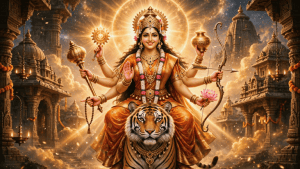
Maa Kushmanda is regarded as the primordial creative power
Maa Kushmanda, a symbol of creation and energy, is worshipped on the fourth day of Navratri.
According to Hindu scriptures, the universe came into being through her gentle smile. She is therefore regarded as the primordial power of creation.
Maa Kushmanda rides a lion and is depicted with eight arms, giving her the name Ashtabhuja Devi, or the eight-armed Goddess.
Her form conveys renewed energy, positive thinking and creativity. Maintaining hope in difficult circumstances and making good use of available opportunities can give life a new direction. Maa Kushmanda’s worship inspires devotees to adopt a positive outlook.
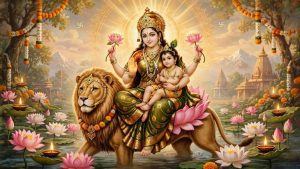
Maa Skandamata embodies motherly love and protection
On the fifth day of Navratri, devotees worship Maa Skandamata. Lord Kartikeya, also known as Skanda, sits in her lap, which is why she is called Skandamata. Her mount is believed to be a lion.
Her form symbolises motherhood, compassion and protection. Alongside granting strength, she embodies affection and security.
Maa Skandamata’s worship conveys that love and compassion are important forms of strength. Sensitivity, protection and responsibility within families and society help build a stronger life.
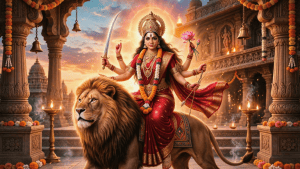
Maa Katyayani inspires resistance to injustice
Resistance to injustice and evil is central to the symbolism of Maa Katyayani, who is worshipped on the sixth day of Navratri.
According to Hindu scriptures, the Goddess was pleased with the penance of Maharishi Katyayana and was born as his daughter, earning the name Katyayani.
Riding a lion, she is regarded as a radiant and powerful Goddess. Religious narratives associate her with the destruction of demonic forces and the protection of righteousness.
Her form teaches the importance of standing up for what is right rather than remaining silent in the face of injustice. Courage is essential to defending one’s rights and confronting wrongdoing.
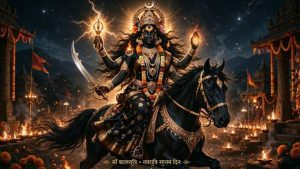
Maa Kalaratri conveys victory over fear
Maa Kalaratri is worshipped on the seventh day of Navratri. Hers is considered the fiercest form among the nine manifestations of Durga.
She is depicted with a dark complexion, flowing hair and a donkey as her mount. Although her appearance may seem fearsome, religious beliefs regard her as a Goddess who brings well-being to her devotees. She is therefore also known as Shubhankari.
Maa Kalaratri symbolises victory over darkness and negativity. Her message is to confront life’s fears and challenges rather than avoid them. Her form inspires self-confidence, patience and courage in overcoming difficult circumstances.
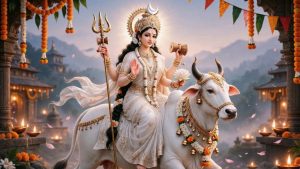
Maa Mahagauri represents peace and purity
Maa Mahagauri, a symbol of peace, gentleness and purity, is worshipped on the eighth day of Navratri.
She is depicted with a fair, radiant complexion and white garments. According to Hindu scriptures, Goddess Parvati undertook severe penance to attain Lord Shiva as her husband. Following her penance, Shiva is believed to have poured sacred Ganga water over her, making her form exceptionally radiant. She thus came to be known as Mahagauri.
Her mount is believed to be a bull.
Maa Mahagauri’s form conveys the importance of maintaining inner peace, positivity and self-confidence through difficult circumstances and prolonged struggles. Inner balance enables better decisions and gives people the strength to move forward.
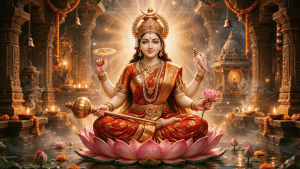
Maa Siddhidatri symbolises spiritual practice and fulfilment
On the ninth and final day of Navratri, devotees worship Maa Siddhidatri.
As the last of Durga’s nine forms, Maa Siddhidatri is regarded as the Goddess who grants knowledge, spiritual strength and siddhis, or spiritual attainments.
The Goddess is seated on a lotus. Her four hands are described as holding a conch, discus, mace and lotus.
Religious traditions mention eight siddhis: Anima, Mahima, Garima, Laghima, Prapti, Prakamya, Ishitva and Vashitva. Devotees believe these may be attained through the Goddess’s blessings.
Her form inspires the understanding that knowledge, self-restraint and sustained spiritual practice can help people recognise their capabilities. Her worship on Navami is also associated with the completion of Navratri’s spiritual observances.
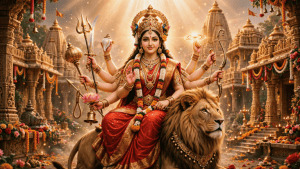
The nine forms embody different values in life
The significance of Goddess Durga’s nine forms extends beyond worship. They also convey values that can enrich life.
Maa Shailaputri inspires steadfastness; Maa Brahmacharini, penance and restraint; Maa Chandraghanta, courage; Maa Kushmanda, creativity; and Maa Skandamata, motherly love and protection.
Maa Katyayani represents resistance to injustice; Maa Kalaratri, fearlessness; Maa Mahagauri, peace; and Maa Siddhidatri, knowledge and spiritual growth.
Embracing these qualities can help people face difficult circumstances with greater patience and discernment.
An opportunity for reflection alongside worship
Navratri also offers an opportunity to reflect on everyday habits and behaviour. The resolve to control anger, arrogance, fear, jealousy and negative thinking is considered an important part of spiritual practice.
The Goddess’s different forms highlight compassion, knowledge, patience and self-restraint alongside strength. Balancing these qualities inspires people to fulfil their responsibilities more effectively within families, society and the workplace.
A tradition that honours women’s strength
In Indian culture, the Goddess’s nine forms represent the many dimensions of feminine strength. The Goddess appears as an ascetic, a warrior, a creator and a mother, and is worshipped as a source of spiritual knowledge.
This tradition conveys respect for women’s capabilities and their diverse roles.
Kanya Pujan, performed during Navratri, is also associated with the religious belief that young girls embody the Goddess. Its social message extends to prioritising girls’ education, safety, equal opportunities and dignity.
Spiritual practice as inspiration for a positive life
The broader message of worshipping the nine forms is that true strength lies not only in physical ability or outward valour, but also in patience, discernment, compassion and sound judgement.
Goddess Durga’s different forms inspire devotees to embrace these qualities. The nine days of spiritual practice offer an opportunity to strengthen faith, self-confidence and positive thinking.
Navratri is therefore regarded as a festival of divine worship as well as introspection, self-restraint and progress towards a better life.


