







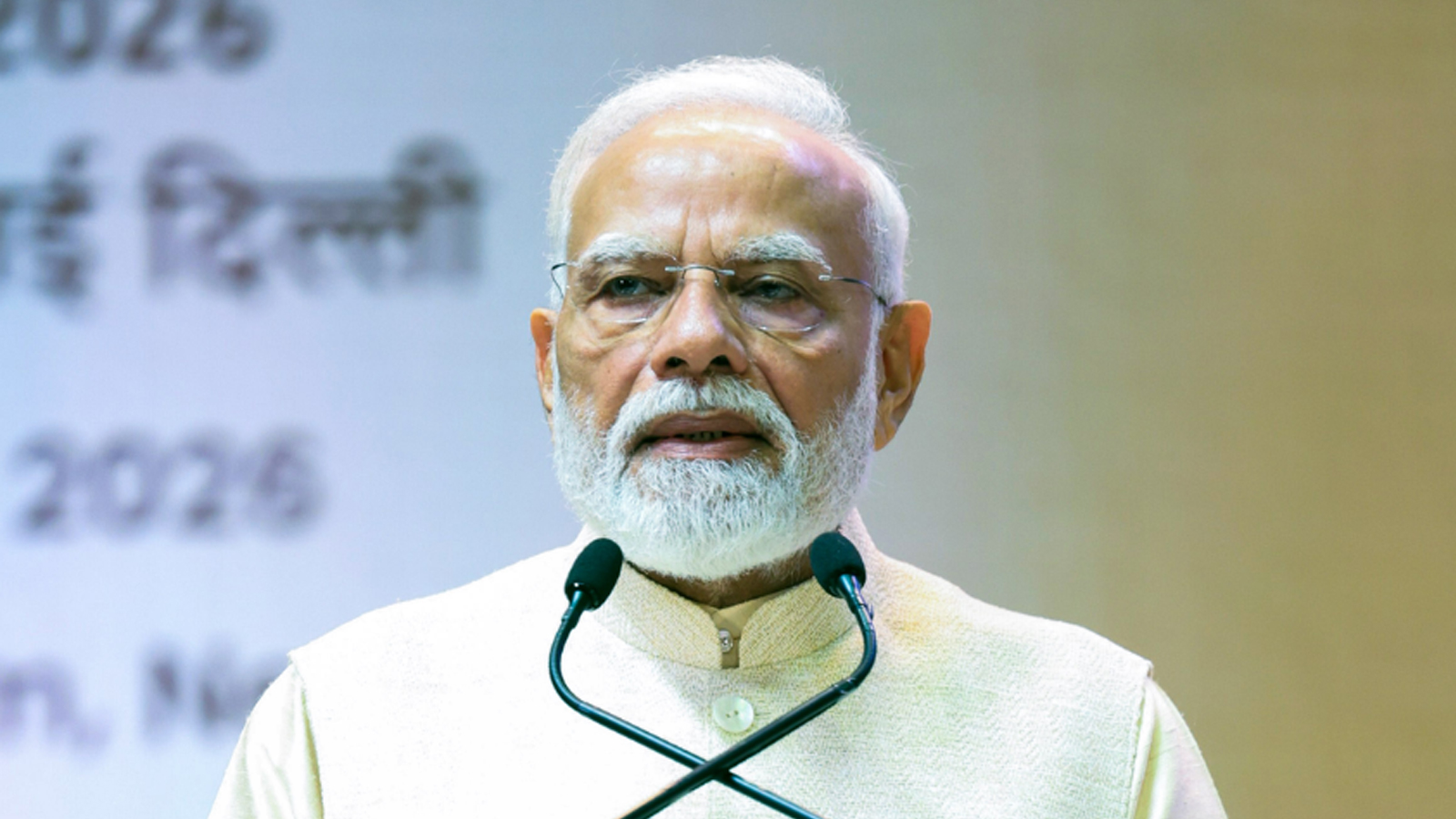
Prime Minister Narendra Modi on Monday highlighted that the next phase of GST reforms will make compliance easier and improve the refund process, giving businesses greater confidence to invest and grow.
Sharing Finance Minister Nirmala Sitharaman’s article on X, the Prime Minister’s Office (PMO) said that the next phase of GST reforms will strengthen the foundation for a Viksit Bharat.
FM Sitharaman said that next-gen GST is making taxation simpler and more predictable while supporting businesses and households. The reform is helping expand economic activity, strengthen revenues and create more opportunities for enterprises across India.
In a post on X, she said, “Next-Gen GST is delivering on its twin objectives of relief for taxpayers and greater momentum for our economy. The next phase will focus on making compliance simpler across registration, returns, refunds, disputes and input tax credit.”
“A simpler, more predictable and taxpayer-friendly GST will enable enterprises of every size, across every region, to grow and contribute to Hon’ble PM Shri Narendra Modi’s vision of a Viksit Bharat,” the FM added.
In her article, FM Sitharaman said the reforms were designed with two connected objectives: reducing and rationalising tax rates, and making compliance easier. The rate changes took effect on September 22, 2025, while the proposed process reforms aim to reduce the time and cost of meeting tax obligations.
FM Sitharaman said the results since the rate changes provided grounds for confidence. The value of reported taxable supplies grew by 25.8% between October 2025 and July 2026 compared with the corresponding period a year earlier.
“A lighter rate structure has been accompanied by a substantial expansion in reported economic activity,” she said, describing the increase as an encouraging foundation for a reform intended to support enterprises and public finances.
Gross GST collections reached ₹12.46 lakh crore during April–September 2026, an increase of 11.6% over the corresponding period last year. Every month from June to September recorded double-digit annual growth, with collections across those four months growing by nearly 15%.
Net collections, after refunds, increased by 10.4% over the half-year, the FM said, adding that taxpayer relief had coexisted with growth in resources available for development.
The expansion was broad-based, with reported taxable supplies increasing across all 11 sector groups and all major states. FM Sitharaman said growth across sectors and regions created opportunities for more businesses to participate in expanding markets and for communities to benefit from demand, investment and employment.
Reported business-to-consumer sales rose by 26.7% in the post-reform comparison. The FM said tax relief reflected in prices could give households more room to meet other needs or save, while supporting demand for goods and services.
The benefits could extend through the economy, from households to retailers, suppliers and producers, she said.
Highlighting the importance of a national market for small and medium enterprises, FM Sitharaman said businesses in Tier-2 and Tier-3 towns should be able to reach customers beyond their immediate surroundings while continuing to invest and generate employment locally.
Enterprises expanding into these towns could also create opportunities for local suppliers and distributors. GST’s common framework supported these connections, she said, while simpler administration should make them easier to sustain.
GST registrations across Central and state jurisdictions stood at approximately 1.71 crore at the end of August, up nearly 15% from a year earlier. For the April–July 2026 tax periods, GSTR-3B returns filed by their due dates were 12.6% higher than in the corresponding periods last year.
FM Sitharaman said these improvements placed a responsibility on the administration to provide reliable services, clear guidance and timely resolution of taxpayers’ difficulties.
On input tax credit, she said post-reform figures showed an increase in the share of tax liability discharged through credits, while accumulated credit declined relative to taxable supplies.
Effective use of eligible credit was particularly important for smaller firms, whose working capital determined their ability to purchase inputs, fulfil orders and take on further business, she said.
Approximately ₹1.80 lakh crore was refunded during April–September 2026. FM Sitharaman said returning amounts due to businesses was an essential part of a well-functioning tax system, and greater predictability would help enterprises plan purchases and production more confidently.
States’ aggregate State GST receipts, including their share of Integrated GST settlements, grew by about 16% during the same six-month period. These revenues supported infrastructure and public services, improving conditions for households and enterprises, she said.
The Finance Minister credited states for helping shape GST Council decisions and implementing them. She said the proposals scheduled for October 7 had been developed through sustained work with states and would address registration, returns, refunds, disputes and the improved flow of input tax credit.
“A growing system must remain attentive to the costs it imposes on smaller participants,” she said, stressing that improvements should allow businesses to devote more time and resources to their operations and expansion.
Recalling that GST’s introduction in 2017 established a common national framework for indirect taxation, FM Sitharaman said Next-Gen GST drew on nine years of implementation and the experience of taxpayers and states.
She added that clarity, certainty and respect for taxpayers also guided the government’s work on direct taxes. A dependable tax system, she said, would enable enterprises of every size and across regions to plan, invest and contribute to the vision of a Viksit Bharat.


