






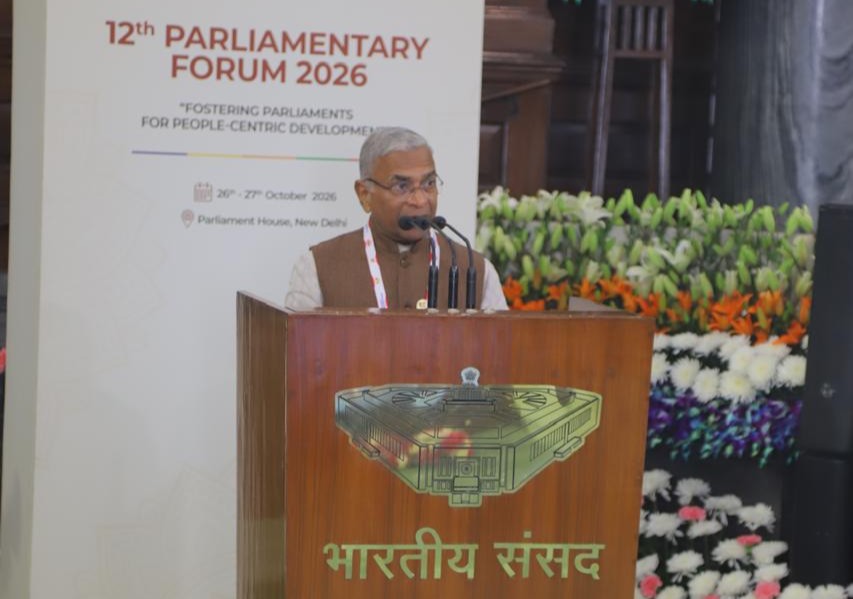
Deputy Chairman of the Rajya Sabha Harivansh on Tuesday stressed that sustainability requires stronger international cooperation, greater access to finance, technology sharing and respect for the principle of Common but Differentiated Responsibilities and Respective Capabilities.
Addressing the plenary session of the 12th BRICS Parliamentary Forum in New Delhi on the theme ‘Sustainability: The Centrality of Parliament in Fostering a Sustainable and Inclusive Future for Our Nations’, Harivansh said developing countries must have adequate policy space and resources to advance sustainable development according to their national circumstances and priorities.
He asserted that global challenges demand a global response.
India’s BRICS Chairship Focuses on Sustainability
Highlighting the context of the conference, Harivansh noted that India’s BRICS Chairship in 2026 is guided by the theme “Building for Resilience, Innovation, Cooperation and Sustainability.”
He emphasised that the New Delhi Declaration, adopted at the 18th BRICS Summit in September 2026, reaffirmed a shared commitment to sustainable development and inclusive growth.
Only 15% of SDG Targets on Track for 2030
Reflecting on global developmental challenges, Harivansh said humanity faces formidable hurdles, including climate change, environmental degradation, biodiversity loss, resource scarcity, food and energy insecurity, and growing inequalities.
Quoting the United Nations Sustainable Development Goals Report 2026, he noted that only 15 per cent of the 139 targets with sufficient trend data are currently on track for achievement by 2030.
He stressed that sustainability is not merely an environmental concern but is fundamentally about human dignity, economic opportunity, social justice and a better future for all.
Parliaments Have a Key Role in Sustainable Development
Underlining the pivotal role of legislatures, Harivansh said Parliaments have a unique and indispensable role in addressing these challenges.
Through legislation, budgetary oversight, accountability mechanisms and citizen representation, Parliaments provide democratic legitimacy to public policy and bridge the gap between global commitments and local action.
He added that achieving the Sustainable Development Goals requires Parliaments to enact enabling legislation, allocate adequate resources, monitor implementation and ensure that the voices of all sections of society are heard.
India’s Development Approach Rooted in ‘Vasudhaiva Kutumbakam’
Elaborating on India’s approach, Harivansh said sustainable development must be people-centric, inclusive and equitable.
He noted that India’s developmental philosophy is rooted in “Vasudhaiva Kutumbakam”—the world is one family. Guided by this principle and the vision of Viksit Bharat @ 2047, India remains committed to building a prosperous, resilient and sustainable nation while contributing to global development efforts.
Youth Engagement Crucial for a Sustainable Future
Highlighting the importance of youth engagement, Harivansh noted that young people are indispensable partners in sustainable development in India, where nearly two-thirds of the population is under 35 years of age.
He said initiatives such as the Viksit Bharat Youth Parliament provide platforms for young citizens to engage with democratic institutions, develop leadership and contribute innovative ideas towards an inclusive and sustainable future.
Concluding his address, Harivansh emphasised that sustainability is ultimately a question of governance, accountability and collective responsibility.
He said Parliaments can act as powerful instruments for building a sustainable, inclusive and prosperous world for present and future generations through parliamentary diplomacy, the exchange of best practices and collective advocacy.
-PIB inputs


