







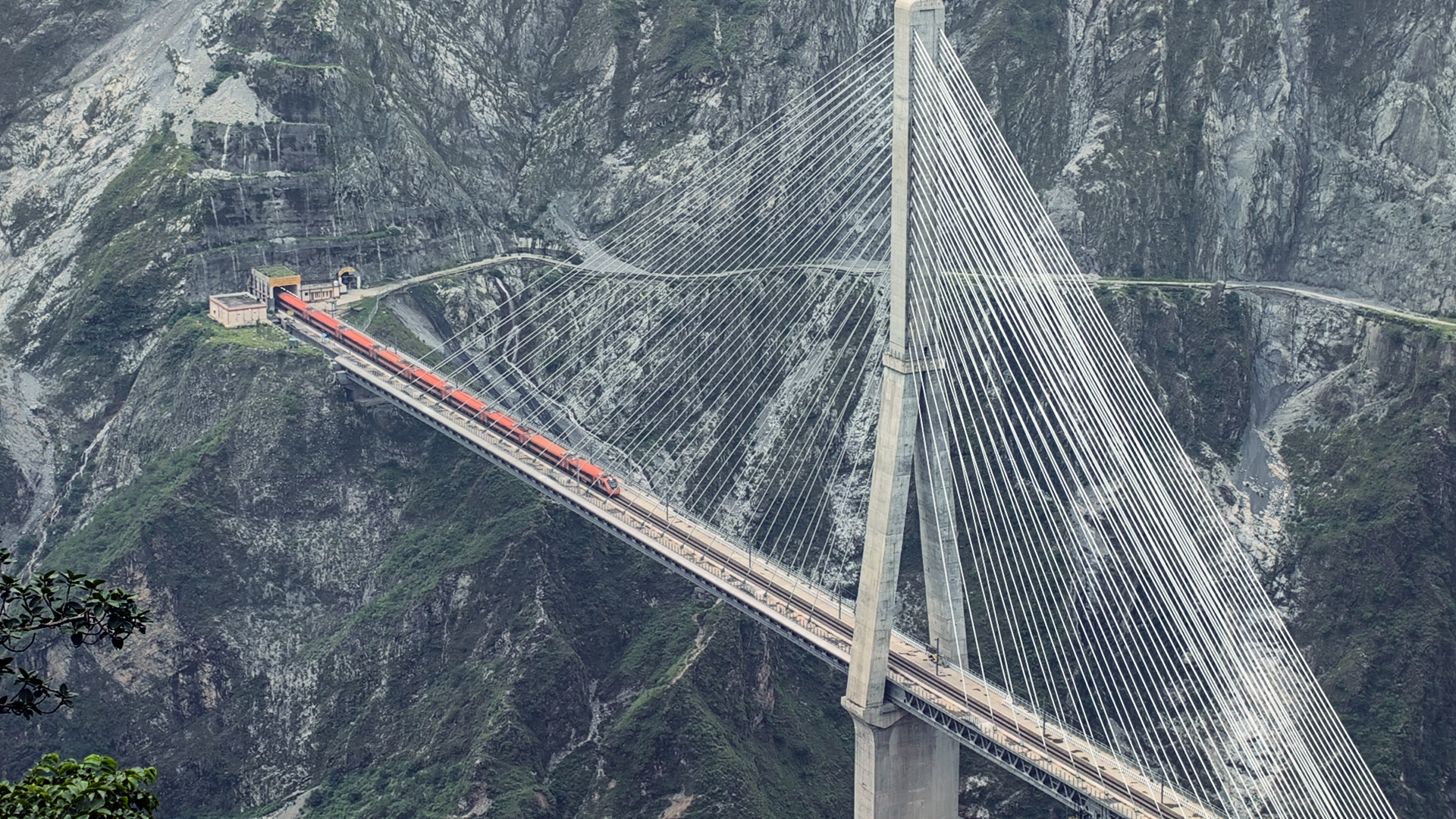
For millions of travellers, the impact of better connectivity is measured not only in kilometres of roads and bridges built, but in the hours saved during everyday journeys.
Across India, new bridges, tunnels, expressways and modern rail services are changing travel times between cities, regions and communities. By replacing long detours, difficult terrain and slow routes with direct and faster connections, these infrastructure projects are making the benefits of connectivity increasingly visible in everyday life.
Bridges: Crossing barriers, cutting travel time
Bridges are opening new routes across rivers and reducing the time required for journeys that once involved lengthy detours.
The Bhupen Hazarika Setu, also known as the Dhola-Sadiya Bridge, in Assam has reduced the travel time between Rupai in Assam and Meka/Roing in Arunachal Pradesh from around six hours to about one hour.
The Bogibeel Bridge in Assam has transformed connectivity between Dhemaji and Dibrugarh. The rail-cum-road bridge across the Brahmaputra has brought down journeys that earlier took almost an entire day to around one to two hours.
In Maharashtra, the Atal Setu, or Mumbai Trans Harbour Link, provides a direct connection between Mumbai and Navi Mumbai. The link has reduced the journey to around 20 minutes from nearly two hours.
The Kosi Rail Mahasetu in Bihar has similarly transformed connectivity. The rail journey between Nirmali and Saraigarh has been reduced from around eight hours to about 30 minutes, while the distance has come down from nearly 300 kilometres to 22 kilometres.
The Sisseri River Bridge in Arunachal Pradesh has also strengthened connectivity between the Dibang Valley and Siang regions, reducing travel time between Pasighat and Roing by about five hours.
Tunnels: Cutting through difficult terrain
In mountainous regions, tunnels are helping bypass winding roads, difficult terrain and vulnerable stretches, providing faster and more reliable connectivity.
The Atal Tunnel in Himachal Pradesh, with a length of 9.02 kilometres, bypasses the Rohtang Pass and has reduced the Manali-Sarchu distance by 46 kilometres. It has also saved around four to five hours of travel time while providing all-weather connectivity to Lahaul-Spiti.
The Dr Syama Prasad Mookerjee Tunnel in Jammu and Kashmir bypasses difficult terrain, cuts the travel distance by around 30 kilometres and saves nearly two hours between Jammu and Srinagar.
The Banihal-Qazigund Road Tunnel, an 8.45-kilometre twin-tube tunnel, has reduced the road distance by 16 kilometres and cut travel time by around one and a half hours.
In Arunachal Pradesh, the Sela Tunnel, constructed at an altitude of around 13,000 feet, provides all-weather connectivity on the strategically important Tezpur-Tawang route and has reduced travel time by more than an hour.
Expressways and economic corridors
Expressways are changing the pace of inter-city travel through shorter alignments, controlled access and higher speeds.
The Delhi-Meerut Expressway has reduced the journey between Delhi and Meerut from around two and a half hours to about 50 minutes.
The Bengaluru-Mysuru Expressway, spanning 118 kilometres, has reduced travel time between the two cities from nearly three hours to around 75 minutes.
The Delhi-Dehradun Economic Corridor, stretching 213 kilometres, has reduced the journey between Delhi and Dehradun from more than six hours to around two and a half hours.
The Mumbai-Nagpur Samruddhi Mahamarg, a 701-kilometre access-controlled expressway, has substantially reduced travel time between the two cities from around 16 hours to about eight hours.
The Ahmedabad-Dholera Expressway, a 109-kilometre greenfield access-controlled corridor, has reduced the Ahmedabad-Dholera journey from around 100 kilometres and two hours 15 minutes to 83 kilometres and about 45 minutes.
It has also reduced the Ahmedabad-Bhavnagar journey from around 169 kilometres and three hours 15 minutes to 141 kilometres and about one hour 45 minutes.
The Delhi-Amritsar-Katra Expressway is also expected to significantly reduce travel time. On Phase-I, the Delhi-Amritsar journey has come down from around eight hours to four hours, while the Delhi-Katra journey is expected to reduce from about 14 hours to six hours.
The Delhi-Mumbai Expressway, meanwhile, is being developed to bring travel time between the two cities down to around 12 hours from approximately 33 hours.
Railways: Faster trains, shorter journeys
The transformation is also visible across the railway network, with faster trains and improved infrastructure reducing journey times.
The 2026 railway timetable reflects this shift, with 549 trains speeded up across the network. Of these, 20 trains gained 60 minutes or more, 48 trains gained between 31 and 59 minutes, 105 trains gained between 16 and 30 minutes, while 376 trains were speeded up by five to 15 minutes.
New-generation trains have added another dimension to faster rail connectivity.
India’s first Vande Bharat Express, launched in February 2019 on the New Delhi-Kanpur-Prayagraj-Varanasi corridor, has a scheduled travel time of around eight hours between New Delhi and Varanasi, making it around 40 to 50 per cent faster than earlier services on the route.
The Vande Bharat service between Katra and Srinagar, launched in June 2025, reduced the journey to around three hours. The extended Jammu-Srinagar service now covers the journey in four hours 50 minutes.
Other Vande Bharat services have also reduced travel time, including the Banaras-Khajuraho service, which saves around two hours 40 minutes compared with earlier special trains, and the Ernakulam-Bengaluru service, which saves more than two hours.
The Vande Bharat Sleeper between Howrah and Guwahati, launched in January 2026, has reduced the journey from around 17 hours to approximately 14 hours, saving nearly three hours compared with the Saraighat Express.
Looking towards high-speed rail
India’s next major step in reducing travel time is the development of high-speed rail corridors.
The Mumbai-Ahmedabad High-Speed Rail Corridor, spanning 508 kilometres, is designed for an operational speed of 320 kilometres per hour. It is expected to reduce travel time to around one hour 58 minutes, compared with eight to nine hours by road.
The corridor will have 12 stations and includes India’s first undersea rail tunnel, around seven kilometres long beneath Thane Creek. The first service is targeted for August 2027.
Seven high-speed rail corridors announced in the Union Budget 2026-27 together cover nearly 4,000 kilometres, with an estimated investment of ₹16 lakh crore.
These corridors include Delhi-Varanasi, Varanasi-Patna-Siliguri, Chennai-Bengaluru, Bengaluru-Hyderabad, Chennai-Hyderabad, Mumbai-Pune and Pune-Hyderabad.
Indicative travel times on these routes range from around 48 minutes between Mumbai and Pune to around three hours 50 minutes between Delhi and Varanasi.
Infrastructure that gives time back
The transformation of India’s transport network is ultimately about more than physical infrastructure.
Bridges are creating new crossings, tunnels are cutting through difficult terrain, expressways are reducing road travel times and modern rail services are making long-distance journeys faster.
Together, these interventions are changing how people, businesses and communities connect with one another.
As faster transport links reach more parts of the country, distance is becoming less of a constraint on everyday mobility. The hours saved on individual journeys are, collectively, becoming an important measure of how infrastructure is reshaping connectivity across India.
-PIB


