






Asian shares were set to end a bruising month on a steadier note as a holiday lull offered some respite from AI jitters, while the dollar reigned supreme, riding a wave of safe-haven demand and rate hike bets towards a third month of gains.
Oil prices were headed for the first weekly rise in four on renewed concerns about supply disruptions. Brent crude futures slipped 0.4% on Friday to $96.14 a barrel, but were still up 3.9% for the week. For the month, they were down 18%.
Wall Street was closed on Thursday for the Thanksgiving holiday, but in Asia, S&P 500 futures were up 0.8% and Nasdaq futures were 1% higher.
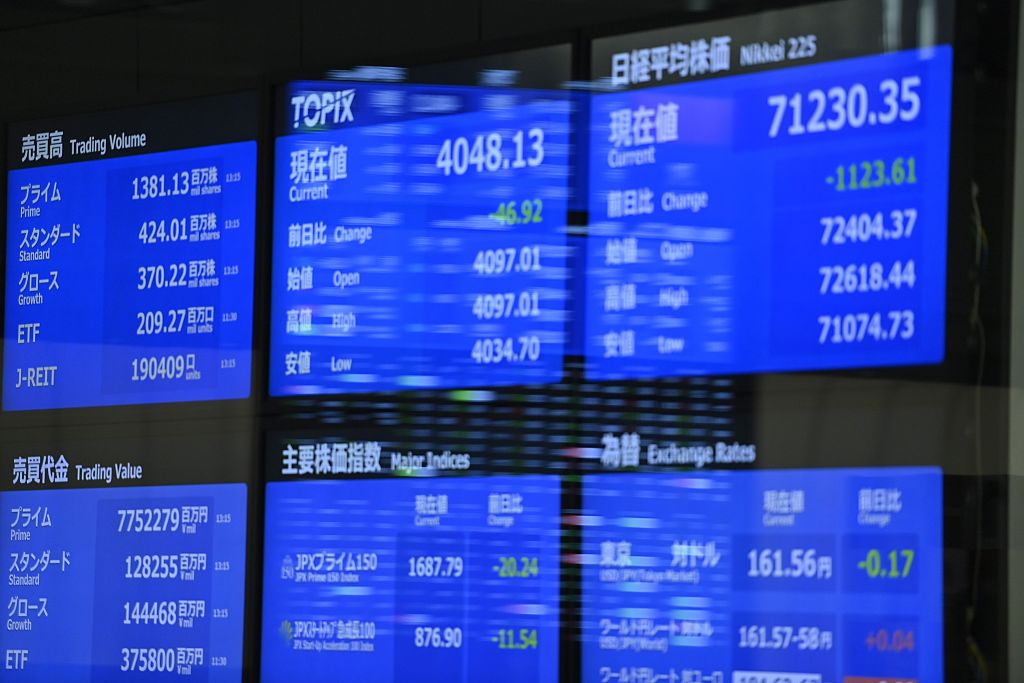
Japan’s Nikkei 0.7% to bring its gains for the week to 2.7%, clawing back only a fraction of its 8.4% loss for the month. Data showed on Friday that core inflation in Tokyo hit a 16-month high in November, bolstering the case for an interest rate hike from the Bank of Japan as soon as next month.
MSCI’s broadest index of Asia-Pacific shares outside Japan edged up 0.5% to end the week 1.9% higher. It was still down 8.2% for the month.
Shares in South Korea rallied 2% and China’s blue chips slipped 0.2%, after hitting the lowest level since June 2025 a day earlier.
“Barring a big shock that severely rattles a thin market, November is practically in the books and the markets limp into December where a seasonal ‘Santa Rally’ currently appears elusive,” said Kyle Rodda, a senior analyst at Capital.com.
“For as long as the markets remain unsure about the growth trajectory for AI and lack clarity about where US rates may peak, uncertainty and therefore volatility is liable to remain elevated.”
Tech giant Nvidia remained a source of unease after S&P put its credit rating on watch for a possible downgrade. The chipmaker told manufacturing partners to stop shipping servers containing its chips to Malaysia, Singapore, Thailand and Indonesia, the Financial Times reported.
Elsewhere in tech, Elon Musk said that every child in the US would receive two shares in his space and AI company SpaceX, pledging a gift worth some $18 billion.
DOLLAR REIGNS
The US dollar was headed to its third monthly gain on Friday, up 1.8% against its major peers at 103.8. It has been supported by expectations that the Federal Reserve is almost certain to lift interest rates in December, as well as safe-haven flows from the selloff in equities.
Futures imply a 99% chance the Fed will raise rates by 25 basis points in December, but speculation of a half-point increase has faded.
The euro was last flat at $1.0964 , after news that Spanish central banking veteran Pablo Hernández de Cos would become the next European Central Bank president, a move that was well telegraphed and suggested policy continuity.
The kiwi edged up 0.2% to $0.5482 after New Zealand’s ruling centre-right coalition fell short of a parliamentary majority, leaving it reliant on negotiations with the centrist Opportunity Party to stay in power.
Bond investors are wondering if the broad losses in global stocks this month coupled with doubts about the durability of AI-driven business investment might temper the hawkishness of central banks.
“The Fed could, of course, still blink,” said David Rees, chief economist at Schroders. “But a Fed put would not necessarily be unambiguously positive for markets.”
“If growth and inflation data remain firm, in a game of cat and mouse markets could soon begin pricing a more hawkish Fed back in, potentially setting off the same chain of events all over again.”
Two-year Treasury yields rose 3 basis points to 4.6705% as the cash market reopened after the US holiday. They were up 6 bps this week.
Benchmark 10-year Treasury yields rose 4 bps to 4.8918%, but were down 2 bps for the week.
(Reuters)


