






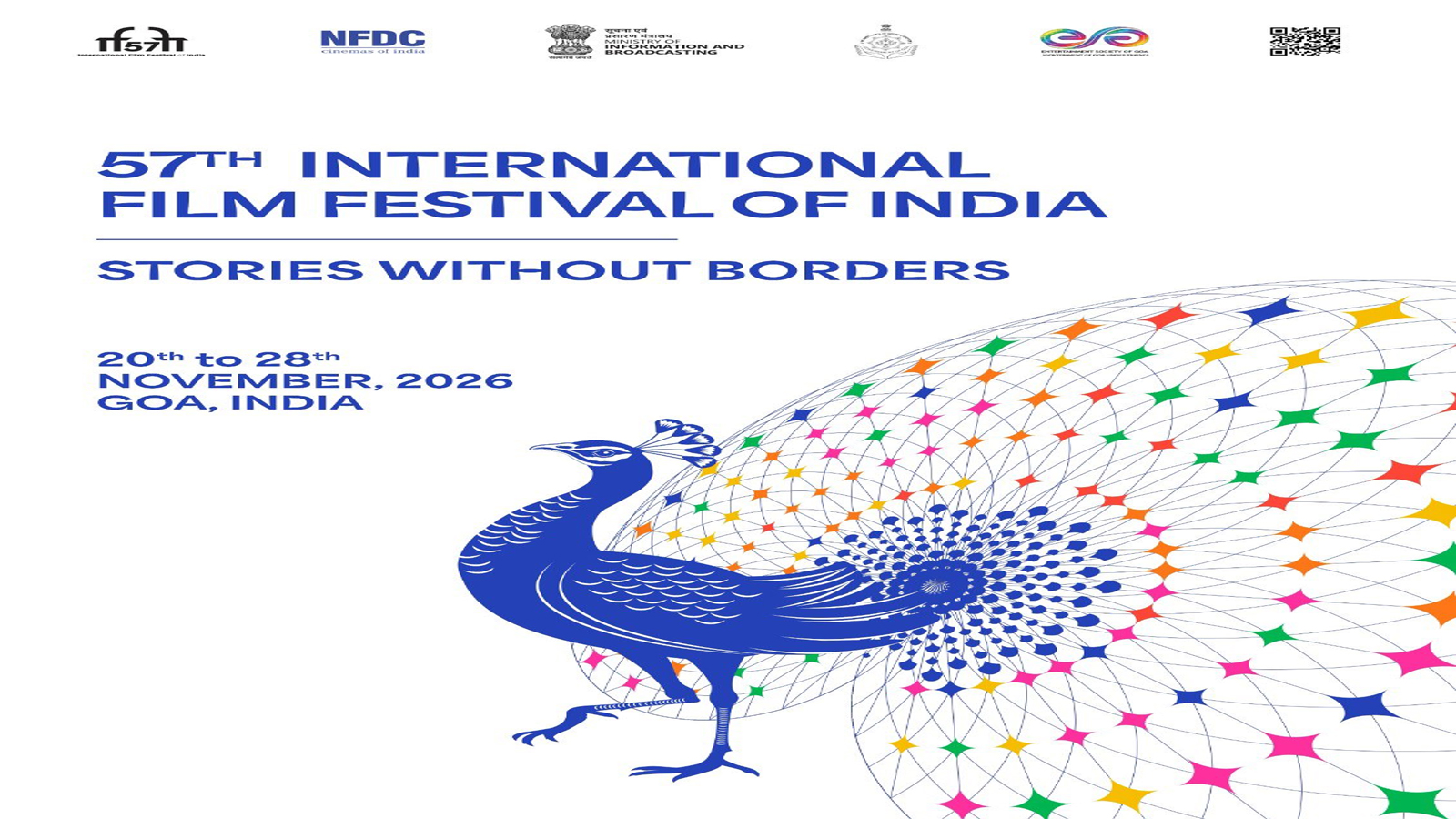
Cinema has the power to connect people across geographical, linguistic and cultural boundaries. A story rooted in a remote village can move audiences thousands of miles away, while a film in an unfamiliar language can communicate emotions that people everywhere understand. Film festivals bring these stories together, giving filmmakers opportunities to reach new audiences and encouraging cultural exchange.
This spirit of connection will take centre stage at the 57th International Film Festival of India (IFFI), scheduled to be held in Goa from November 20 to 28. With the theme Stories Without Borders, this year’s festival celebrates cinema as a medium of cultural understanding while creating opportunities for emerging talent, regional storytellers and independent filmmakers.
IFFI’s role, however, extends beyond screening films. Through initiatives such as Creative Minds of Tomorrow, Indian Panorama and WAVES Film Bazaar, the festival supports different stages of filmmaking, from developing creative skills and discovering new voices to finding collaborators, financiers and international audiences.
Building the next generation of filmmakers through Creative Minds of Tomorrow
Every filmmaker begins with an idea, but transforming that idea into a film requires technical expertise, practical experience, teamwork and industry exposure. Recognising these needs, IFFI introduced Creative Minds of Tomorrow (CMOT) in 2021 to provide young talent with opportunities to learn, collaborate and demonstrate their creative abilities.
The sixth edition of CMOT at IFFI 2026 will bring together 100 young participants across 13 filmmaking crafts. These include direction, cinematography, scriptwriting, sound recording, costume design and visual effects. The programme recognises that filmmaking is a collaborative process involving several creative and technical disciplines.
Participants will attend masterclasses, workshops and interactions with established film professionals. A 48-hour filmmaking challenge will test their ability to develop an idea and turn it into a completed film within a limited timeframe. The CMOT Talent Camp will provide another opportunity for participants to pitch creative concepts and explore possibilities across the media and entertainment industry.
The initiative has already demonstrated how opportunities at IFFI can help young filmmakers progress towards international recognition.
A notable example is Chidananda S. Naik, who participated in CMOT in 2022. His Kannada short film Sunflowers Were the First Ones to Know, made as a student of the Film and Television Institute of India (FTII), won the La Cinef Award at the Cannes Film Festival in 2024. Inspired by Indian folk stories and traditions, the film demonstrated how locally rooted narratives can find appreciation on the international stage.
IFFI 2026 is also creating space for new filmmakers through its film selections. The festival will feature 52 women filmmakers and 62 debut filmmakers from India and abroad. Of these, 10 women filmmakers and 12 debut filmmakers will be represented in competitive sections.
Seven films from different countries, including India’s The Sledge and Birds on Ice, will compete in the Best Debut Feature Films Competition. Such platforms give first-time directors an opportunity to present their work alongside films by more established filmmakers.
Through CMOT and its film selections, IFFI is addressing two important needs of emerging talent: developing filmmaking skills and creating opportunities for recognition.
Indian Panorama: Bringing India’s regional stories to a national and international audience
India’s cinematic identity is shaped by its many languages, cultures and storytelling traditions. Beyond mainstream cinema, regional filmmakers explore diverse subjects, from everyday life and social challenges to folklore, identity and changing communities.
Indian Panorama, introduced in 1978, is one of IFFI’s principal initiatives for showcasing this diversity. It presents outstanding contemporary Indian feature and non-feature films, giving regional stories an opportunity to reach audiences across the country and abroad.
The section has consistently brought distinctive regional narratives into the spotlight.
At IFFI 2023, Manipuri documentary Andro Dreams, directed by Meena Longjam, opened the non-feature section. The film followed an all-girls football club in rural Manipur, exploring the determination of its players as they navigated financial difficulties and social barriers.
In 2024, Ladakhi short film Ghar Jaisa Kuch, directed by Harsh Sangani, became the first Ladakhi film to open the non-feature section of Indian Panorama. Its exploration of displacement, belonging and the longing for home brought a distinctive regional experience to a wider audience.
The 2025 selection continued this emphasis on linguistic and cultural diversity. Tamil film Amaran opened the feature section, while Hindi film Kakori opened the non-feature section. The selection also included Vimukt in Braj, Imbu in Tulu and Oitharei in Manipuri.
At the 57th IFFI, Indian Panorama will feature 25 feature films and 20 non-feature films, selected from 404 feature-film entries and 358 non-feature entries, respectively. The wider Indian Cinema section will screen 76 films in 18 languages.
Ladakhi film Becoming, directed by Leena Yadav, will open the non-feature section, while Dhurandhar, directed by Aditya Dhar, will be the opening feature film. Other selections include Urum in Nyishi, Pili Channe in Tulu and Birds on Ice in Ladakhi. The festival will also highlight Marathi and Malayalam cinema, recognising their cinematic legacies as well as contemporary creative voices.
The importance of Indian Panorama lies in the visibility it gives to stories that might otherwise remain confined to their immediate linguistic or regional audiences. A film from a particular community can introduce viewers to unfamiliar landscapes, traditions and social realities, while its themes of family, identity, aspiration and belonging can resonate across cultures.
By bringing films from different parts of India into a common programme, Indian Panorama presents a broader picture of the country’s cinematic identity.
WAVES Film Bazaar: Connecting filmmakers with the global film industry
Making a film is only one part of a filmmaker’s journey. Securing finance, finding production partners, improving a project and reaching distributors and audiences can be equally challenging, particularly for independent filmmakers.
This is where WAVES Film Bazaar plays an important role. Established in 2007 and held alongside IFFI in Goa, it is South Asia’s largest film market. Its 20th edition in 2026 will continue to connect filmmakers, producers, financiers, distributors and other professionals from the international media and entertainment industry.
Unlike a conventional film festival, Film Bazaar focuses on the development, business and distribution of cinema. It provides platforms through which projects at different stages can find the support needed to move forward.
Its specialised programmes address different requirements of filmmakers:
* Co-Production Market: Connects selected film projects with potential production partners and financiers, helping filmmakers explore collaboration opportunities.
* Screenwriters’ Lab: Supports writers in developing and strengthening their scripts.
* Work-in-Progress Lab: Helps filmmakers refine films that are still being completed.
* Viewing Room and market screenings: Provide opportunities for films and projects to be presented to industry professionals, buyers and distributors.
* Producers’ Lab: Offers a platform for producers to develop their professional capabilities and explore industry opportunities.
The contribution of Film Bazaar can be seen in the journeys of acclaimed films such as The Lunchbox, Court, Newton and Girls Will Be Girls, whose journeys have been associated with the platform.
As it completes two decades, Film Bazaar represents an important link between creative ideas and the resources required to bring them to audiences. It helps Indian and international filmmakers explore collaborations, access professional networks and consider opportunities beyond their domestic markets.
BRICS cinema showcase: Cinema as a bridge between nations
IFFI’s international engagement is not limited to professional networking. The festival also uses cinema to introduce audiences to the histories, societies and contemporary experiences of other countries.
The BRICS cinema showcase at IFFI 2026 will feature 21 films, bringing together stories from BRICS nations and offering perspectives shaped by different cultural and historical experiences.
The selection includes films that examine questions of freedom, identity, social justice and belonging.
Brazil’s Amadeo and the Hypothetical New World revisits the struggle against slavery. Indonesia’s The Sea Speaks His Name follows the disappearance of a student activist during the country’s 1998 people’s movement. South Africa’s The Trek examines injustices associated with the colonial frontier.
Other films explore personal experiences and their relationship with wider social concerns. The Uganda-UK documentary Dreaming of Serenada approaches climate change through the relationship between a father and daughter. China’s Embers reflects on grief, loss and mortality.
Although these films emerge from different societies and historical contexts, they explore experiences and emotions that audiences across the world can recognise. The showcase allows viewers to encounter unfamiliar perspectives while discovering common concerns across cultures.
The BRICS programme complements Film Bazaar in an important way. While Film Bazaar builds professional relationships and industry partnerships, the international film showcase encourages cultural dialogue through storytelling.
How IFFI’s initiatives work together to strengthen Indian cinema
The different programmes at IFFI address distinct but interconnected needs of the film industry.
Creative Minds of Tomorrow focuses on developing the skills and confidence of emerging filmmakers. Indian Panorama provides visibility to India’s linguistic and regional diversity. WAVES Film Bazaar helps filmmakers access professional networks, production support and distribution opportunities. The BRICS showcase expands cultural engagement by bringing international stories and perspectives to Indian audiences.
Together, these initiatives create an ecosystem in which filmmakers can develop their craft, present their work, find collaborators and connect with audiences beyond geographical boundaries.
For a young filmmaker, IFFI can provide an opportunity to learn from experienced professionals and demonstrate creative ability. For a regional filmmaker, it can offer visibility beyond a familiar linguistic market. For an independent producer, Film Bazaar can help establish connections with potential partners and distributors. For audiences, the festival provides an opportunity to discover stories and cinematic traditions from India and across the world.
Conclusion: Stories without borders, opportunities beyond the festival
The 57th International Film Festival of India reflects the growing role of film festivals in shaping the future of cinema. Its contribution extends beyond screenings, awards and celebrations to the opportunities it creates for filmmakers and the connections it builds across cultures and industries.
By nurturing emerging talent, showcasing regional-language cinema, supporting independent film projects and bringing international stories to Indian audiences, IFFI is strengthening the foundations of a diverse and globally connected film industry.
The theme Stories Without Borders captures this wider purpose. It is not only about films crossing geographical boundaries, but also about filmmakers finding new opportunities, regional narratives reaching wider audiences and different cultures discovering common ground through cinema.
As IFFI returns to Goa, its lasting impact will be measured not just by the films screened during the festival, but also by the creative journeys, collaborations and connections that continue long after the final screening.
(PIB)


