






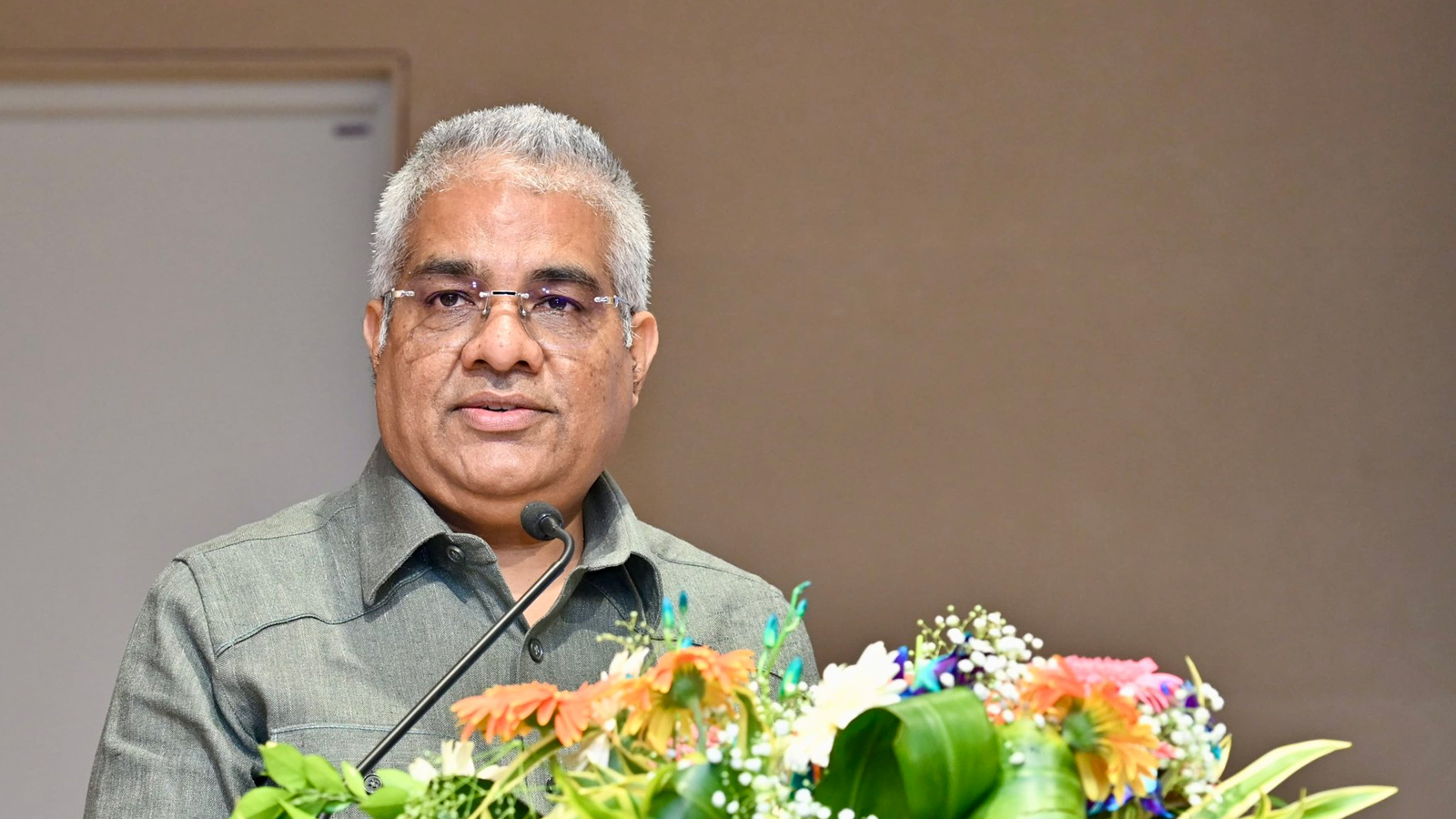
Union Environment Minister Bhupender Yadav has released guidelines for recognising areas outside India’s legally protected conservation network that deliver sustained, long-term biodiversity benefits.
The “Guidelines for the Designation of India’s Other Effective Area-Based Conservation Measures (I-OECMs), 2026” were launched on November 3 at a side event of the 17th Conference of the Parties to the Convention on Biological Diversity in Yerevan, Armenia.
Prepared by the Ministry of Environment, Forest and Climate Change (MoEFCC) in partnership with the National Biodiversity Authority (NBA), the guidelines support India’s commitments under the Kunming-Montreal Global Biodiversity Framework’s Target 3, known as “30×30”, and its updated National Biodiversity Strategy and Action Plan for 2024–2030.
Yadav described OECMs as a conservation approach that protects biodiversity in its natural habitat through effective landscape management beyond forests and protected areas.
The framework covers terrestrial, inland water, coastal and marine ecosystems. Potential sites include biodiversity parks, sacred groves, community-managed irrigation tanks, seagrass and seaweed beds, and areas subject to seasonal fishing bans.
Recognition will not turn a site into a protected area or change its ownership, legal status, existing activities, governance or regulatory arrangements.
To qualify, an area must lie outside legally protected or conserved areas and be governed under Central or state frameworks, or managed by government-recognised local institutions such as Panchayats and Biodiversity Management Committees. It must have defined boundaries and must not overlap with an area already reported to the World Database on Protected Areas.
Sites may also be assessed for their biodiversity significance, ecosystem services and cultural values.
Applications can be submitted to the NBA by government departments, agencies and institutions, local self-governments and Biodiversity Management Committees.
The NBA will carry out a preliminary examination and forward applications to the relevant State Biodiversity Board or Union Territory Biodiversity Council within 30 days. The state or Union Territory body will validate the information and submit its recommendation within a further 30 days.
The NBA, supported by an Inter-Departmental I-OECM Committee, will take the final decision in coordination with the environment ministry, which will authorise recognition.
Each recognised site must have a monitoring framework with measurable indicators and be assessed at least once every five years. State and Union Territory biodiversity bodies will maintain site records, while the ministry and NBA will coordinate with the United Nations Environment Programme World Conservation Monitoring Centre to publish recognised sites in the global database.
The guidelines also provide for capacity building and non-monetary recognition of good conservation practices.
Alongside the framework, the government has commissioned a GEF-8 project to implement the guidelines across six demonstration landscapes and seascapes. Executed by the NBA and environment ministry with UNDP support, the project runs from May 15, 2026, to May 15, 2032.
Its total financing is $60.79 million, comprising a $6.65 million GEF Trust Fund grant and $54.14 million in confirmed co-financing.
According to the ministry, the project aims to add three per cent of India’s land and marine area to its conservation estate, beyond the existing 27 per cent under protection, through OECMs and other initiatives, including community and private conservation areas.
The demonstration sites are Gori Valley in Uttarakhand; the Kumbhalgarh–Mount Abu–Jaisalmer landscape in Rajasthan; Satkosia–Kalahandi in Odisha; Srisailam–Cumbum in Andhra Pradesh and Telangana; Sahyadri–Konkan in Maharashtra and Goa; and the Lakshadweep Islands Marinescape.
The project aims to establish 50,000 hectares of new terrestrial conservation areas, restore at least 5,000 hectares of degraded land and directly benefit at least 50,000 people, half of them women.
It will also establish state-level coordination mechanisms and a monitoring, reporting and verification system to support implementation.
The launch event was organised by the environment ministry, NBA and UNDP. Armenia’s environment minister and the CBD executive secretary also participated in the release.
(PIB)


