






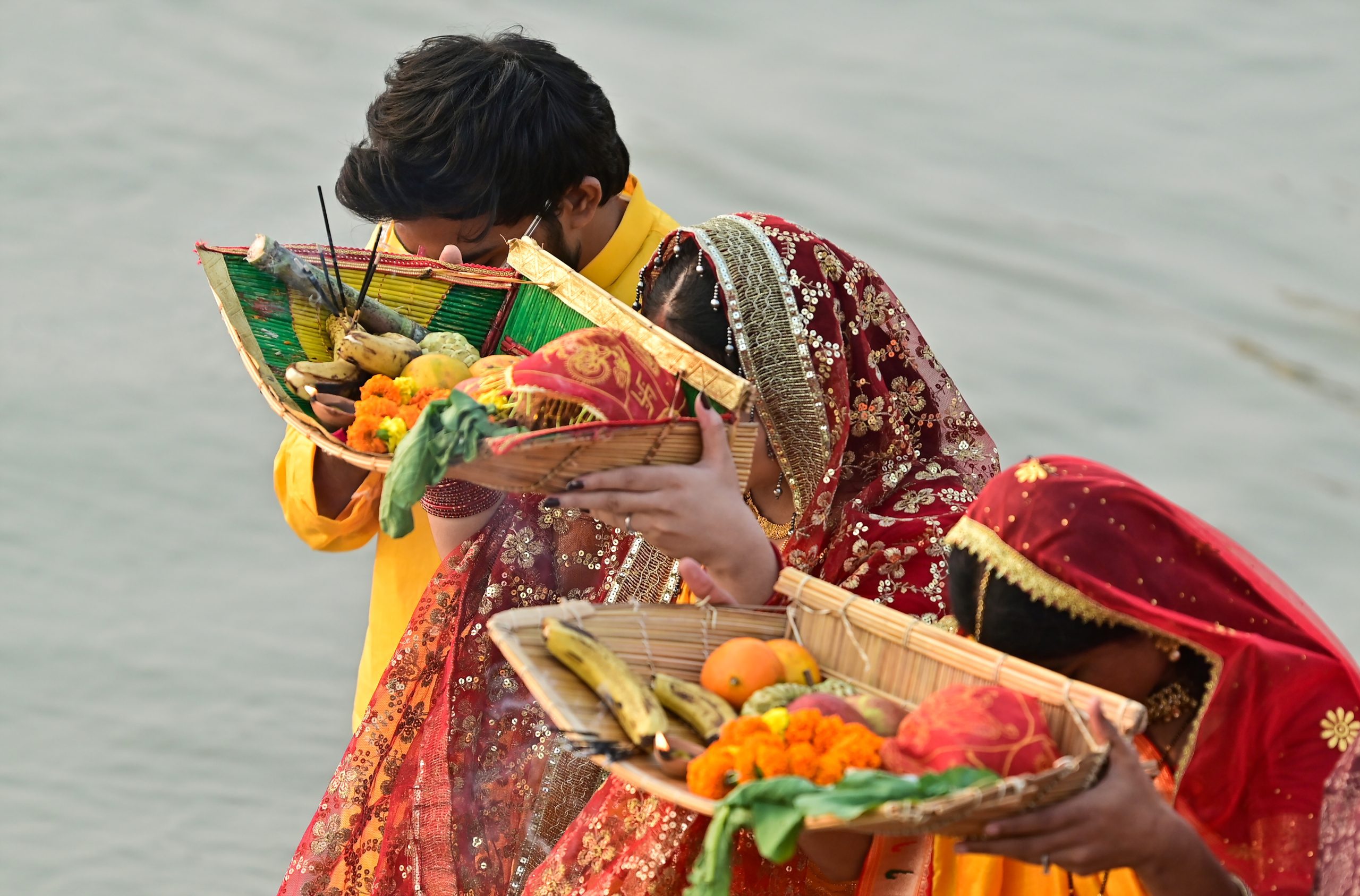
The four-day Chhath festival, marked by devotion to the Sun God and Chhathi Maiya, reached a significant stage on Saturday with devotees across Bihar observing the traditional Kharna ritual and preparing to undertake a rigorous 36-hour waterless fast.
The festival began on November 13 with the Nahay-Khay ritual, followed by Kharna on the second day, which marks the beginning of the most demanding phase of the celebrations.
On Saturday, devotees observed a day-long fast without consuming food or water. In the evening, after taking a bath and wearing clean clothes, they offered prayers to the Sun God and Chhathi Maiya before preparing the traditional Kharna prasad.
The main offerings include jaggery-based rice pudding, commonly known as gur ki kheer, and rotis made from wheat flour. The kheer is traditionally prepared using arwa rice, cow’s milk and jaggery instead of sugar. In some traditions, sugarcane juice is also used.
Strict attention is paid to cleanliness and purity during the preparation of the prasad. Rice, wheat and milk are carefully selected, while onion and garlic are avoided in accordance with traditional sattvic practices.
Following the evening prayers, devotees first consume the Kharna prasad, after which it is distributed among family members. According to tradition, the person observing the fast must eat in complete silence. If the meal is interrupted by any noise or disturbance, the devotee stops eating.
After consuming the prasad, devotees take a vow to observe the 36-hour nirjala fast, abstaining from both food and water until the conclusion of the festival.
Preparations for the remaining rituals gather momentum following Kharna. Devotees and their families prepare traditional offerings such as thekua, gujia and tikri, while fruits including bananas, apples and oranges, along with flowers and other Puja Items, are collected.
The offerings are traditionally arranged in bamboo trays known as soop and baskets called daura. Devotees carry these to riverbanks, ponds and other designated water bodies to offer arghya to the setting Sun.
Each ritual and offering associated with Chhath carries traditional significance. While pumpkin holds particular importance during Nahay-Khay, Kharna is marked by the preparation of jaggery-based kheer and wheat rotis. These practices reflect the festival’s emphasis on purity, discipline and folk traditions passed down through generations.
On November 15, devotees will offer arghya to the setting Sun, while the concluding rituals will take place on November 16, when prayers and offerings will be made to the rising Sun.
The festival will conclude with the traditional paran ritual, through which devotees break their prolonged fast. They also pray to Chhathi Maiya for their families’ happiness and prosperity, the well-being of their children and the welfare of society.
Kharna marks the transition to the most rigorous phase of Chhath Puja, with its rituals reflecting devotion, self-discipline, gratitude towards nature and faith in the Sun God and Chhathi Maiya.
(IANS Inputs)


