





Anaemia prevalence in India has declined compared to previous national surveys, with severe anaemia accounting for less than two per cent of cases across most age groups, according to findings of a nationwide nutrition survey released by the Indian Council of Medical Research (ICMR) on Monday.
The Survey for Assessment of Markers of Population Health, Activity, Diet and Anthropometry (SAMPADA) 2023–2025 provides comprehensive national-level evidence on anaemia and micronutrient deficiencies across different stages of life.
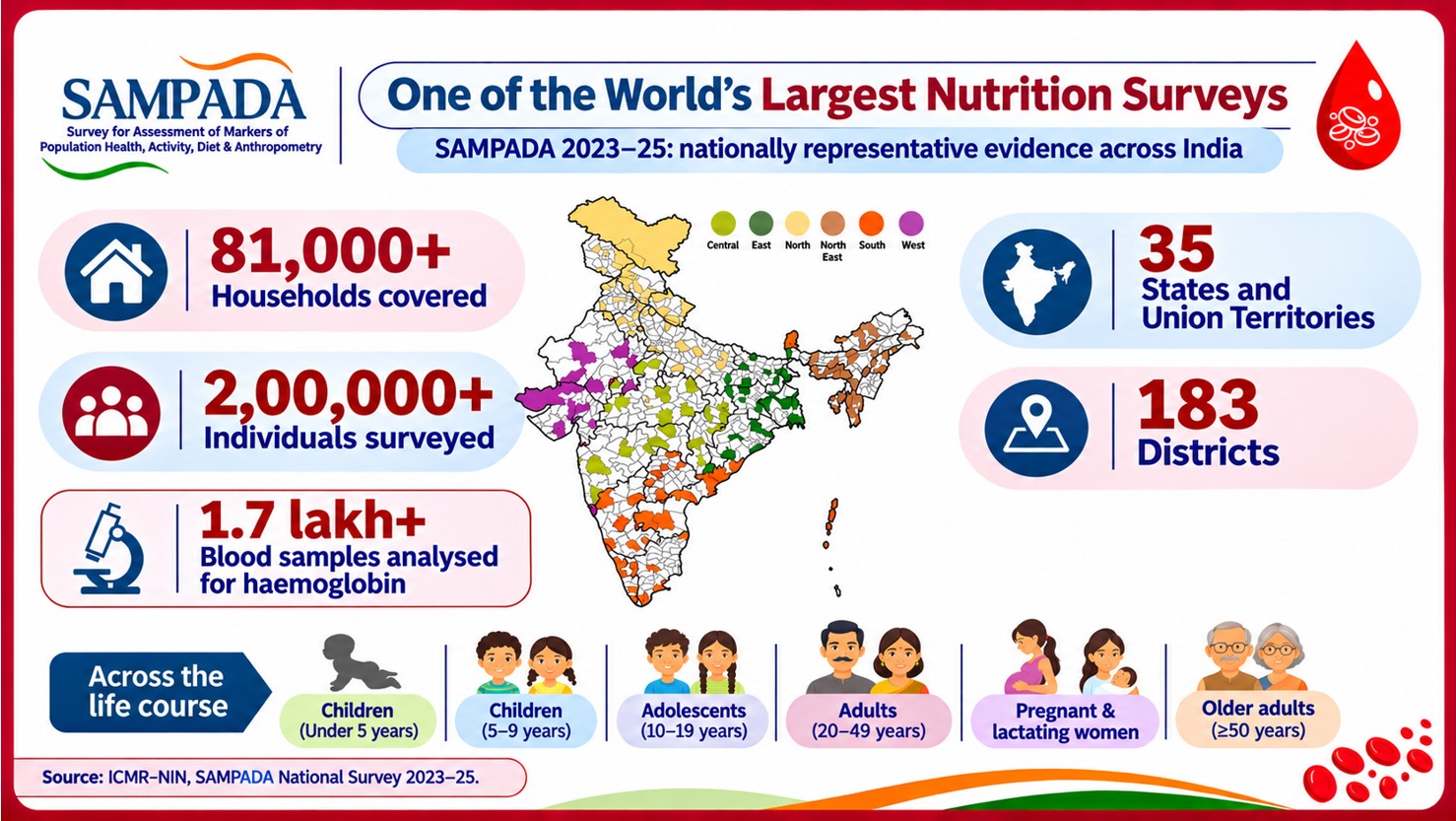
One of the largest nutrition surveys globally, SAMPADA covered more than two lakh individuals from over 81,000 households across 183 districts in 35 States and Union Territories. More than 1.7 lakh blood samples were analysed to estimate haemoglobin levels across different age, sex and physiological groups.
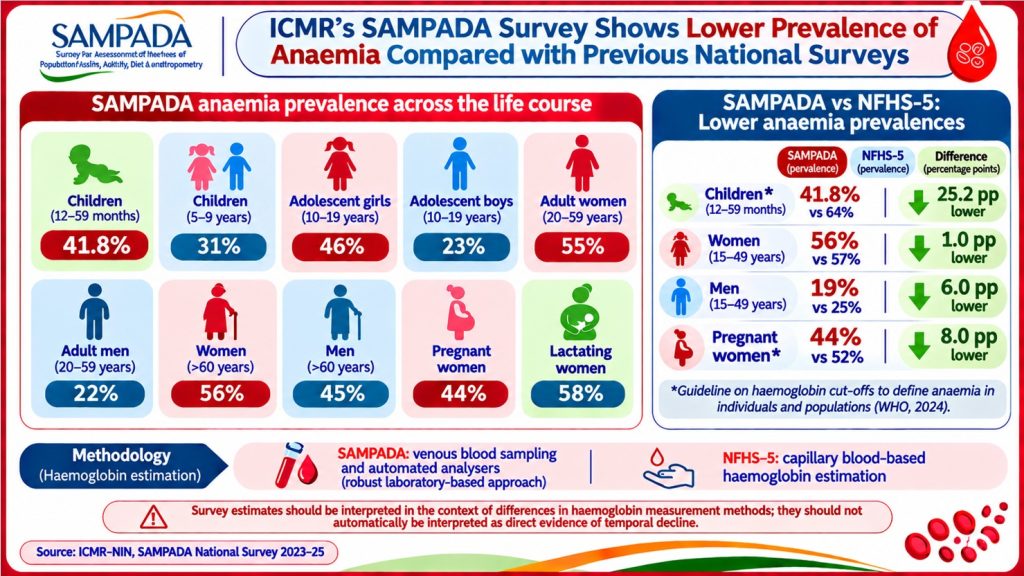
A key feature of the survey is the use of venous blood sampling and automated analysers for haemoglobin estimation, considered the gold-standard approach for obtaining accurate and reproducible results.
The findings indicate that anaemia prevalence stands at 42 per cent among children aged 12–59 months and 46 per cent among adolescent girls aged 10–19 years. Among adolescent boys and men aged 20–59 years, the prevalence ranges between 22 and 23 per cent, while women of reproductive age record a prevalence of 56 per cent.
The survey also provides nationally representative estimates for older adults, an age group for which comprehensive national-level evidence on anaemia has previously been limited.
Majority of anaemia cases are mild
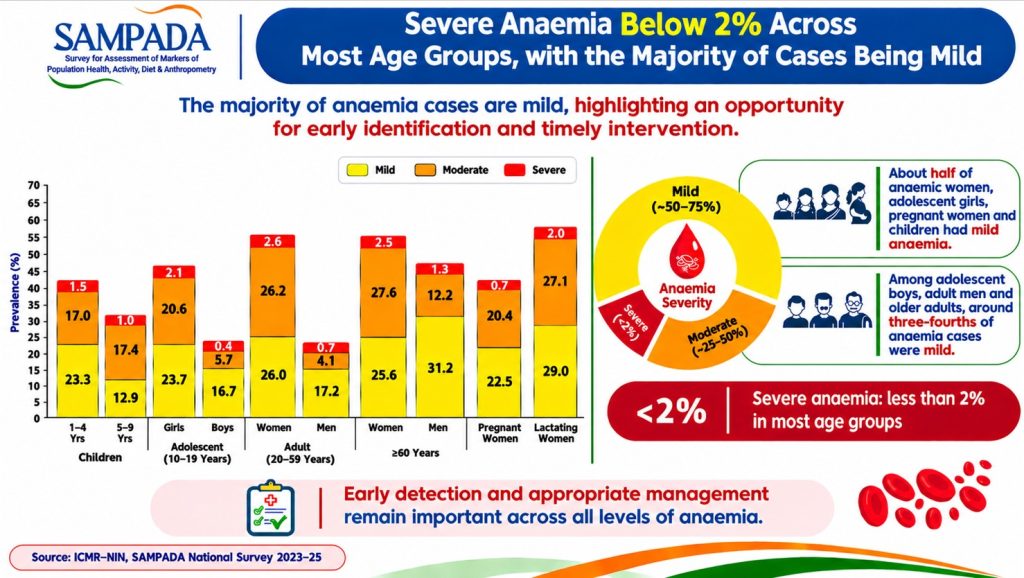
The survey highlights that mild anaemia accounts for a substantial share of the overall burden, with around half of anaemic women, including pregnant and lactating women, adolescent girls and children, having mild anaemia.
Among adolescent boys, adult men and older men, anaemia prevalence is considerably lower, and nearly three-fourths of affected individuals have only mild anaemia.
Severe anaemia was recorded in less than two per cent of individuals across most age groups, highlighting opportunities for early identification and timely intervention.
Iron deficiency accounts for around half of anaemia cases
The micronutrient assessment found that iron deficiency is the predominant contributor to anaemia among vulnerable population groups, including young children, adolescent girls and women of reproductive age. However, it accounts for approximately half of the overall anaemia burden.
The findings underline the need to address other contributing factors, including infections, haemoglobin disorders and inflammation associated with chronic diseases.
The survey also found that vitamin B12 and folate deficiencies were present at similar levels among anaemic and non-anaemic individuals across population groups, suggesting their limited contribution to anaemia prevalence in India.
Iron deficiency was found to be concentrated in specific life stages, particularly among children below five years, adolescent girls and women of reproductive age. Adolescent boys, adult men and older adults showed comparatively low prevalence of iron deficiency.
Individuals with moderate and severe anaemia were found to have a higher prevalence of iron deficiency, indicating the need for appropriate testing, treatment and follow-up.
Findings to strengthen Anaemia Mukt Bharat
Secretary of the Department of Health Research and Director General of ICMR, Dr Rajiv Bahl, said the survey provides nationally representative estimates of anaemia across children, adolescents, adults, pregnant and lactating women, and older adults.
He described the lower prevalence of anaemia compared to previous national surveys as encouraging and said the comprehensive findings would provide an evidence base to strengthen the ongoing national efforts under the Anaemia Mukt Bharat programme.
Dr Bharati Kulkarni, Director of ICMR-National Institute of Nutrition (NIN), said the findings support more targeted, population-specific and life-course approaches to anaemia prevention and management.
She added that the evidence would also help identify areas requiring further research and improved surveillance.
The SAMPADA findings are expected to support the implementation of Anaemia Mukt Bharat 2.0 through improved identification of vulnerable population groups, targeted interventions and monitoring of treatment outcomes.


