






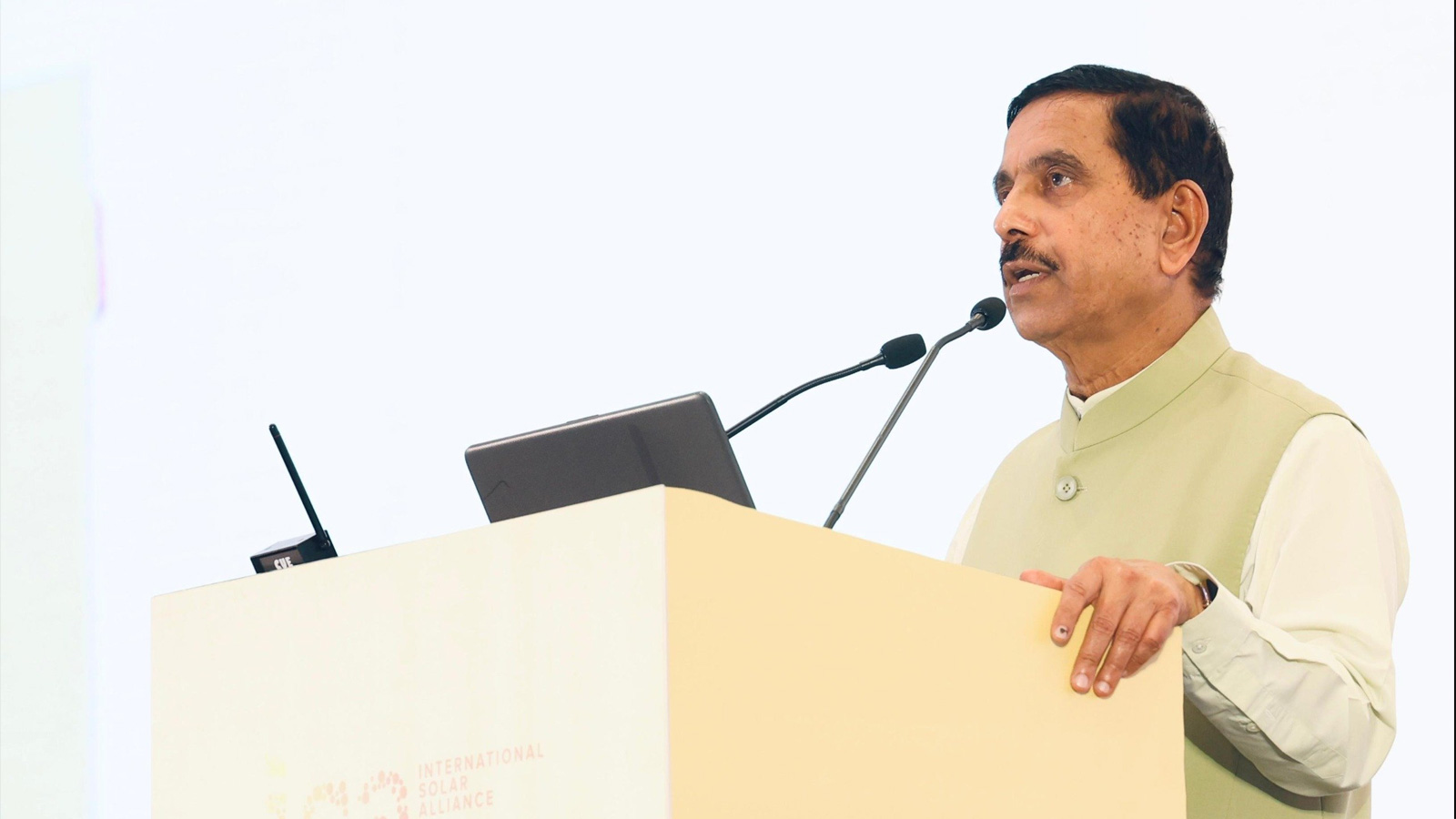
India is completing approximately one lakh rooftop solar installations every six days under the PM Surya Ghar: Muft Bijli Yojana, Union Minister Pralhad Joshi said on Wednesday, describing the scheme as a mass movement delivering household savings and strengthening energy security.
Speaking at a fireside chat on the third day of the Bharat Renewable Energy Summit & Expo 2026, Joshi said millions of households were achieving zero electricity bills and earning income by selling surplus power to the grid.
“The PM Surya Ghar: Muft Bijli Yojana has truly transformed into a mass movement, ultimately ensuring welfare and savings for the people, the states, and the entire country,” he said.
The minister said India’s installed solar capacity had grown from 3 GW in 2014 to 172 GW. Rooftop solar was helping reduce emissions and support energy security during peak hours, he added.
The summit’s third day brought together government representatives, industry leaders, researchers and investors for discussions on clean energy partnerships, manufacturing, storage and grid infrastructure.
Addressing the Next Terawatt Diplomatic Dialogue, Minister of State for New and Renewable Energy Shripad Yesso Naik said the next phase of clean energy expansion would require cooperation across countries, technologies and institutions. He sought diplomats’ views on investment, technology, implementation and capacity building.
Country sessions involving Norway, Japan, Australia, the United Kingdom and France explored cooperation in hydrogen, offshore wind and financing. Karnataka, Delhi, Uttarakhand, Bihar, Gujarat and Chhattisgarh presented their renewable energy investment pipelines.
A CEO Caucus convened by the International Solar Alliance, CEEW and Energiva Ventures examined international arrangements for implementing clean energy projects. The ISA High-Level Assembly and a ministerial roundtable for Small Island Developing States also formed part of the engagements.
The fourth International Conference on Green Hydrogen, held alongside the summit, reviewed progress under the National Green Hydrogen Mission, which targets five million tonnes of annual green hydrogen production capacity by 2030.
Discussions covered electrolyser manufacturing, hydrogen-powered mobility, fuel cells and sustainable aviation fuels, alongside opportunities for research partnerships and stronger domestic supply chains.
Other sessions examined onshore and offshore wind development, domestic battery manufacturing and the use of artificial intelligence in grid forecasting and energy security. A dedicated policy session focused on increasing women’s participation in renewable energy.
The RTSE Vendor Buddy tool, developed by C-STEP with support from Bloomberg Philanthropies and in association with the Ministry of New and Renewable Energy, was launched during the event. It enables rooftop solar vendors to assess roof layouts, design three-dimensional solar systems and generate technical drawings and bills of materials through a single workflow.
According to the Ministry, India’s solar module manufacturing capacity has crossed 200 GW, while solar cell manufacturing capacity has reached approximately 45 GW. Domestic wind manufacturing capabilities also cover a significant share of the turbine value chain.
The summit is facilitating discussions on battery energy storage, pumped storage and grid modernisation as expanding renewable capacity increases the need for reliable storage and transmission infrastructure.
(PIB)


