






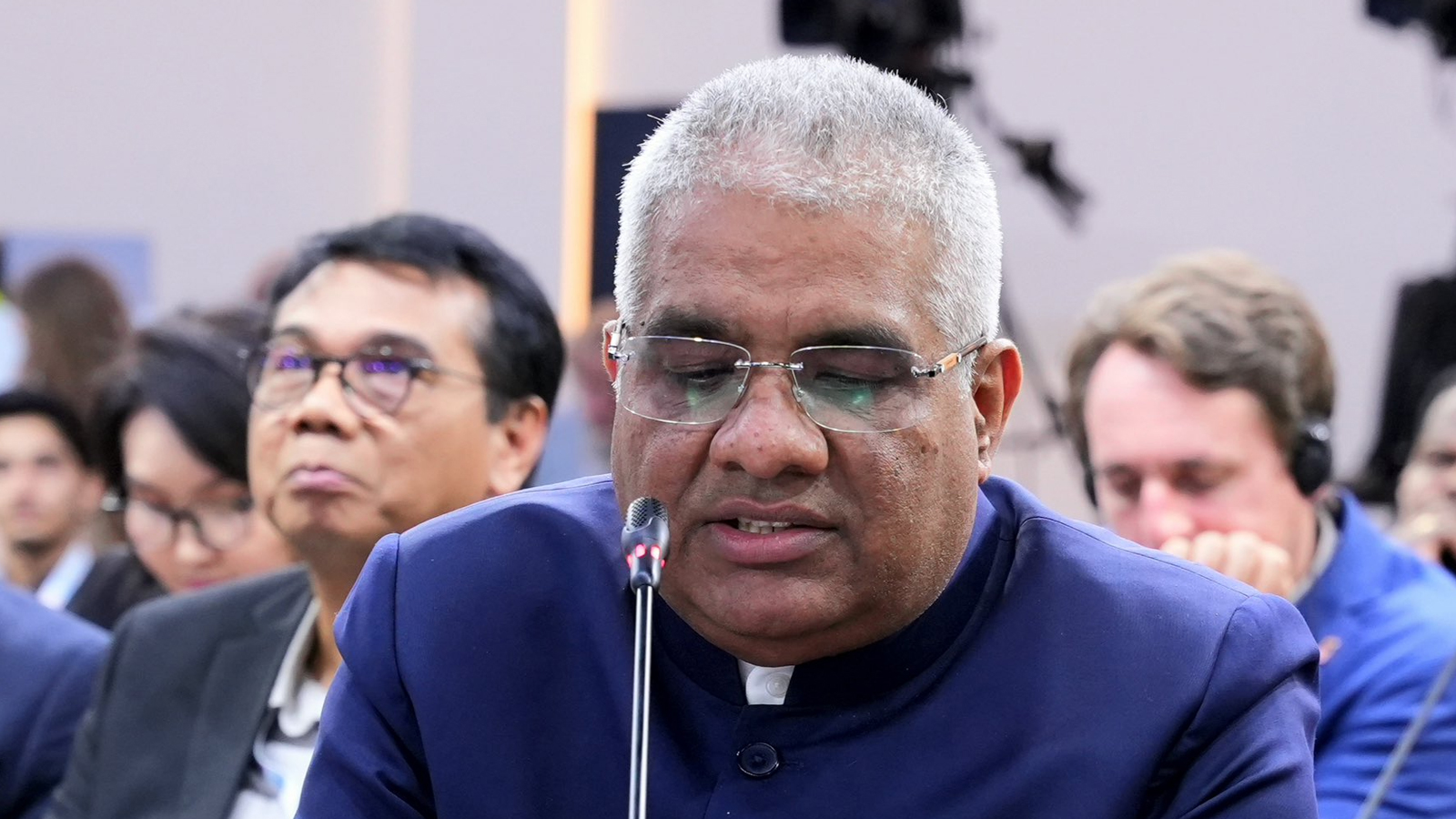
India on Wednesday called for an open, transparent and inclusive Second Global Stocktake (GST-2) under the Paris Agreement, emphasising the need for an equitable assessment of global climate action and greater accountability from developed countries on climate finance and technology transfer.
Addressing a high-level event on the Second Global Stocktake at the 31st Conference of the Parties (COP31) to the UN Framework Convention on Climate Change (UNFCCC) in Antalya, Türkiye, Union Environment, Forest and Climate Change Minister Bhupender Yadav said the process should be grounded in the best available science and the principle of equity, with balanced outcomes across all areas of climate action.
India stresses equity and comprehensive assessment
Yadav said GST-2 should take a comprehensive, 360-degree view of the Paris Agreement and its implementation, assessing both the progress achieved and the gaps that remain.
He underlined that the exercise must be guided by the principles of equity and Common but Differentiated Responsibilities and Respective Capabilities (CBDR-RC). Developed countries, he said, must take the lead in climate action in light of their national circumstances.
The Minister said the Second Global Stocktake offers an opportunity to assess progress across several key areas, including updated Nationally Determined Contributions (NDCs), Biennial Transparency Reports, international cooperation under Article 6 of the Paris Agreement, the Global Goal on Adaptation and the Just Transition Mechanism.
He also called for scientific assessments and reports, particularly those emerging from developing countries, to be recognised alongside reports of the Intergovernmental Panel on Climate Change (IPCC).
Climate finance and technology transfer remain key concerns
Highlighting the gap between climate commitments and their implementation, Yadav said the GST-2 must examine why, despite progress in climate action, the world remains at risk of crossing the 1.5°C global warming threshold in the coming years.
He called for the stocktake to produce practical, solution-oriented outcomes that can guide countries in updating their NDCs and address shortcomings in the means of implementing climate commitments.
The Minister particularly emphasised climate finance and technology transfer, stating that actual delivery in these areas has fallen far below the obligations and responsibilities of developed countries.
India seeks balanced outcomes
Concluding his address, Yadav expressed India’s expectation that the Second Global Stocktake would be conducted successfully and provide a balanced assessment of global climate action and implementation.
India’s position, as outlined at the COP31 high-level event, is that the stocktake should go beyond measuring progress on commitments and also identify implementation gaps, while ensuring that equity, scientific evidence and the responsibilities of developed countries remain central to the process.
(PIB)


