






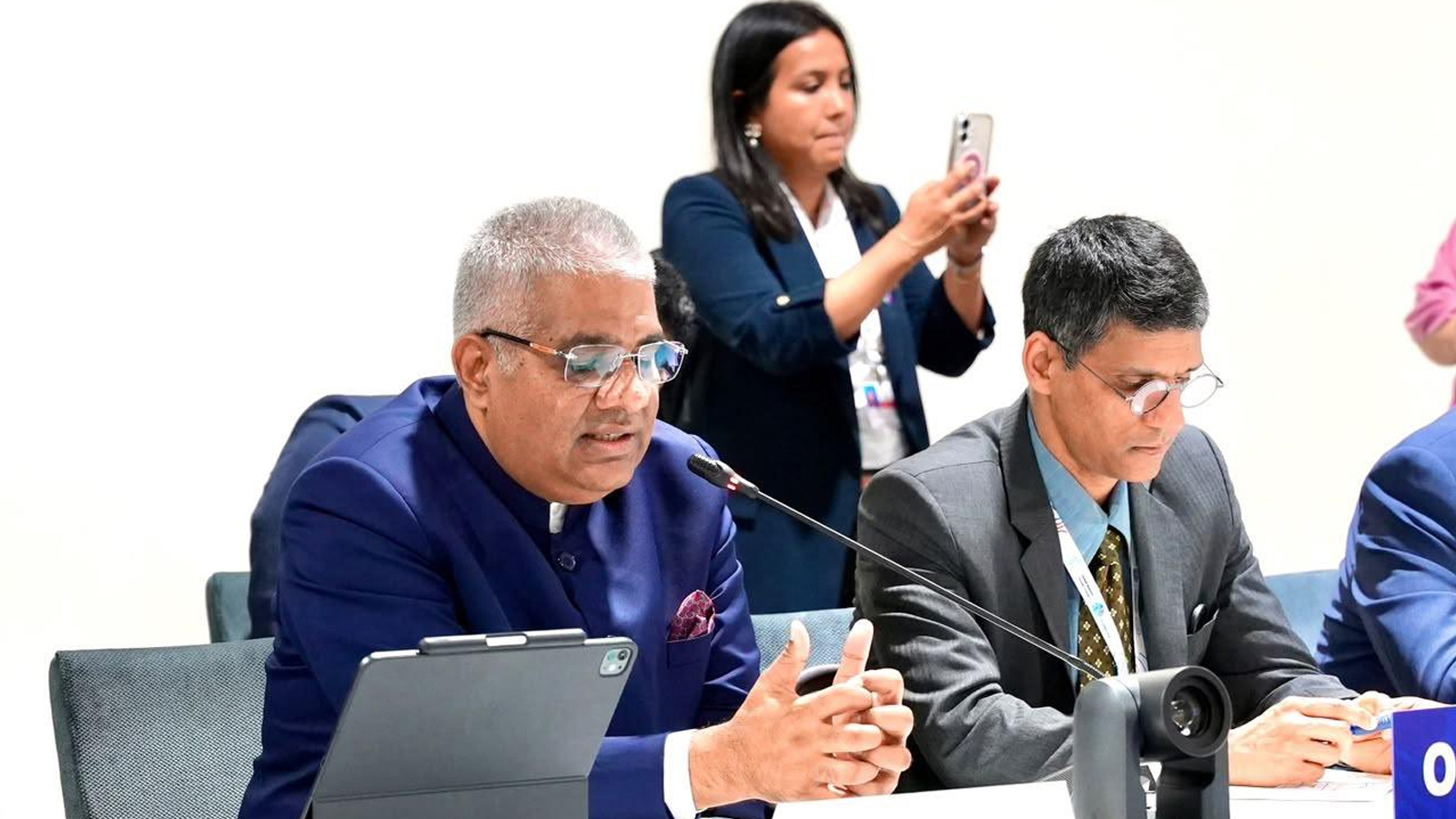
India on Wednesday called for stronger international cooperation to develop disaster-resilient infrastructure and translate global climate commitments into practical action, with Union Minister for Environment, Forest and Climate Change Bhupender Yadav highlighting the role of the Coalition for Disaster Resilient Infrastructure (CDRI) as a key global platform.
Addressing the CDRI Ministerial Dialogue on ‘Disaster Resilient Infrastructure for Climate Adaptation’ at the 31st UN Climate Change Conference (COP31) in Antalya, Türkiye, Yadav emphasised that climate action must advance alongside climate negotiations.
He said the success of international commitments should ultimately be measured by their translation into concrete outcomes on the ground.
Focus on practical outcomes and international cooperation
Yadav stressed the need for practical results in climate adaptation, mitigation and resilience, supported by stronger international cooperation and collective efforts.
He highlighted the importance of sharing knowledge, technical expertise and building capacities, particularly in developing countries. These efforts, he said, are essential to strengthening institutional capabilities and improving access to proven technologies.
The Minister also underlined the importance of affordable and sustainable finance, supported by robust institutional frameworks and technical capacities, for developing infrastructure capable of withstanding disasters and climate-related risks.
CDRI as a global platform for disaster resilience
Describing the Coalition for Disaster Resilient Infrastructure as a unique global initiative, Yadav said it brings together governments, international institutions, development partners and technical experts to strengthen cooperation on infrastructure resilience.
The platform facilitates the exchange of best practices, promotes technical collaboration and supports efforts to make infrastructure more resilient to disasters.
He noted that discussions at COP31 had reinforced the importance of resilience as a key global priority. He called for moving beyond shared commitments towards collaborative initiatives and measurable outcomes.
Countries highlight financing and infrastructure priorities
Representatives from participating countries also outlined their priorities and challenges in strengthening disaster-resilient infrastructure.
Trinidad and Tobago emphasised the need for grants and affordable financing, risk assessment tools and cooperation with the Government of India in the agro-processing sector.
Namibia highlighted the severe impact of drought on rural livelihoods and called for adequate funding to strengthen infrastructure resilience.
Japan stressed the importance of accelerating the deployment of Early Warning Systems, sharing expertise in disaster risk reduction and strengthening regional networks, particularly in vulnerable countries.
Guatemala also underlined the need for affordable finance, while Jordan called for greater international cooperation to improve access to financing and strengthen infrastructure planning.
The discussions at the CDRI Ministerial Dialogue highlighted the common challenges faced by countries in building climate-resilient infrastructure, particularly the need for accessible finance, technical expertise and stronger institutional capacity.
(PIB)


