






India on Wednesday reaffirmed its commitment to strengthening regional healthcare cooperation as the first BIMSTEC Health Ministers’ Meeting in Colombo, Sri Lanka, unanimously adopted a Joint Ministerial Statement to improve access to affordable and quality healthcare and enhance public health security across the Bay of Bengal region.
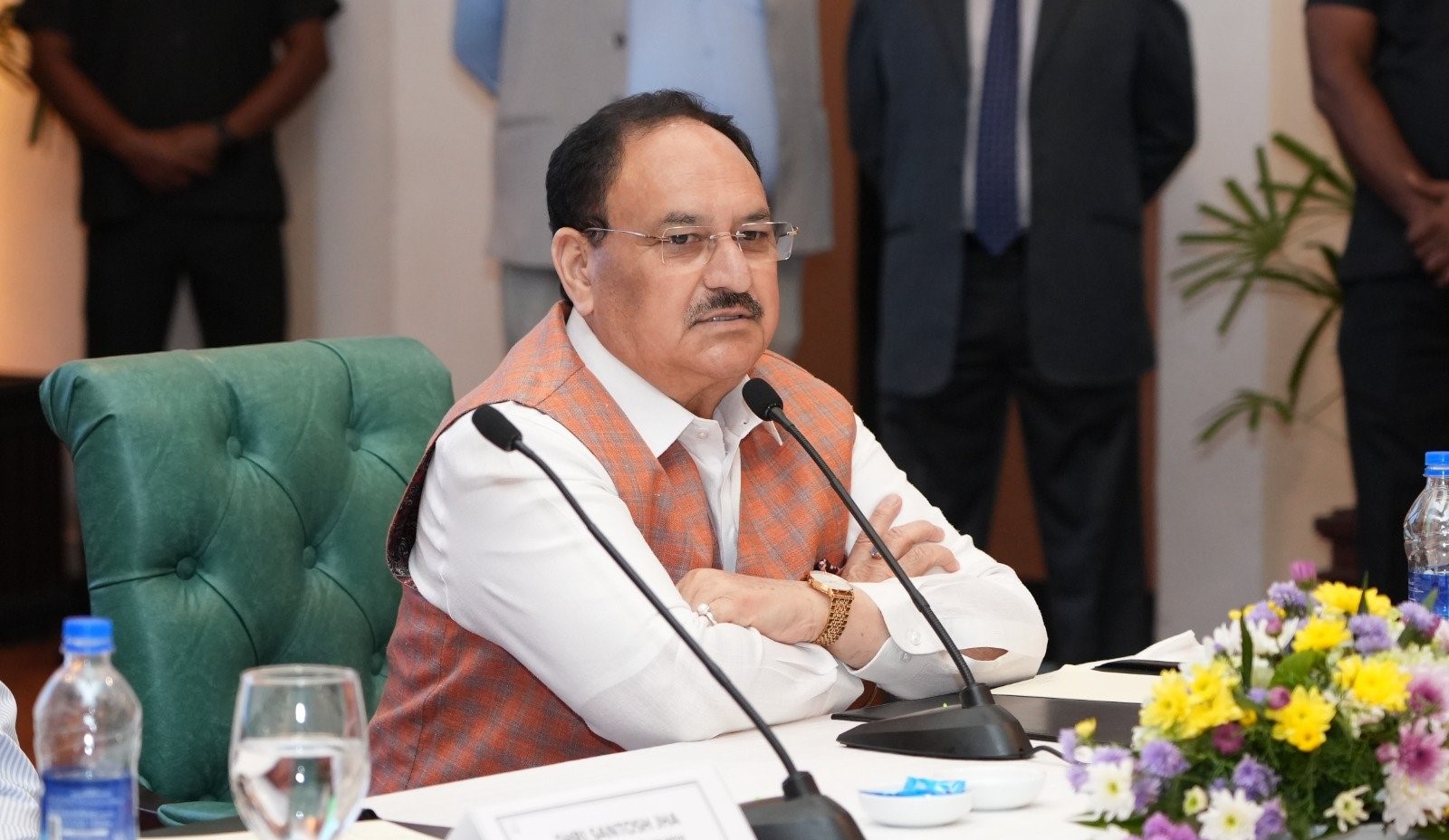
Union Health and Family Welfare Minister Jagat Prakash Nadda represented India at the meeting, which also adopted the Revised BIMSTEC Plan of Action on Public Health (2026-2030), outlining a roadmap for cooperation in disease surveillance, pandemic preparedness, digital health, traditional medicine, the One Health approach and healthcare workforce development.
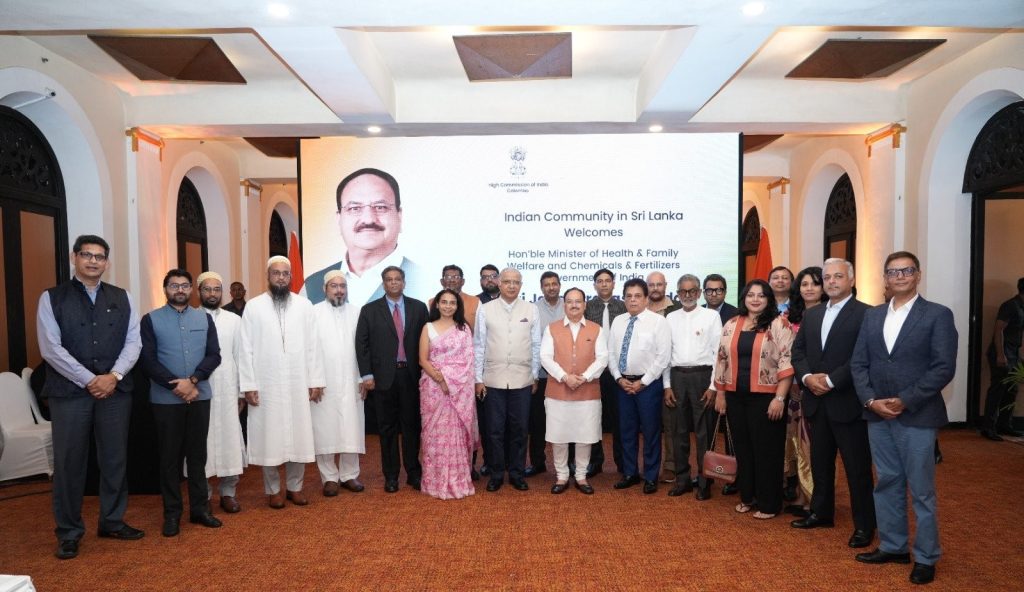
On the sidelines of the meeting, India and Sri Lanka exchanged a memorandum of understanding (MoU) for supplying 100 additional fully equipped ambulances to the island nation. Nadda also announced Indian support for 50 Medical Kiosks or Health ATMs in Sri Lanka. He held bilateral discussions with Nepal’s Health Minister and interacted with members of the Indian diaspora in Colombo.
BIMSTEC adopts joint statement on regional health cooperation
Addressing the inaugural meeting, Nadda described the gathering as a significant milestone in regional cooperation, following the decision taken at the Sixth BIMSTEC Summit in Bangkok in April 2025 to establish a dedicated mechanism for engagement among health ministers of member countries.
He said BIMSTEC nations shared a collective responsibility and an opportunity to strengthen healthcare systems, expand access to quality medical services and improve preparedness for emerging health challenges.
The Joint Ministerial Statement reaffirmed the member countries’ commitment to Universal Health Coverage and Sustainable Development Goal 3, which focuses on ensuring healthy lives and promoting well-being for all.
It identifies priorities for coordinated regional action, including disease surveillance, emergency preparedness, early warning systems, antimicrobial resistance management, digital healthcare, traditional medicine, climate-related health responses and capacity building.
The statement also proposes exploring a BIMSTEC Digital Health Framework to promote telemedicine, interoperable electronic health records and the use of artificial intelligence in diagnostics and disease modelling.
The meeting welcomed several regional initiatives, including the proposed BIMSTEC Regional Centre of Excellence for Public Health in Sri Lanka, the BIMSTEC Centre of Excellence on Tropical Medicine in Thailand and India’s proposal to establish a Centre of Excellence in Traditional Medicine.
It also welcomed Bangladesh’s proposal for a Regional Zoonotic Disease Observatory and Early Warning System to strengthen coordinated preparedness against cross-border health threats.
India offers to share healthcare expertise with member countries
Highlighting India’s progress towards Universal Health Coverage under Prime Minister Narendra Modi’s leadership, Nadda outlined the country’s efforts to expand primary healthcare, strengthen financial protection, upgrade public health infrastructure and promote digital innovation.
He said India had established more than 1.85 lakh Ayushman Arogya Mandirs to bring comprehensive primary healthcare services closer to communities, with a focus on preventive, promotive and essential healthcare.
The minister also highlighted the Ayushman Bharat Pradhan Mantri Jan Arogya Yojana (AB PM-JAY), which provides annual cashless hospitalisation coverage of up to Rs 5 lakh per eligible family and covers more than 60 crore people.
Referring to the Pradhan Mantri Ayushman Bharat Health Infrastructure Mission (PM-ABHIM), he highlighted investments in public health infrastructure, disease surveillance, diagnostic facilities and preparedness for future health emergencies.
Nadda also pointed to the growing role of technology in healthcare, noting that the National Telemedicine Service, eSanjeevani, had crossed 50 crore teleconsultations.
He outlined India’s experience under the Ayushman Bharat Digital Mission (ABDM) in developing an interoperable digital health ecosystem to improve access, efficiency and continuity of care.
Reaffirming India’s commitment to regional cooperation, Nadda offered to share the country’s expertise, technical capabilities and best practices with BIMSTEC member states, particularly in primary healthcare, digital health systems and public health infrastructure.
India to host BIMSTEC Centre of Excellence in Traditional Medicine
Nadda announced India’s commitment to hosting the BIMSTEC Centre of Excellence in Traditional Medicine at the Institute of Teaching and Research in Ayurveda (ITRA) in Jamnagar, Gujarat.
The proposed centre will serve as a regional platform for collaborative research, academic exchanges, institutional partnerships, capacity building and the exchange of traditional medicine knowledge and best practices.
It will also focus on evidence-based approaches, quality and safety standards and the responsible preservation of traditional knowledge.
The Joint Ministerial Statement welcomed India’s initiative, recognising its potential to strengthen regional cooperation in traditional medicine. India’s proposal to host the next meeting of the BIMSTEC Task Force on Traditional Medicine was also welcomed.
Emphasising the importance of collective preparedness, Nadda called for stronger regional cooperation under the One Health approach. He said the approach was aligned with Prime Minister Modi’s vision of ‘One Earth, One Family, One Future’ and India’s philosophy of Vasudhaiva Kutumbakam.
He stressed that One Health was a shared responsibility and that early detection, timely information-sharing and coordinated action were essential to preventing disease outbreaks and safeguarding public health.
India, Sri Lanka strengthen healthcare partnership with MoU for 100 ambulances
On the sidelines of the meeting, Nadda held bilateral discussions with Sri Lanka’s Minister of Health and Mass Media, Nalinda Jayatissa, to review ongoing healthcare initiatives and explore further areas of cooperation.
The two ministers witnessed the exchange of an MoU for the supply of 100 additional fully equipped ambulances to Sri Lanka’s 1990 Suwa Seriya Emergency Ambulance Service.
The initiative will receive Indian grant assistance of SLR 1,725.73 million, equivalent to approximately USD 5.28 million. It is expected to strengthen emergency medical response capabilities, improve operational efficiency and facilitate timely access to emergency healthcare services across the country.
India has been a longstanding development partner in establishing and expanding the Suwa Seriya service. It provided grant assistance of USD 7.5 million in 2016 and USD 15.02 million in 2018, supporting the deployment of 297 ambulances.
These ambulances have played an important role in providing emergency medical assistance, including during the COVID-19 pandemic and natural disasters. The additional vehicles are expected to further strengthen Sri Lanka’s emergency healthcare network.
India announces support for 50 Medical Kiosks in Sri Lanka
Nadda also announced India’s support for the procurement of 50 Medical Kiosks or Health ATMs to strengthen primary healthcare delivery in Sri Lanka.
The initiative involves Indian grant assistance of up to SLR 225 million and forms part of the USD 450 million comprehensive rehabilitation package announced by the Government of India following Cyclone Ditwah, which affected Sri Lanka during November-December 2025.
The kiosks will be installed at Sri Lanka’s Arogya Primary Health Centres and provide point-of-care diagnostic services integrated with telemedicine facilities.
The initiative is expected to improve access to essential diagnostic services, facilitate timely medical consultations and strengthen technology-enabled primary healthcare, particularly for communities requiring accessible medical facilities.
The initiatives reflect India’s continued support for strengthening Sri Lanka’s healthcare system and its broader development partnership with the island nation.
Nadda holds bilateral talks with Nepal’s Health Minister
The Union Health Minister also met Nepal’s Minister for Health and Food Safety, Neesha Mehta, on the sidelines of the BIMSTEC meeting.
The two ministers discussed ways to deepen bilateral and regional healthcare cooperation, exchange expertise and best practices, and improve access to affordable and quality healthcare services.
The meeting reaffirmed the longstanding historical, cultural and people-to-people ties between India and Nepal, which provide a strong foundation for cooperation in healthcare and development.
Guided by Prime Minister Modi’s Neighbourhood First policy, India reiterated its commitment to working closely with Nepal to strengthen healthcare partnerships, improve health outcomes and promote shared regional prosperity.
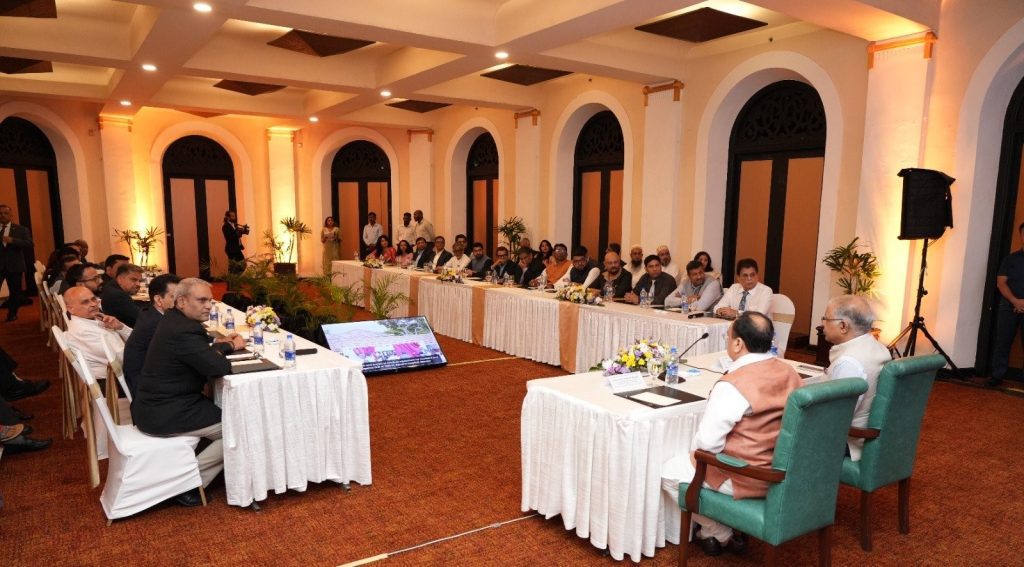
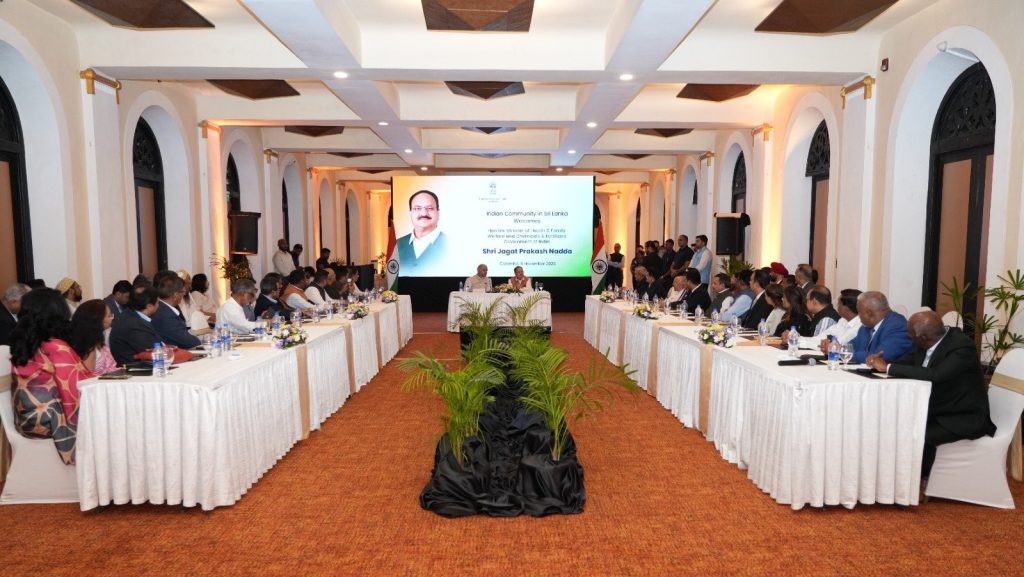
Nadda interacts with Indian diaspora in Colombo
During his visit, Nadda also interacted with members of the Indian diaspora in Colombo and acknowledged their contribution to strengthening the longstanding friendship and people-to-people ties between India and Sri Lanka.
Addressing the gathering, he highlighted India’s progress over the past 12 years under Prime Minister Modi, particularly in healthcare, digital innovation, pharmaceuticals, medical research and technological development.
He said India’s expanding capabilities offered significant opportunities to deepen cooperation with Sri Lanka in healthcare, education, digital transformation and economic development.
Nadda also highlighted the role of India’s Neighbourhood First and MAHASAGAR policies in strengthening its partnership with Sri Lanka and promoting regional stability, development and prosperity.
He appreciated the diaspora’s contribution to fostering mutual understanding, strengthening cultural ties and serving as a bridge between the two countries.
BIMSTEC health ministers’ meetings to be held every two years
The first BIMSTEC Health Ministers’ Meeting brought together health ministers and senior representatives from Bangladesh, Bhutan, India, Myanmar, Nepal, Sri Lanka and Thailand. It was chaired by Sri Lanka’s Minister of Health and Mass Media, Nalinda Jayatissa.
The Joint Ministerial Statement reaffirmed the decision to hold meetings of BIMSTEC health ministers and senior officials every two years to ensure sustained engagement and follow-up on agreed regional priorities.
Thailand’s offer to host the second BIMSTEC Health Ministers’ Meeting in 2028 was also welcomed.
Concluding his address, Nadda thanked the Sri Lankan government for hosting the meeting and reiterated India’s commitment to building a healthier, safer and more resilient BIMSTEC region.
He emphasised that “No country should be left behind in its pursuit of better health outcomes.”
The adoption of the Joint Ministerial Statement, the revised regional public health roadmap, India’s commitment to establishing a Centre of Excellence in Traditional Medicine and the healthcare initiatives with Sri Lanka mark significant steps towards strengthening regional health security and cooperation across the Bay of Bengal region.
-PIB


