






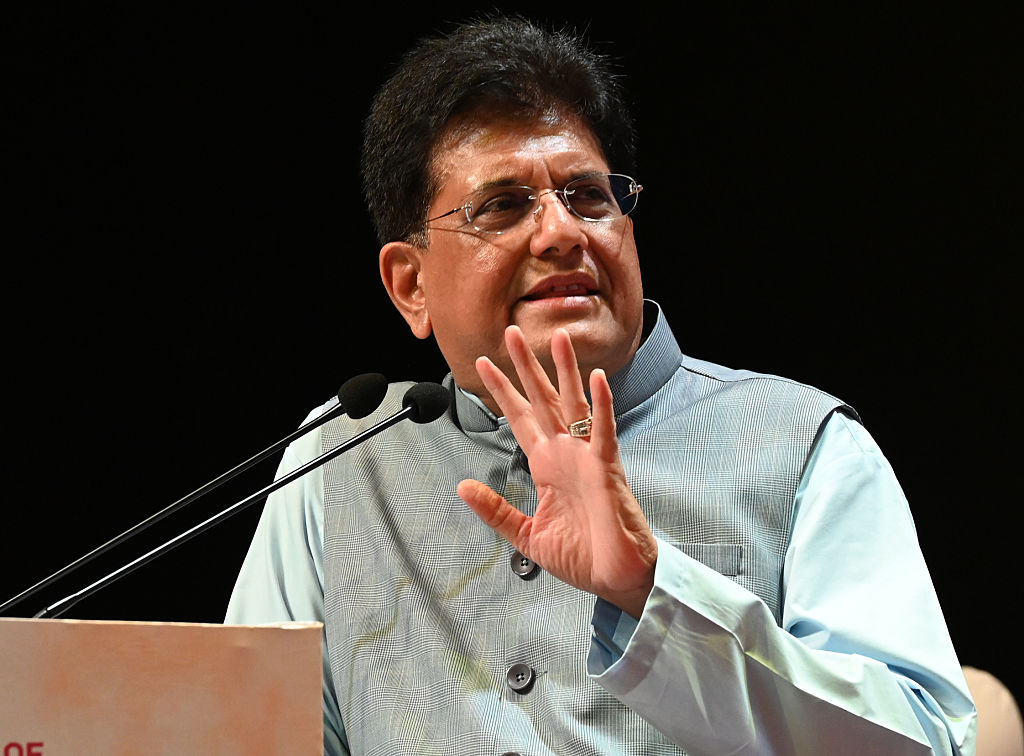
Union Minister of Commerce and Industry Piyush Goyal on Friday said the India-US trade deal was close to culmination, with the process and pathway for finalising the agreement beginning to take shape.
Addressing the India Debt Capital Market Summit 2026, Goyal said India’s growth story remained strong, resilient and trustworthy despite global uncertainties. He highlighted the country’s economic performance, sustained reforms, expanding trade opportunities and the growing role of debt markets in financing India’s development ambitions.
The Minister said India had recorded 7.8 per cent growth in the first quarter of the current financial year and expressed confidence that the growth momentum would continue in the second quarter. Gross fixed capital formation had increased by around 12 per cent, while exports had reached USD 570 billion in the first seven months of the year. He said the country was on track to achieve its USD 1 trillion export target, which had appeared aspirational when it was set in May this year. Credit growth of approximately 19 per cent was another positive indicator, particularly for credit markets.
India Expanding Global Trade Partnerships
Goyal said India had demonstrated resilience amid two ongoing wars, oil price shocks, tariff-related uncertainties, disruptions to sea routes and sporadic attacks affecting air travel. Despite these challenges, the country’s growth story continued to attract global trust.
He highlighted the Government’s efforts to improve ease of doing business, introduce policy reforms and maintain an open-door approach towards businesses and stakeholders. He said the vision of Viksit Bharat 2047 was guiding long-term planning, with the ambition of transforming India into a USD 30 trillion economy.
The Minister said India had continued to finalise free trade agreements (FTAs) and reform the Goods and Services Tax (GST) system by simplifying its structure and reducing tax rates to boost consumption. GST collections continued to rise, with October recording an all-time high. Exports also registered a record performance in October, reaching USD 90 billion in a single month.
He said several substantive trade agreements were yet to come into effect. The India-European Union FTA was expected to be signed later this year and become operational by March or April next year. The India-US trade deal, meanwhile, was close to culmination, with the process and pathway for finalising it beginning to take shape.
Goyal said India’s trusted partnerships with countries across the world were central to its engagement in preferential and free trade agreements. He described India as an emerging preferred partner and investment destination, supported by its expanding manufacturing and export capabilities, growing infrastructure and integration with the global economy.
FTAs to Expand Market Access for Indian Businesses
Highlighting the expansion of India’s trade partnerships, Goyal said that until 2014, the country’s FTAs covered economies with a combined GDP of approximately USD 10 trillion, compared with global GDP of around USD 115 trillion.
He said nine FTAs covering 38 developed countries had been finalised over the last four-and-a-half to five years, covering economies with a combined GDP of USD 60 trillion. Together with earlier agreements, India now had preferential market access to economies accounting for approximately USD 70 trillion of global GDP.
The country was negotiating eight or nine additional agreements and expected to add another USD 15 trillion in market access, taking the total to USD 85 trillion out of a global GDP of USD 115–120 trillion. He said the growing interest of countries in entering into FTAs with India reflected its position as a trusted trade partner and the opportunities available to Indian businesses.
The Minister said infrastructure development, rising consumption and economic growth, combined with expanded access to international markets, would create opportunities for manufacturers, agricultural exporters, seafood exporters and service providers.
He called for taking India’s exports to the next level and increasing investment in manufacturing to make the Make in India initiative a globally competitive manufacturing base. He also stressed the need for greater value addition, improved quality and a larger skilled talent pool to enable India to participate at the forefront of emerging technologies such as artificial intelligence, machine learning and quantum computing.
Long-Term Growth and Economic Resilience
Goyal said India’s economic transformation was the outcome of 12 years of sustained reforms and initiatives across sectors. He highlighted the Government’s focus on improving access to essential services, including food, housing, healthcare, education, roads, quality electricity and digital connectivity.
He also referred to the Jal Jeevan Mission’s efforts to provide tap water to every household in every village and said bringing 50 crore people out of poverty over 12 years was a significant achievement. Rising incomes and the expansion of the middle class, he said, would create substantial market opportunities.
On the impact of global economic uncertainties, particularly rising oil prices, Goyal said India’s long-term growth prospects needed to be assessed in the context of its changing economic fundamentals. He pointed to the country’s higher foreign exchange reserves, remittances and foreign direct investment inflows compared with 20 years ago.
He said India’s GDP stood at USD 4 trillion, placing it among the world’s top five or six economies, while its GDP on a purchasing power parity basis was approximately USD 18–19 trillion. The country was exporting over USD 700 billion, with the overall export basket expected to reach USD 1 trillion this year.
The Minister also highlighted India’s relatively low national debt levels and said its external debt was significantly lower as a share of overall debt. He emphasised that India had never defaulted on its obligations to the world, including during the COVID-19 pandemic. He also noted that domestic institutional and retail investors had supported the markets during periods of volatility, including when foreign investors were withdrawing funds.
Goyal Calls for Stronger Debt Capital Markets
Focusing on the summit’s theme, ‘Catalysts, Apex and Credit’, Goyal said bond and credit markets were built on trust and the credibility of borrowers. He called for a financing ecosystem capable of meeting the scale, diversity and long-term requirements of India’s development plans.
He pointed to upcoming investments in semiconductor fabrication facilities, electricity grids, data centres and the Vadhavan port project near Mumbai as major sources of future demand for debt financing. He said debt markets would play an important role in supporting these investments and called for faster, more efficient financing mechanisms and innovative instruments.
The Minister also said private capital would become an increasingly important source of funding and that India’s inclusion in global bond indices would contribute to the development of its debt markets.
He outlined five priorities for strengthening the debt capital market ecosystem:
1. Greater use of bond markets by issuers: Large corporates, public sector undertakings and infrastructure developers should make bond markets a preferred source of financing for capital expenditure, particularly for long-gestation projects, while developing innovative financing solutions.
2. Broader investor participation: Insurance companies, pension funds, provident funds and mutual funds should support long-term debt and the wider credit ecosystem. He encouraged these institutions to look beyond AAA-rated instruments and contribute more actively to patient capital formation.
3. Improved bond-market liquidity: The market should make bonds easier to trade and enable transactions to take place instantaneously, along the lines of the share market.
4. Investment in export capacity: Exporters and their financiers should convert the opportunities created by FTAs into investment decisions and build capacity to serve newly accessible markets.
5. Continued stakeholder consultation: The Government remains open to suggestions from industry participants and other stakeholders on further reforms and improvements to the financing ecosystem.
Goyal said the Government and private sector were collectively catalysing new growth opportunities and opening avenues for higher capital expenditure. He expressed confidence that stronger collaboration, long-term investment and an efficient debt market would help India sustain its growth momentum and realise its economic ambitions.
(PIB)


