






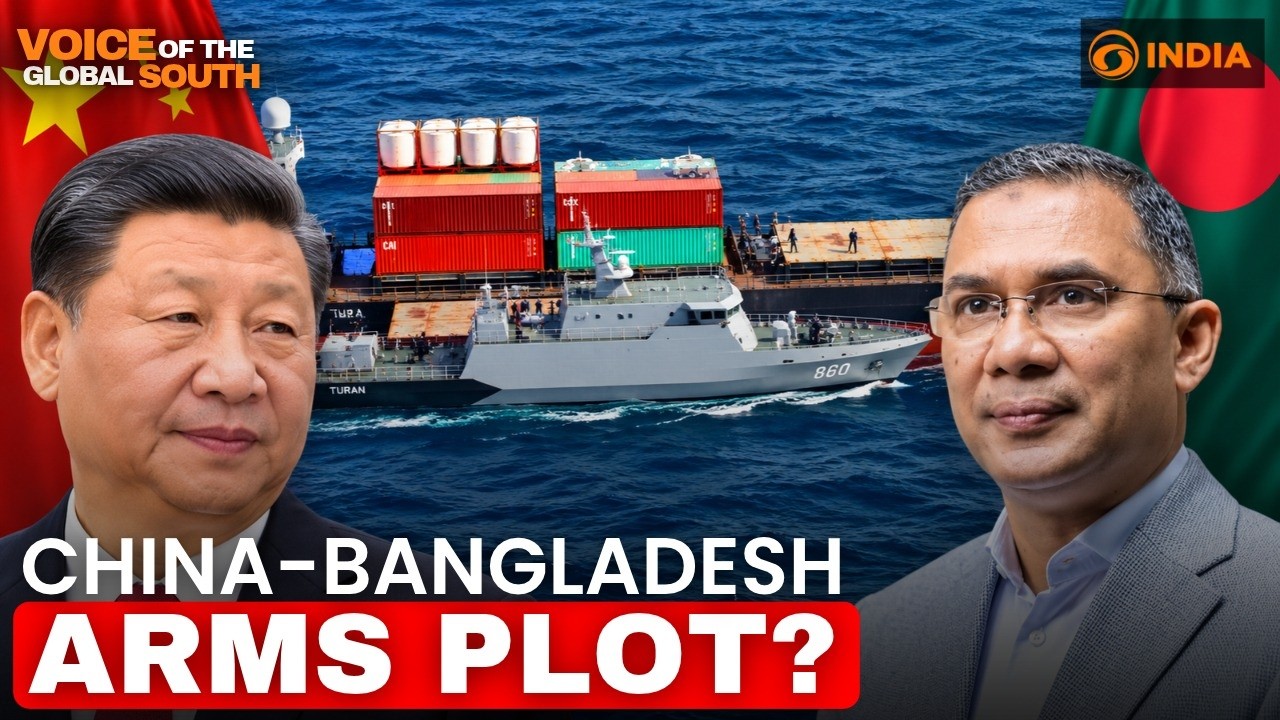
A cargo vessel sailing from China to Bangladesh has become the centre of an international maritime mystery after Indonesian authorities intercepted the ship and discovered more than 400 tonnes of a chemical used in rocket fuel alongside millions of blank SIM cards – a shipment that Bangladeshi customs officials say does not exist in their records.
The interception has sparked a multi-agency investigation into who ordered the massive consignment and where it was actually headed.
https://www.youtube.com/watch?v=wDAtVWB-w1g
On 7th November, an Indonesian Navy patrol vessel spotted the Comoros-flagged M.V. Star Line acting erratically off the coast of Belawan in North Sumatra. While the crew claimed that the ship needed to refuel, its unusual movements and refusal to respond to repeated radio calls raised immediate suspicion. Indonesian Navy officers boarded the 5,000-tonne vessel and escorted it to the Belawan Naval Base for inspection. Inside its 36 shipping containers, authorities uncovered:
• Over 400 tonnes of sodium perchlorate, packed across 15 containers; and
• Millions of blank 4-G L.T.E. SIM cards, stored on 54 pallets – brand-new chips unlinked to any phone numbers or registered users.
While sodium perchlorate has legitimate industrial applications in textiles and bleaching, it is also a potent oxidiser used in the manufacturing of solid rocket propellants. Briefing journalists on 20th November, Rear Admiral Deny Septiana noted that a stockpile of this magnitude is sufficient to fuel approximately 100 missiles.
Further inspection revealed deeper irregularities. Authorities found that the M.V. Star Line’s registration had been suspended and several of its shipping documents appeared to be falsified.
According to maritime tracking data, the vessel departed China’s Lianyungang port on 12th September. Platforms such as VesselFinder listed Mongla Port in Bangladesh as its final destination, with an expected arrival date of 8th November.
However, officials in Bangladesh report no record of the shipment. Mongla Customs Commissioner Mohammad Gias Kamal confirmed to local media that no Import General Manifest – a mandatory document filed by a local shipping agent prior to arrival detailing a ship’s cargo and intended buyers – was ever submitted for the vessel. Customs authorities in Chattogram similarly found no import declaration and no record of the ship entering Bangladeshi waters. Because the ship was intercepted mid-voyage without a manifest on file, investigators currently lack a paper trail identifying the intended recipient.
Historical trade figures highlight the unusual scale of the seized cargo:
• National Board of Revenue (NBR) data: Between 2010 and November of this year, Bangladesh officially imported less than 700 kilograms of sodium perchlorate across 50 separate shipments. The 400-tonne haul seized in Indonesia is nearly 600 times that 16-year total.
• United Nations trade figures: Between 2019 and 2025, Bangladesh imported just over 300 tonnes of perchlorates and related compounds combined – primarily from India and Singapore, with only 11 tonnes originating from China. The M.V. Star Line was carrying more than seven years’ worth of the country’s broader chemical imports in a single voyage.
A joint task force – comprising the Indonesian Navy, police, customs, immigration, and the National Narcotics Agency – is currently interrogating the vessel’s crew and auditing its paperwork.
Until investigators determine who purchased the consignment and who was waiting to receive it, questions remain over whether the cargo was an illicit industrial shipment or part of a far more concerning operation.


