






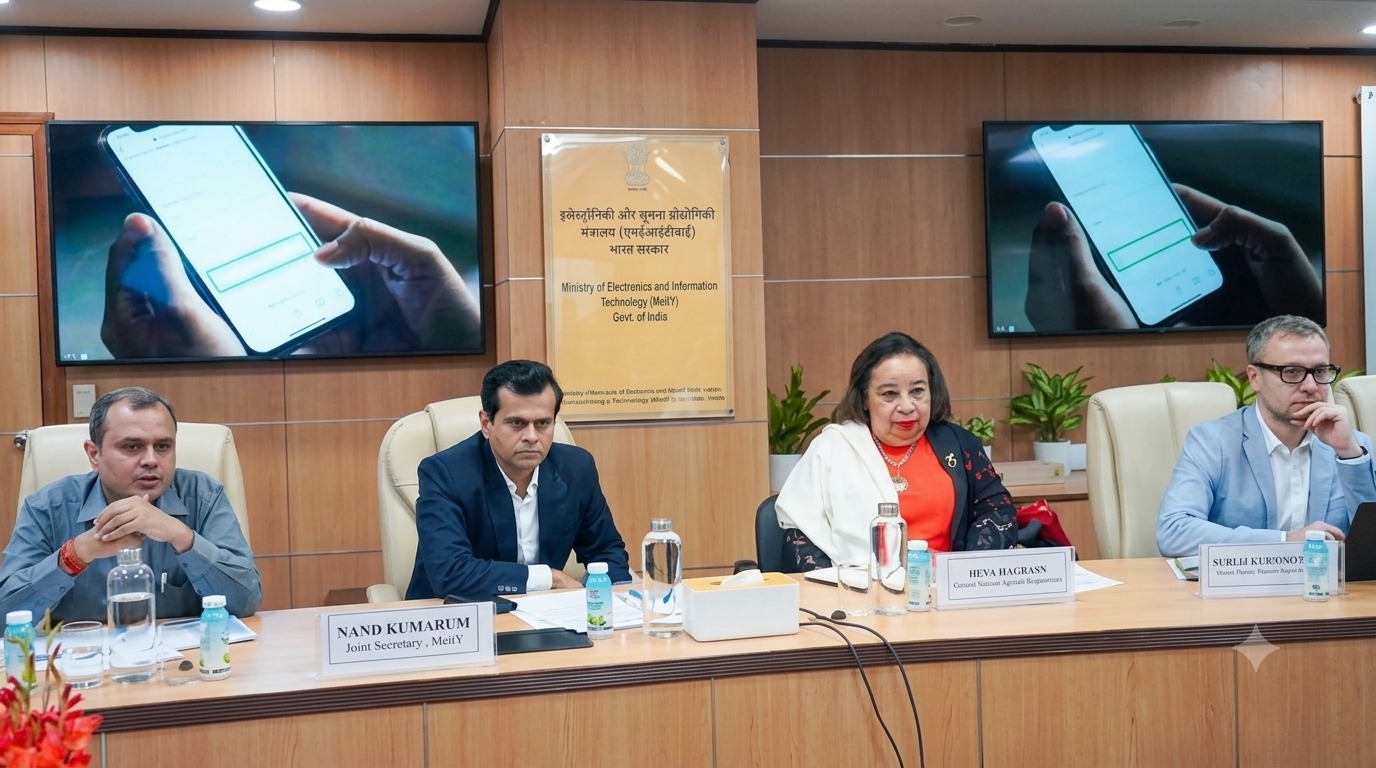
The Ministry of Electronics and Information Technology (MeitY) on Thursday discussed India’s efforts to improve digital accessibility and inclusion with Heba Hagrass, the UN Special Rapporteur on the Rights of Persons with Disabilities.
During the interaction, the ministry outlined India’s legal and policy framework for digital accessibility, including the Rights of Persons with Disabilities Act, 2016, which mandates accessible information and communication technology.
MeitY highlighted initiatives to make government websites, applications and digital services more accessible, including the Guidelines for Indian Government Websites and Apps (GIGW 3.0), aligned with the Web Content Accessibility Guidelines (WCAG) 2.1 Level AA, and the Indian Standard IS 17802 on accessible ICT products and services. The latter was made enforceable through a 2023 amendment to the Rights of Persons with Disabilities Rules.
The ministry said 73 ministries and departments had received certification under the Standardisation Testing and Quality Certification (STQC) framework. It also highlighted testing tools such as SugamyaWeb and SATYA for assessing the accessibility of websites and applications.
Its UX4G initiative has provided user experience audits and design support to more than 400 government websites and applications, while its ready-to-use accessibility widget is being used by over 1,800 websites.
Other initiatives discussed included Bhashini for multilingual access, UMANG for delivering citizen services in 23 languages, and Namaste Bharat, an AI-based citizen guide offering voice and multilingual support.
The ministry also highlighted Divyang Sarthi, a platform providing virtual reality-based learning content for persons with intellectual disabilities.
MeitY reiterated its commitment to updating accessibility standards in line with international benchmarks, strengthening certification and compliance mechanisms, and developing digital assistive solutions.
The interaction was part of Hagrass’s official visit to India from November 16 to 25.
( PIB)


