






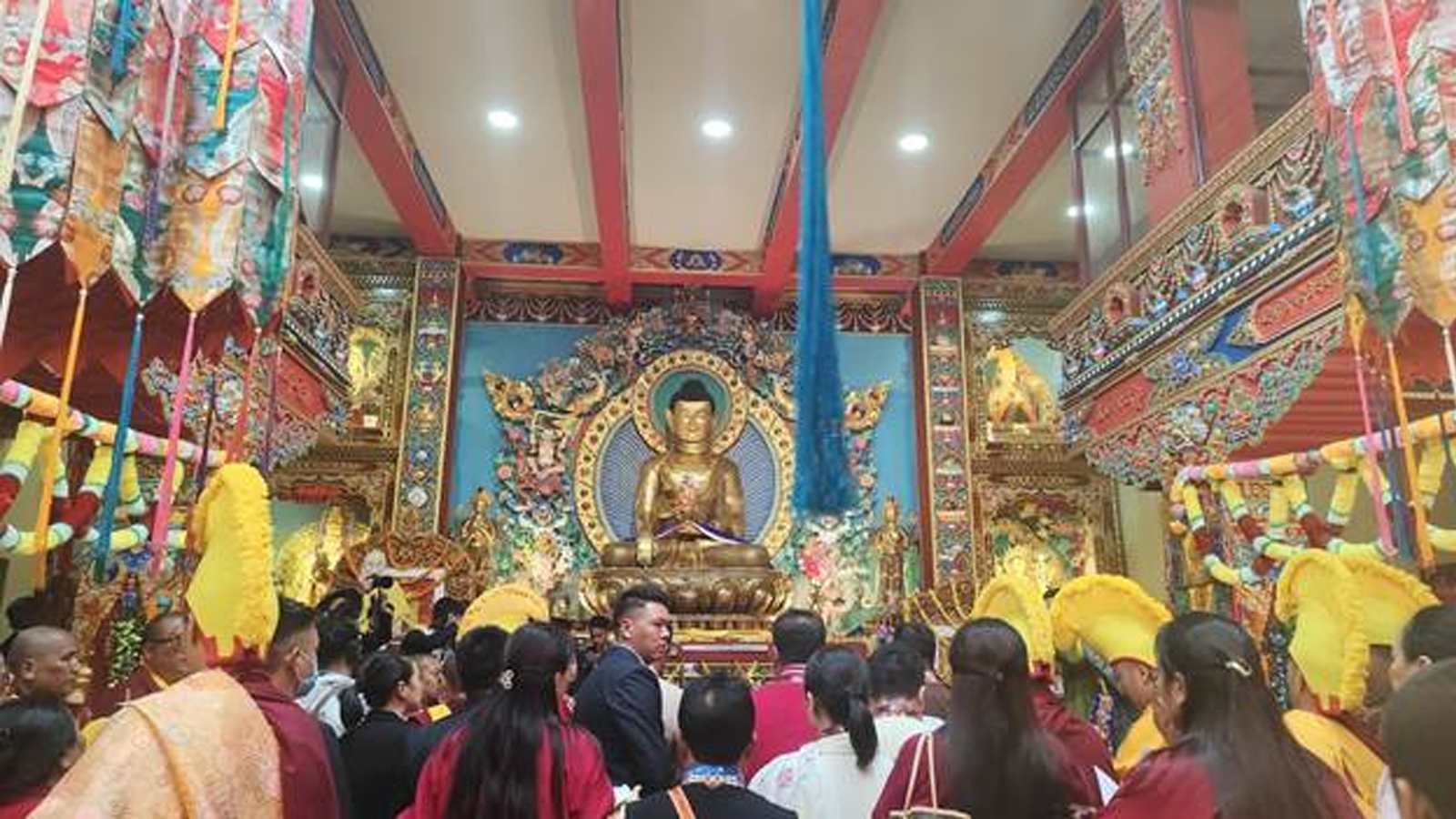
The sacred relics of Shakyamuni Buddha have drawn nearly 12,000 devotees to Thubchog Gatsel Ling (TGL) Monastery, also known as Lower Gompa, in Bomdila, Arunachal Pradesh, during the first two days of their public exposition.
According to the Ministry of Culture, a total of 11,969 devotees visited the monastery to offer prayers and seek blessings in the presence of the sacred relics, reflecting the deep religious faith and spiritual significance associated with them among Buddhists.
The exposition is being organised by the Ministry in collaboration with the National Museum, New Delhi, the Government of Arunachal Pradesh and the International Buddhist Confederation (IBC), New Delhi. Public darshan at TGL Monastery will continue until November 13.
To facilitate the participation of devotees, the authorities have announced a constituency-wise schedule for the remaining days. On November 11, devotees from the 5-Kalaktang Assembly Constituency will be able to visit the monastery, followed by devotees from the 6-Buragaon–Thrizino Assembly Constituency on November 12.
November 13 has been reserved for devotees from other districts, members of the Armed Forces and Central Armed Police Forces (CAPFs) stationed in the district, as well as those who could not attend on their designated days.
Darshan will be available from 8:30 am to 6 pm on all scheduled days.
Following the conclusion of the exposition in Bomdila, the sacred relics will be accorded a ceremonial send-off on November 14 for their onward journey to Namsai district. They will be placed at the Golden Pagoda, Namsai, for public darshan from November 14 to 20. The relics are scheduled to return to the National Museum in New Delhi on November 21.
The exposition is part of the government’s efforts to preserve and promote India’s Buddhist heritage and civilisational legacy. It also aims to provide devotees access to sacred Buddhist relics, strengthen cultural and spiritual connections, and highlight India’s contribution to the teachings and philosophy of Buddhism.
(PIB)


