







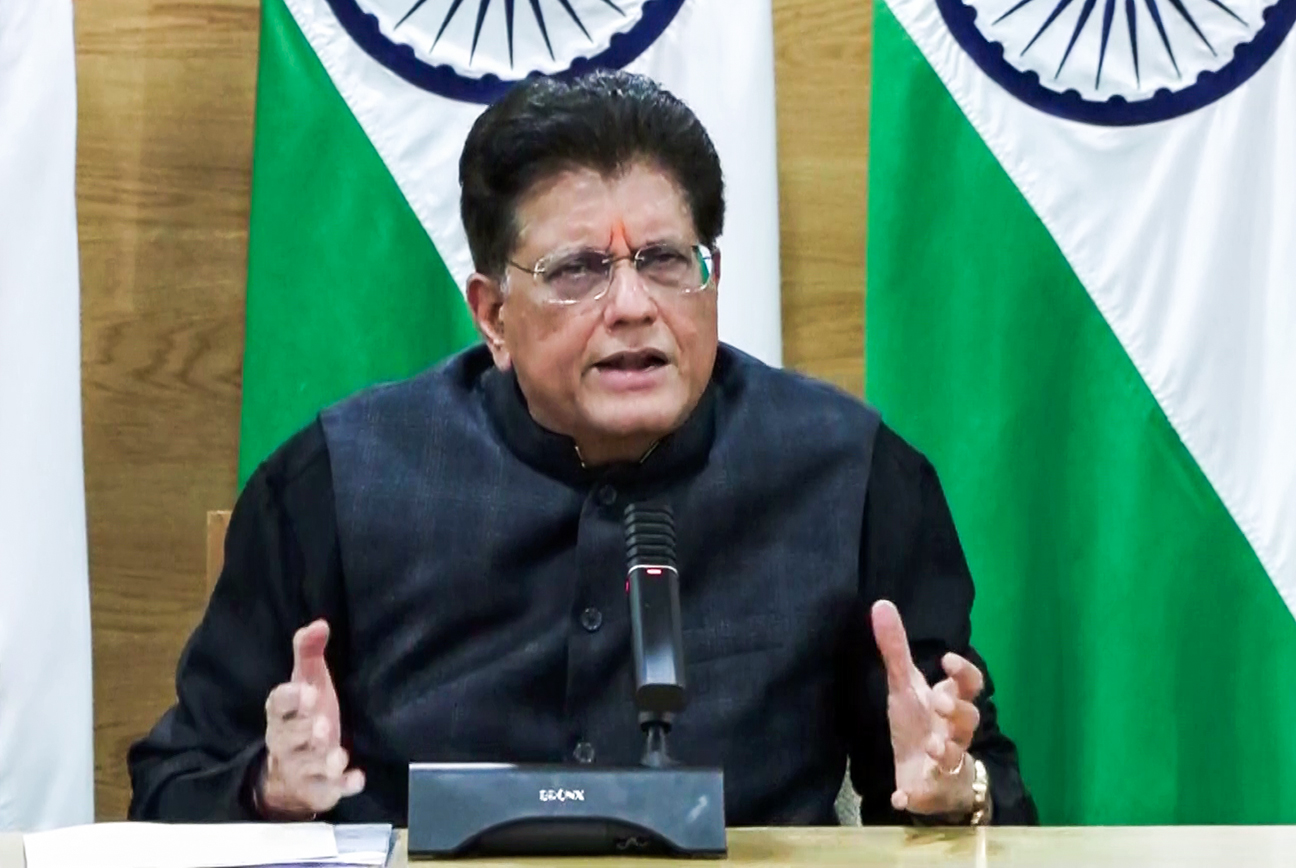
Commerce and Industry Minister Piyush Goyal on Wednesday virtually inaugurated Vanijya Bhawan and Udyog Bhawan in Jaipur, making it the first city to bring together all departments and affiliated offices of the Ministry of Commerce and Industry at a single location.
Goyal called for the model to be expanded across the country, particularly to every state capital, to create one-stop centres for promoting exports, investment and internal trade and assisting businesses.
He also directed that services, including applications for licences and permits and SCOMET approvals, move entirely online. He set March 31, 2027, as the deadline for completing digitisation, including past data and records at the Directorate General of Foreign Trade’s regional authorities.
From April 1, 2027, people should not be required or expected to visit offices physically for these services, he said.
Where verification of original documents remained necessary, offices could provide dedicated counters and computers to facilitate verification and uploading, Goyal said. He encouraged greater use of self-certification and trust-based processes.
The Minister said co-location should go beyond bringing offices together and focus on simplifying procedures, improving service delivery and making compliance easier. He urged the Department of Commerce, the Department for Promotion of Industry and Internal Trade and associated organisations to work across organisational boundaries.
The Ministry has around 500 offices and 46 organisations, Goyal said. Most offices would be brought under the co-location arrangement, while very large campuses, such as ECGC’s office in Mumbai, would continue to function independently.
The unified centres would facilitate services across all 46 organisations, including those without personnel physically stationed at a particular location. Goyal directed that video conferencing facilities be provided to connect users with officials elsewhere, with additional counters based on local requirements.
He said the centres should increasingly function as facilitation and promotion offices, helping businesses access guidance, attract investment, expand capital expenditure and promote exports, rather than limiting their role to issuing licences.
Co-location, digitisation and faceless assessments would strengthen transparency, accountability and public confidence, he said.
Citing uncertainty in international trade and geopolitical affairs, Goyal stressed the importance of timely services and competitiveness. He asked officials to ensure that offices remained supportive, accessible and helpful to stakeholders.
The Minister directed that CCTV cameras in offices be connected to a central server at Vanijya Bhawan in New Delhi for periodic checks of functioning and security.
He also instructed offices to secure necessary statutory approvals, including fire safety and applicable Shops and Establishments Act approvals, and provide high-quality toilets for men and women, accessible facilities for persons with disabilities and multi-gender facilities where appropriate in smaller offices.
Furniture and equipment should be modular wherever possible, he said, adding that procurement should prioritise domestic products except where unavoidable.
Goyal urged senior officials to identify opportunities to shorten service timelines, introduce deemed approvals where feasible, reduce paperwork and hold regular regional consultations with stakeholders through virtual or hybrid meetings.
He said the initiative would improve coordination and operational efficiency as the ministry prepared for expanding responsibilities arising from new trade agreements and market opportunities.
Reiterating that serving citizens and businesses was the Ministry’s foremost responsibility, Goyal called for a modern, responsive system that would support India’s ambition of becoming a $30 trillion economy by 2047.
(PIB)


