






Naturopathy in India is gradually evolving beyond its traditional association with nature cure, with increasing emphasis on scientific research, clinical evaluation and preventive healthcare, as the country seeks to strengthen its nature-based healthcare ecosystem.
The growing focus on lifestyle-related disorders, obesity, stress and healthy ageing has renewed attention to naturopathy’s emphasis on nutrition, natural therapies and lifestyle modification.
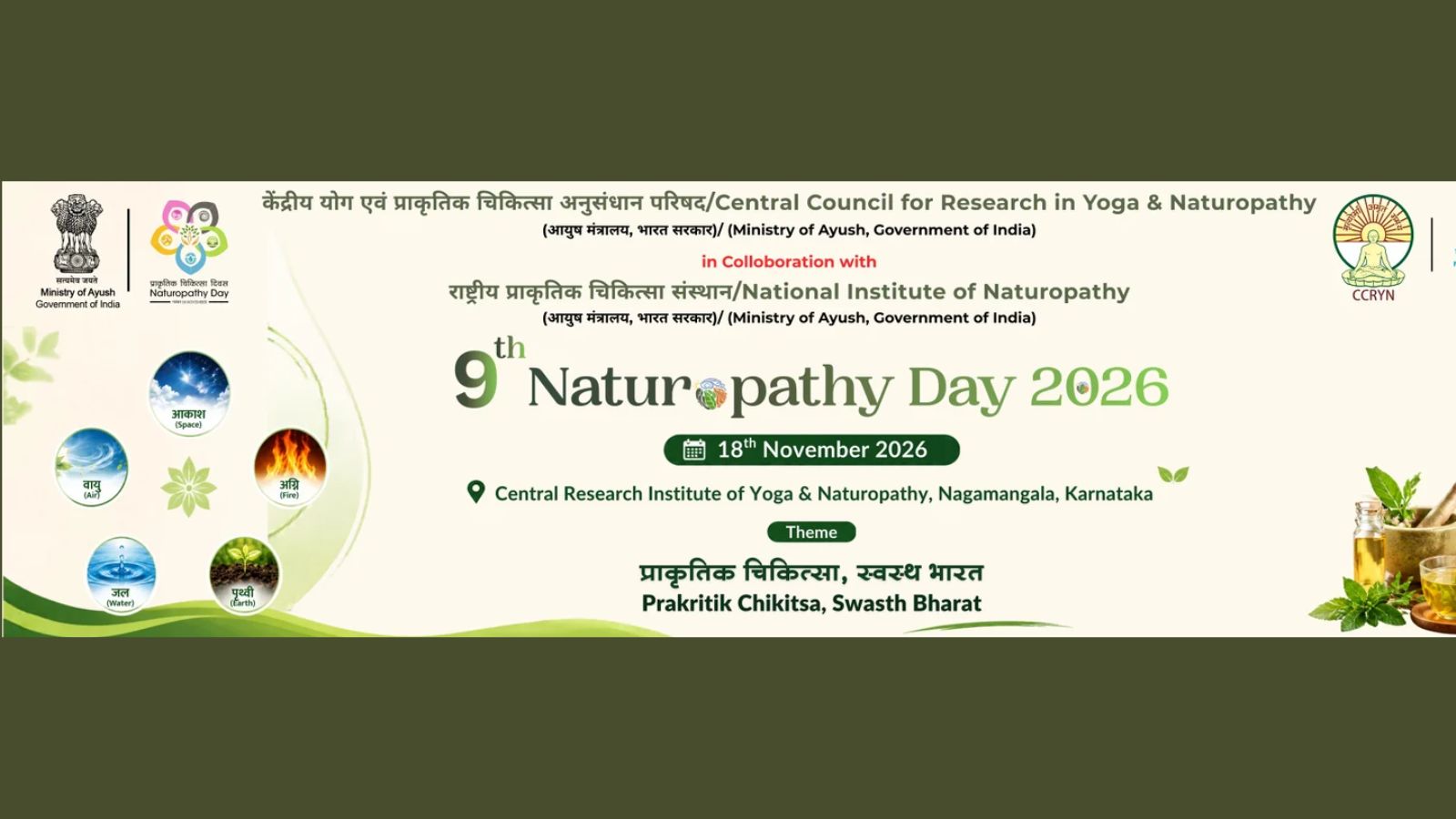
The ninth National Naturopathy Day will be observed on November 18, 2026, at the Central Research Institute of Yoga and Naturopathy (CRIYN) in Nagamangala, Karnataka, under the theme ‘Prakrutik Chikitsa, Swasth Bharat’.
The annual observance aims to promote awareness about naturopathy and its role in health promotion, disease prevention and healthy living. This year’s theme highlights preventive and promotive healthcare through appropriate dietary practices, physical activity, yoga, stress management and evidence-informed naturopathic approaches.
It also seeks to raise awareness about obesity prevention and lifestyle-related disorders, encouraging individuals and communities to adopt healthier and more sustainable lifestyles. The initiative aligns with Prime Minister Narendra Modi’s vision of a Fit and Healthy India, with emphasis on preventive healthcare and collective responsibility towards public well-being.
Union Minister of State (Independent Charge) for Ayush and Minister of State for Health and Family Welfare Prataprao Jadhav said naturopathy highlights the close relationship between lifestyle, nature and overall health.
“Our emphasis is on strengthening its scientific foundation through credible research, quality education and responsible integration with conventional healthcare. This approach can contribute to preventive healthcare while advancing the vision of a Fit and Healthy India,” he said.
Vaidya Rajesh Kotecha, Secretary, Ministry of Ayush, underscored the importance of scientific validation in enhancing the credibility and wider application of naturopathy.
“Through CCRYN and other institutions, we are encouraging systematic research, clinical evaluation and collaboration so that naturopathic practices can be assessed through appropriate scientific methods and translated into responsible healthcare approaches,” he said.
The Central Council for Research in Yoga and Naturopathy (CCRYN) published several research papers in peer-reviewed journals during the financial year 2025-26. Collectively, five research councils under the Ministry of Ayush published 653 papers during the period.
CCRYN currently operates 22 units across the country, reflecting its expanding institutional presence in research, education and public outreach.
India’s institutional infrastructure in the field has also expanded with postgraduate institutes dedicated to yoga and naturopathy education and research, alongside 200-bed Yoga and Naturopathy hospitals at Jhajjar in Haryana and Nagamangala in Karnataka.
The Bachelor of Naturopathy and Yogic Sciences (BNYS) college at Nisarg Gram, established under the National Institute of Naturopathy (NIN), Pune, is the first such college set up under the Central Government. It aims to strengthen academic and clinical training through research-based learning and practical exposure, preparing graduates for careers in healthcare, research, academics and private practice.
NIN Pune has also strengthened its research framework through a dedicated Research Department and an Institutional Ethics Committee registered with the Department of Health Research. Its initiatives include workshops on research methodology, Good Clinical Practice training, observational studies, systematic reviews and collaborative research.
The growing research focus is particularly relevant as naturopathy promotes healthy dietary habits, physical activity, adequate rest and stress management. These lifestyle measures can support preventive healthcare across age groups and improve awareness of risk factors associated with lifestyle-related disorders.
The National Naturopathy Day observance will focus on strengthening scientific research, expanding institutional capacity and encouraging healthier lifestyles. The broader objective is to develop a credible and accessible naturopathy ecosystem that complements India’s preventive healthcare initiatives under the theme ‘Prakrutik Chikitsa, Swasth Bharat’.
(PIB)


