






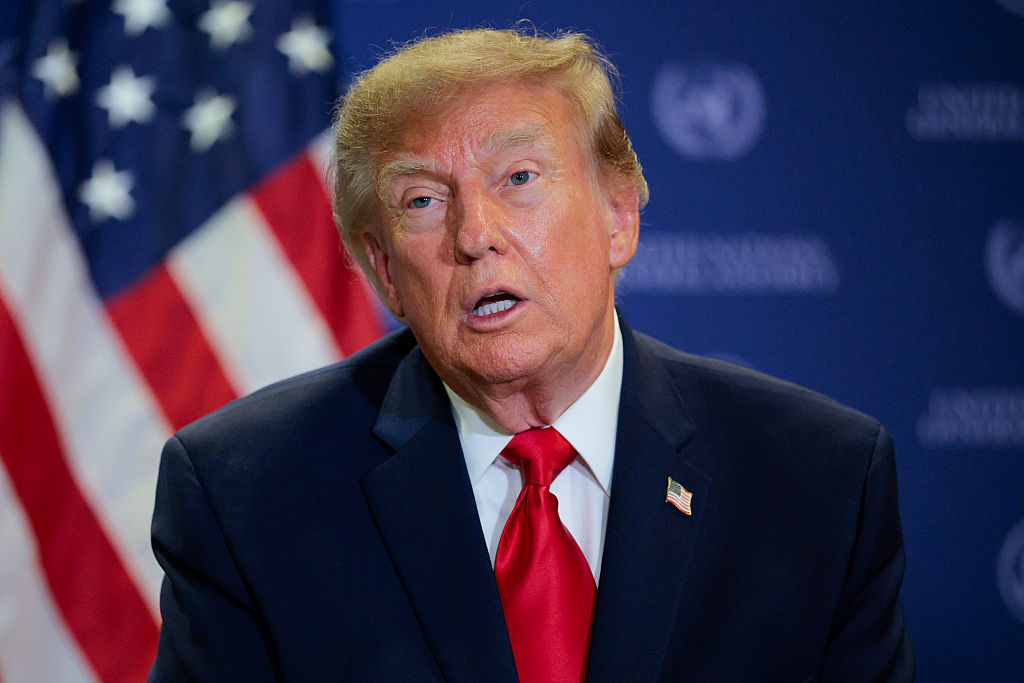
The U.S. wants South Africa and Rwanda out of its premier African trade programme. On 2nd November, President Trump started the clock to terminate their benefits under the African Growth and Opportunity Act. U.S. Trade Representative Jamieson Greer has officially notified the U.S. legislature.
The reasons? Washington cites trade barriers, corruption, and threats to U.S. interests. For Rwanda, the White House adds human rights and political freedom to the list of failures.
The African Growth and Opportunity Act was created back in 2000 under Bill Clinton. It lets eligible African nations export thousands of goods to the U.S. without paying heavy import duties. However, it has to be renewed by the legislature. And eligibility is checked every year.
South Africa has been the biggest winner under the pact but its trade has already been sliding. Exports under the programme dropped from four billion dollars in 2024 to just 1.7 billion last year. Now, key industries like cars, citrus, and wine face a steep uphill battle. Losing tax-free access means their prices go up, making them less competitive against European and South American rivals.
Trade unions warn that up to 10,000 jobs are suddenly on the line. Farmers who grew orchards specifically for the U.S. market are now staring at disaster. South Africa’s Agricultural Business Chamber says that the news is a heavy blow — but one they saw coming.
Wandile Sihlobo, chief economist, Agricultural Business Chamber of South Africa says: “It is disappointing to learn that South Africa has been excluded from A.G.O.A.. But I think we all know that this is not, outside of their expectations. For some time many South Africans have been thinking that this day would come. Being excluded or graduating out of A.G.O.A. does not necessarily mean that South Africa loses market access to the US. All this means is that without A.G.O.A. now, there will be an additional tariffs at most favoured nations rate, because A.G.O.A. basically meant that we would not be paying the tariffs that I had most favoured nations rate”.
Wine producers are equally worried about losing their edge.
“The entire A.G.O.A. issue in terms of our exports is a serious matter. We export to the United States. We do take advantage or we have benefits under A.G.O.A.. Those benefits mean that we have the same status as many other nations exporting to the U.S.. Without A.G.O.A., we lose that competitive advantage. It’s a serious difficulty. It’s a major problem. It changes our pricing. To mitigate these risks is no, we have a problem, we will be less competitive than other nations competing with us. Chile, Argentina, Europe would have would be more competitive. So we have an immediate disadvantage. Could we move that volume into another market? It’s not likely. Markets are under pressure everywhere in the wine industry. There’s a wine industry you might have read has a serious problem, commercially, financially, right now,” says Ken Forrester, a wine producer.
For his part, South Africa’s Trade Minister Parks Tau calls the decision unfortunate. He claims that Washington is moving the goalposts by bringing up brand new issues. He says that Pretoria will fight to protect jobs and diversify its markets.
Tensions between the two capitals have been simmering for a while. During a White House meeting in May 2025, Trump accused Pretoria of persecuting its white minority. South Africa fiercely rejected these claims. And just last week, Washington locked South Africa out of a major G-20 meeting in Atlanta.
It’s not just South Africa. Rwanda is also on the chopping block. Kigali exports coffee, tea and minerals to the U.S. However, Washington is furious over Rwanda’s alleged support for M-23 rebels in the Democratic Republic of the Congo. Just days ago, the U.S. slapped sanctions on Rwanda’s Defence Ministry. Kigali denies the rebel links but the diplomatic damage is done.
Both nations now have a brief window before the axe falls in January 2027. Until then, the economic and diplomatic clock is ticking loud and clear.
Ramesh Ramachandran is a senior consulting editor with D.D. India


