






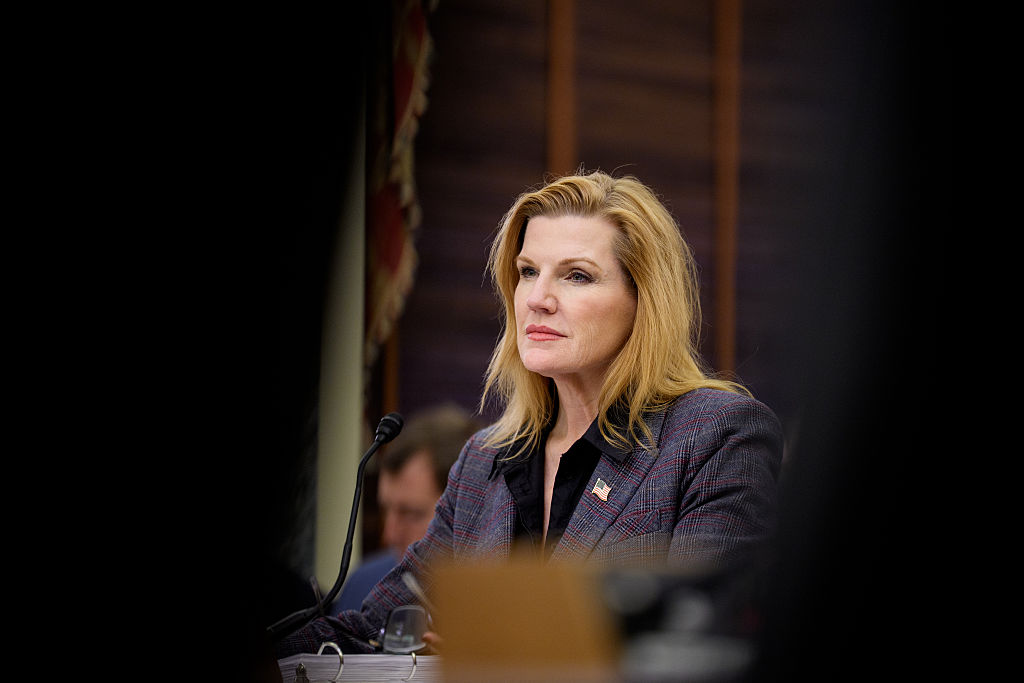
The White House on Thursday appointed Kirsten A. Davies as acting head of the Office of the National Cyber Director (ONCD), succeeding Sean Cairncross, as US President Donald Trump reshuffles his artificial intelligence and cybersecurity leadership amid a series of technology disruptions across the country.
Davies will assume the position in an acting capacity, as the permanent appointment requires confirmation by the US Senate. Cairncross, who had overseen federal cybersecurity policy and strategy since August 2025, is stepping down from the role.
In a statement issued on Thursday night, Cairncross described his tenure under the Trump administration as the “honour of a lifetime”.
Following her appointment, Davies expressed gratitude to Trump and senior administration officials in a post on X, outlining her priorities for strengthening the country’s digital infrastructure.
“Thank you @POTUS and @StephenM for your faith and steady confidence in me. And thank you @SecWar for your vigilant and visionary leadership. Our nation stands at the crossroads of analogue, digital, and quantum technologies, with our American way of life increasingly interconnected,” she wrote.
Davies said the country needed to modernise its digital infrastructure, strengthen cyber resilience and develop a skilled cybersecurity workforce to secure its technological future.
US Secretary of State Marco Rubio also congratulated Davies on her appointment, saying he looked forward to working with her to strengthen America’s cybersecurity.
The leadership change comes amid a series of technology and service disruptions affecting several sectors in the United States, drawing increased scrutiny of the Trump administration’s preparedness to safeguard critical digital infrastructure.
JPMorgan Chase Reports Cyberattack on Third-Party Vendors
Adding to concerns over cybersecurity, JPMorgan Chase disclosed on Thursday (local time) that third-party service providers working with the financial institution had been targeted in a cyberattack. Reports indicated that personal information belonging to around 16,000 of its wealthiest customers may have been exposed.
According to Fox News, a ransomware group identified as n0n claimed responsibility for leaking customer records. The incident reportedly also affected business partners associated with Visa and Mastercard, with exposed information including email addresses, phone numbers and account IDs.
The leaked JPMorgan Chase data reportedly appeared to be linked to the bank’s Reserve programme, an invitation-only Visa credit card generally associated with customers holding more than USD 10 million in assets under management.
In a statement posted on X, JPMorgan Chase said its investigation suggested that attackers had accessed marketing data held by external vendors.
“We have learned that third parties who provide services to the firm were the target of a cyberattack. Based on our investigation so far, we believe the attackers accessed certain marketing data held by those vendors, which may include some customer names and email addresses,” the bank said.
The financial institution clarified that its core services remained unaffected and that the incident was unrelated to a separate service disruption experienced by some customers earlier in the week.
It also said affected customers would be contacted directly and offered assistance, including complimentary credit monitoring where appropriate.
Visa said the breach originated with a vendor in the Asia-Pacific region. JPMorgan Chase, Visa and Mastercard maintained that their core payment networks and card numbers had not been compromised.
The incident highlights growing concerns over cybercriminals exploiting vulnerabilities in third-party service providers. It follows recent reports of malware being inserted into around 180 major websites.
Technology Disruptions Raise Broader Concerns
The latest cyber incident comes amid a turbulent period for the US financial and technology sectors. A software bug in recent days caused transaction-processing difficulties at JPMorgan Chase and several other banks.
According to an industry executive, the Office of the Comptroller of the Currency (OCC) has sought information to assess the impact of the disruption and review how affected banks communicated with customers.
The financial sector’s challenges follow several high-profile technology disruptions in recent weeks, including a nationwide Federal Aviation Administration (FAA) ground stop that disrupted air travel last week, a global email outage at Microsoft and a major cyberattack on cryptocurrency exchange Binance last month.
Although official statements have largely ruled out cyberattacks as the cause of most of these non-financial disruptions, the incidents have intensified scrutiny of the reliability and security of critical digital infrastructure.
Who Is Kirsten Davies?
Davies brings extensive experience in cybersecurity and information technology across government and the private sector.
Before her appointment as acting National Cyber Director, she served as Chief Information Officer (CIO) at the US Department of War (DoW), taking the oath of office on December 23, 2025. In that capacity, she served as the principal adviser to the Secretary of War on information management, information technology, cybersecurity and information assurance.
According to her official Department of War biography, Davies was responsible for ensuring the resilience and operational effectiveness of digital infrastructure supporting military operations, readiness and strategic deterrence.
Her responsibilities also included overseeing command, control, communications and computer (C4) systems, positioning, navigation and timing capabilities, as well as electromagnetic spectrum management.
Before joining government service, Davies served as Chief Information Security Officer (CISO) at Unilever. She also held senior technology and cybersecurity positions at The Estée Lauder Companies, Barclays-Africa Group, Hewlett Packard Enterprise and Siemens.
She is the founder of the Institute for Cyber, a non-profit organisation focused on protecting citizens in the digital sphere.
Davies holds a bachelor’s degree in International Politics and Government from the University of Puget Sound. She has also pursued advanced studies in international law, business and human rights at Johns Hopkins University and the International Institute of Human Rights in Strasbourg, France. Additionally, she holds a professional certification in change management from the Prosci Institute.
(ANI inputs)


