







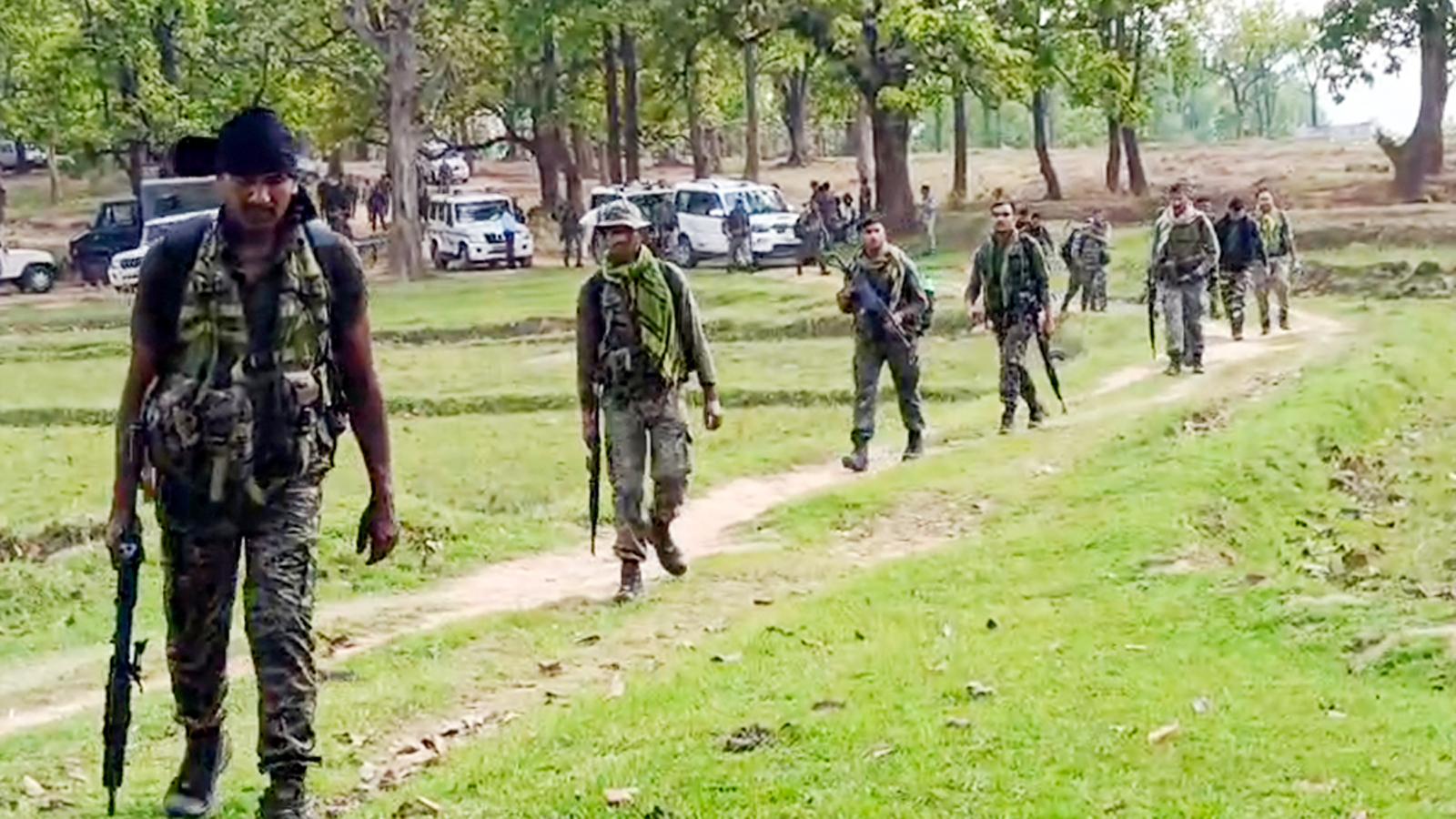
The Union Government has made significant strides in its fight against Naxalism, reducing violent incidents by 53% over the past decade through a comprehensive strategy blending security, development, and rehabilitation. With a goal to make all affected districts Naxal-free by March 2026, the government has shifted from reactive measures to a proactive approach rooted in dialogue, security, and coordination.
Between 2014 and 2024, Naxal-related violence plummeted, with incidents dropping from 16,463 to 7,744, security personnel deaths falling 73% from 1,851 to 509, and civilian fatalities declining 70% from 4,766 to 1,495. In 2025 alone, security forces neutralised 270 Naxals, arrested 680, and facilitated 1,225 surrenders, with operations like Operation Black Forest and mass surrenders in Bijapur, Chhattisgarh, and Maharashtra reflecting growing trust in reintegration efforts.
The government’s security infrastructure has been a cornerstone of this success. Over the past decade, 576 fortified police stations and 336 new security camps were established, reducing Naxal-affected districts from 126 in 2014 to just 18 in 2024, with only six now classified as most-affected. The construction of 68 night-landing helipads has enhanced operational mobility, while advanced technologies like drone surveillance, satellite imaging, AI-based analytics, and mobile data analysis have bolstered intelligence and monitoring capabilities.
Financial networks fueling Naxalism have been disrupted, with the National Investigation Agency seizing assets worth over ₹40 crore and the Enforcement Directorate confiscating ₹12 crore. States have also seized properties worth ₹40 crore, weakening urban Naxal networks and their capacity for information warfare.
To empower state forces, the government allocated ₹3,331 crore under the Security Related Expenditure scheme over the past 11 years, a 155% increase from the previous decade. The Special Infrastructure Scheme approved ₹991 crore for strengthening state forces and infrastructure, while ₹3,769 crore under Special Central Assistance supported developmental projects in affected districts. Additionally, ₹122.28 crore was provided for camp infrastructure and ₹12.56 crore for health facilities.
Infrastructure development has driven social and economic inclusion. Over 12,000 km of roads were completed with ₹20,815 crore approved for 17,589 km of construction. Mobile connectivity expanded with 2,343 2G towers built under Phase I and 1,139 of 2,542 sanctioned 4G towers operational under Phase II. Financial inclusion efforts include 1,007 bank branches, 937 ATMs, 37,850 banking correspondents, and 5,899 post offices across 90 districts. Under the Kaushal Vikas Yojana, ₹495 crore was sanctioned for 48 Industrial Training Institutes and 61 Skill Development Centres, with 46 ITIs and 49 SDCs now operational.
Security operations, guided by a “Trace, Target, Neutralise” approach, have reclaimed areas like Budha Pahar, Parasnath, and Abujhmaad, once Naxal strongholds. In 2024, 26 major encounters neutralised key cadres, including one Zonal Committee Member, five Sub-Zonal Committee Members, and 31 Divisional Committee Members. The People’s Liberation Guerrilla Army was forced to abandon core areas in Bijapur and Sukma, and the Naxals’ 2024 Tactical Counter-Offensive Campaign failed due to aggressive operations.
The Surrender and Rehabilitation Policy has encouraged 521 surrenders in 2025 and 1,053 in Chhattisgarh over the past two years. Rehabilitated cadres receive financial aid of ₹5 lakh for high-ranking members, ₹2.5 lakh for mid/low-ranking members, and a ₹10,000 monthly stipend for vocational training over 36 months.


