The Department of Science and Technology (DST) has established 15 Inclusive Technology Business Incubators (i-TBIs) across universities and higher educational institutions in different parts of the country to democratise innovation and entrepreneurship beyond metropolitan centres, Union Minister of State (Independent Charge) for Science and Technology Jitendra Singh said on Thursday.
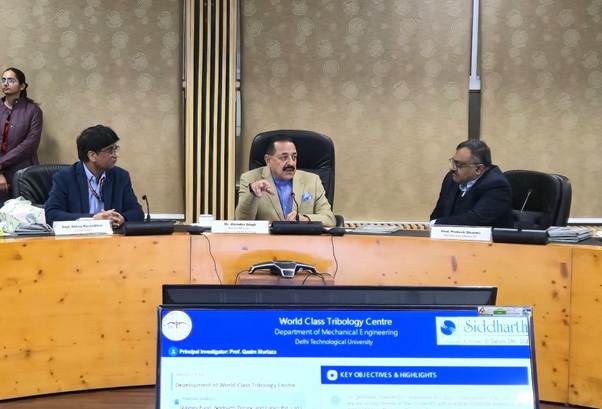
Singh visited Delhi Technological University (DTU) in the national capital, where he reviewed the functioning of the DST-supported Inclusive Technology Business Incubator set up under the National Initiative for Developing and Harnessing Innovations (NIDHI) programme.
During the visit, Singh inspected the i-TBI facility at DTU and interacted with faculty members, student innovators and startup founders. He lauded the university for effectively leveraging DST support to build a vibrant startup ecosystem within the academic campus.
Highlighting that one of the 15 DST-supported i-TBIs is housed at DTU, the minister said the incubator is playing a significant role in translating academic research into market-ready solutions, with a particular focus on inclusivity and women-led innovation.
Singh noted that the DTU i-TBI has so far incubated 15 startups, reflecting the growing entrepreneurial capacity within the university ecosystem. On the occasion, three DTU-based startups were awarded Startup Ignition Grants of ₹5 lakh each under the DST-NIDHI framework to support early-stage product development and commercialisation.
He said such grants are catalytic in nature and aim to encourage innovation and risk-taking among young entrepreneurs.
Referring to the broader policy vision, Singh said science, technology and innovation have received unprecedented priority over the last decade under the leadership of Prime Minister Narendra Modi. He added that India is increasingly emerging as a technology creator, supported by structured mechanisms spanning the entire innovation lifecycle — from research and academic excellence to incubation, startups and industry collaboration.
The minister also emphasised the need for universities to evolve into hubs of innovation and entrepreneurship and encouraged academic institutions to engage more closely with industry, attract private investment and diversify funding sources. He highlighted the role of government schemes such as FIST, PURSE and NIDHI in strengthening research and innovation capabilities.
Singh said the government has put in place enabling frameworks to ensure that innovation opportunities reach smaller towns and aspirational districts, adding that transparency, merit-based selection and inclusive outreach have helped build confidence among young innovators across the country.
The DST-supported i-TBI at DTU operates under the DTU Innovation and Incubation Foundation and focuses on nurturing knowledge-based startups, with special emphasis on women entrepreneurs. The incubator provides end-to-end support, including mentoring, infrastructure, prototyping facilities and access to funding.
Reiterating the government’s commitment to strengthening university-led innovation ecosystems, Singh assured continued support to institutions that demonstrate effective use of public funds to deliver tangible outcomes in research, startups and societal impact.