







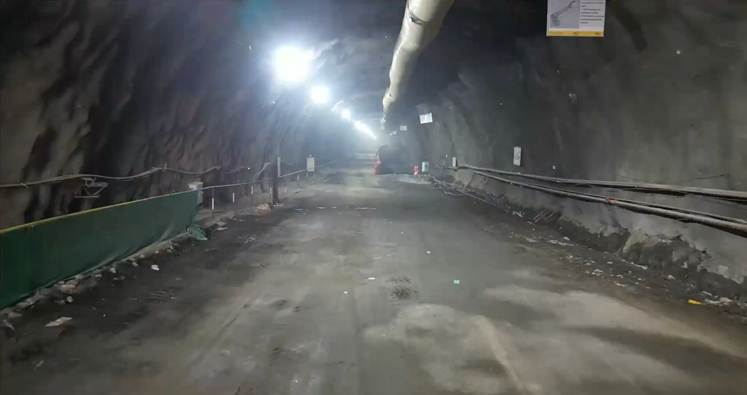
Union Railway Minister Ashwini Vaishnaw on Friday announced the successful breakthrough of the first mountain tunnel of the Mumbai–Ahmedabad High-Speed Rail (MAHSR) project in Maharashtra, marking a key milestone in the ambitious bullet train corridor.
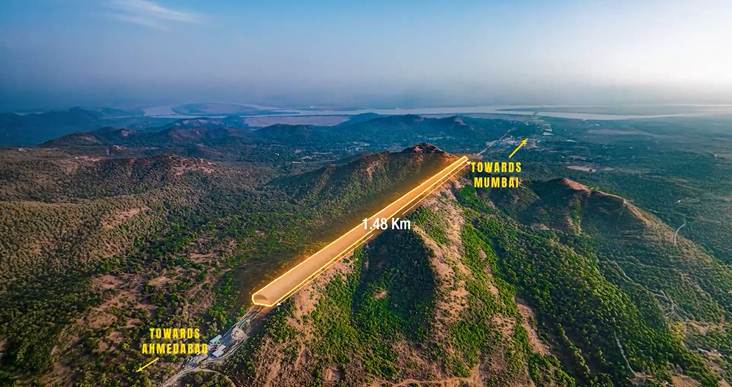
The breakthrough was achieved in the nearly 1.5-kilometre-long Mountain Tunnel–5 (MT-5) in Palghar district, located between the Virar and Boisar bullet train stations. The tunnel, one of the longest mountain tunnels in the district, was excavated from both ends and completed within 18 months using the drill-and-blast method.
According to Ministry of Railways, advanced tunnelling techniques were employed, enabling real-time monitoring of ground behaviour and the deployment of support systems such as shotcrete, rock bolts and lattice girders based on site conditions. All safety measures, including ventilation, fire prevention and controlled access arrangements, were followed during construction.
Earlier, the first underground tunnel of the project—approximately five kilometres long between Thane and Bandra Kurla Complex—was completed in September 2025.
The 508-kilometre-long MAHSR corridor includes a total tunnel length of 27.4 kilometres, comprising 21 kilometres of underground tunnels and 6.4 kilometres of surface tunnels. The project features eight mountain tunnels, with seven located in Maharashtra spanning about six kilometres, and one in Gujarat.
Vaishnaw said the bullet train project would significantly boost employment during both construction and operation phases. He added that once operational, the high-speed rail service would reduce travel time between Mumbai and Ahmedabad to just one hour and 58 minutes, strengthening economic integration between major commercial centres.
The minister said the project is expected to stimulate economic activity along the corridor, facilitate technology and knowledge transfer, and support the development of new industrial and IT hubs. He also noted that the bullet train would provide comfortable and affordable travel options, particularly benefiting the middle class.
Highlighting environmental benefits, Vaishnaw said the project is expected to reduce carbon dioxide emissions by nearly 95 per cent compared to road transport.
The MAHSR corridor spans 352 kilometres across Gujarat and Dadra and Nagar Haveli, and 156 kilometres in Maharashtra, connecting key cities including Sabarmati, Ahmedabad, Vadodara, Surat, Vapi, Boisar, Virar, Thane and Mumbai.


