







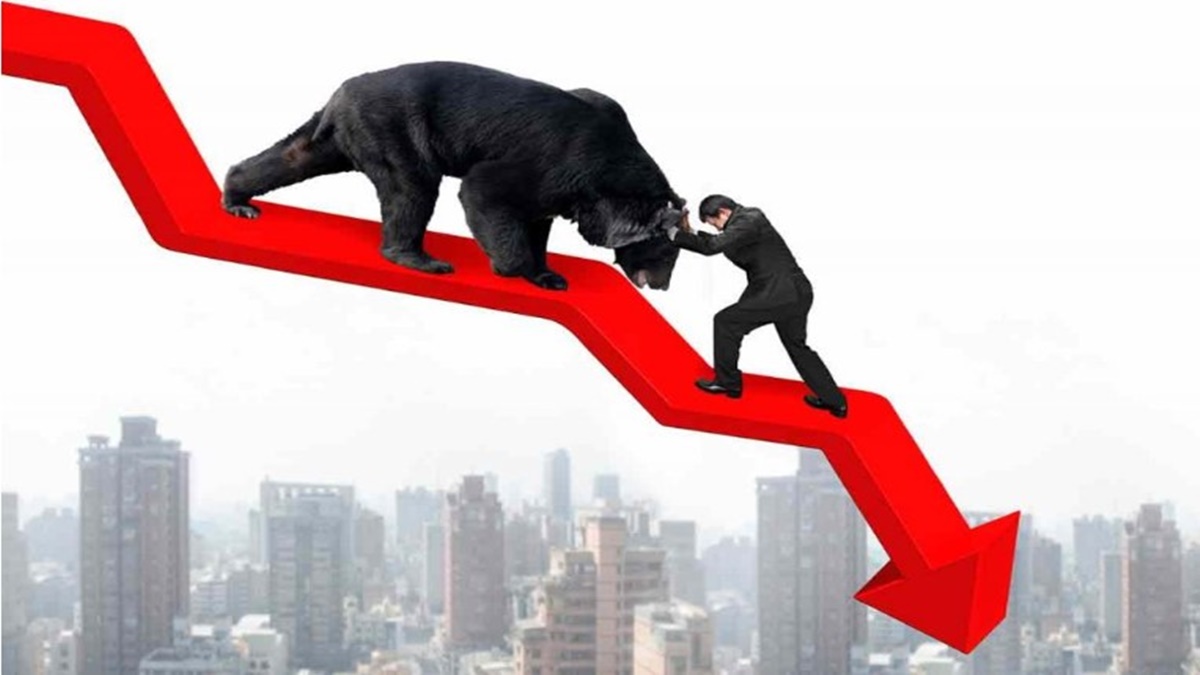
Domestic equity markets came under heavy selling pressure on Sunday as stocks plunged sharply during Finance Minister Nirmala Sitharaman’s Union Budget 2026 speech, with investors reacting negatively to a steep hike in Securities Transaction Tax (STT) on futures and options (F&O) trades.
Benchmark indices opened deep in the red, reflecting heightened nervousness on Dalal Street. The Nifty 50 slipped 367.60 points, or 1.45 per cent, to 24,953.05, while the BSE Sensex dropped 1,047.81 points, or 1.27 per cent, to 81,221.97.
The sharp decline followed the Finance Minister’s announcement of higher STT rates on derivatives trading. The move triggered intense selling, particularly in stocks linked to trading, broking and market participation, as investors reassessed the rising cost of trading in the derivatives segment.
Securities Transaction Tax is a levy imposed on every buy and sell transaction in the stock market, including equities, futures and options. While relatively small, STT directly increases transaction costs, especially for frequent traders, hedgers and arbitrageurs.
Under Union Budget 2026, the government proposed a significant hike in STT on F&O trades. STT on futures contracts has been increased from 0.02 per cent to 0.05 per cent. For options, STT on the premium has been raised from 0.1 per cent to 0.15 per cent, while STT on the exercise of options has also been increased to 0.15 per cent.
Market participants said the announcement came at a time when equity markets were already witnessing volatility, and the sudden increase in transaction costs intensified investor concerns, leading to a broad-based sell-off.
Shripal Shah, Managing Director and CEO of Kotak Securities, said the sharp hike in STT could have a cooling effect on derivatives trading. “The steep increase in STT on futures and options, coming on top of last year’s hike, is likely to raise impact costs for traders, hedgers and arbitrageurs. This could cool derivative activity and reduce volumes,” he said.
Shah added that the government’s intent appears to be moderation of trading volumes rather than revenue maximisation, noting that any revenue gains from higher STT could be offset by a decline in derivative volumes.
With markets already under pressure, the latest Budget proposal is being viewed as adding further downside risk in the near term.
(ANI)


