







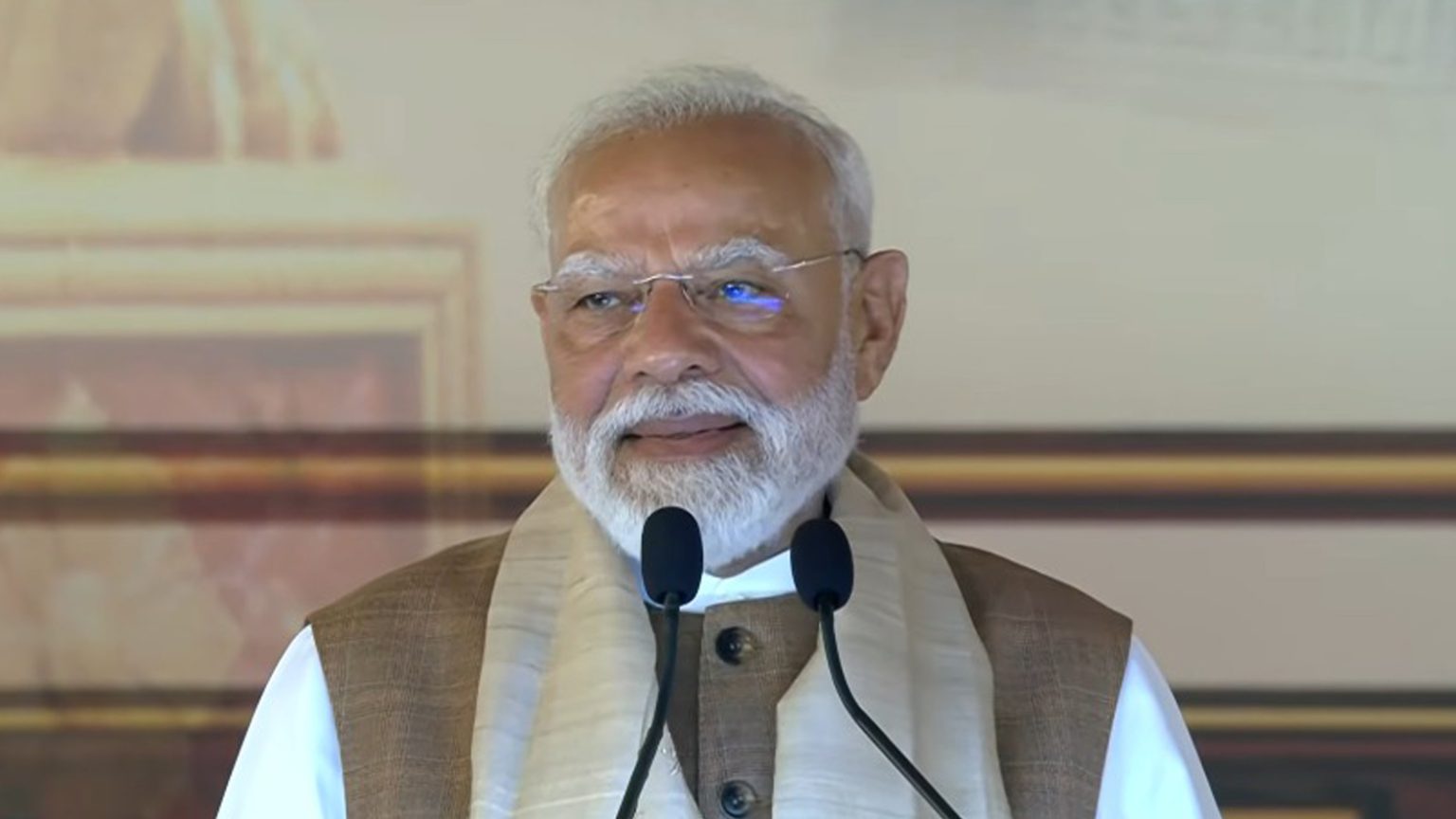
India and Italy on Wednesday elevated their bilateral relationship to the level of a “Special Strategic Partnership”, signalling a significant expansion of cooperation across trade, defence, technology, connectivity and global governance.
The announcement came during Prime Minister Narendra Modi’s official visit to Italy at the invitation of Italian Prime Minister Giorgia Meloni.
In a joint declaration issued after delegation-level talks in Rome, the two countries agreed to institutionalise annual meetings between the Prime Ministers, including on the sidelines of multilateral summits, along with regular ministerial and institutional dialogues.
The two sides also decided to establish a Foreign Ministers-led mechanism to review implementation of the India-Italy Joint Strategic Action Plan 2025–2029, adopted during the G20 Summit in Rio de Janeiro in November 2024.
Focus on trade, investment and supply chains
India and Italy reaffirmed their target of expanding bilateral trade to 20 billion euros by 2029, while emphasising the need for resilient industrial and technology partnerships.
The two countries identified sectors such as clean technologies, semiconductors, automotive manufacturing, pharmaceuticals, medical technologies, textiles, tourism, digital technologies, ports, infrastructure and critical raw materials as key areas for future investment and collaboration.
Both leaders welcomed the signing of a Memorandum of Understanding on cooperation in critical minerals and agreed to promote joint efforts in sustainable supply chains and recovery of critical minerals from unconventional sources such as electronic waste and mine tailings.
The two countries also agreed to encourage greater engagement among stock exchanges, venture capital funds, financial institutions and small and medium enterprises to strengthen industrial integration and supply-chain resilience.
Push for IMEC and maritime cooperation
India and Italy reiterated their commitment to the India-Middle East-Europe Economic Corridor (IMEC), describing it as a transformative initiative for global trade, connectivity and economic prosperity.
The two leaders encouraged concrete progress through the proposed first IMEC Ministerial meeting in 2026.
An MoU on maritime transport and ports was also signed, with both governments agreeing to establish a joint working group for implementation.
Technology, AI and innovation
A major focus of the discussions was cooperation in emerging technologies, particularly artificial intelligence, semiconductors, quantum technologies and supercomputing.
The two Prime Ministers announced the launch of “INNOVIT India”, an innovation hub aimed at strengthening cooperation between Indian and Italian start-up and research ecosystems.
The hub is expected to support joint research, university collaboration, talent mobility and start-up acceleration programmes in sectors including fintech, healthcare, logistics, agritech, energy and AI.
The two countries also reaffirmed support for a “human-centric, secure and trustworthy” approach to artificial intelligence and agreed to collaborate in AI applications, including in third countries.
India welcomed Italy’s participation in the AI Impact Summit held in New Delhi earlier this year.
Defence and security cooperation
India and Italy agreed to deepen defence ties through technological collaboration, co-development and co-production of defence equipment.
The two sides welcomed the adoption of a Joint Declaration of Intent and a Defence Industrial Roadmap covering areas such as helicopters, naval platforms, marine armaments and electronic warfare systems.
The countries also agreed to examine the feasibility of an annual high-level military dialogue and expand joint exercises and maritime cooperation.
A new Dialogue on Maritime Security will also be launched to improve coordination and information sharing in the maritime domain.
On terrorism, the two leaders strongly condemned violent extremism and cross-border terrorism and specifically denounced the April 2025 Pahalgam terror attack.
They reiterated commitment to cooperation under multilateral mechanisms including the United Nations and the Financial Action Task Force (FATF) to counter terror financing and dismantle terror infrastructure.
Mobility, education and cultural ties
India and Italy agreed to facilitate greater mobility for students, researchers and skilled professionals, especially in STEM sectors.
The two countries also welcomed a Joint Declaration of Intent to facilitate mobility of Indian nurses to Italy and continued discussions on a Social Security Agreement.
The leaders announced that 2027 would be celebrated as the “Year of Culture and Tourism between Italy and India”, with plans for cultural forums, exhibitions and cooperation in heritage conservation.
Italy also signed an MoU related to participation in the development of the National Maritime Heritage Complex at Lothal in Gujarat.
Prime Minister Modi also invited Italian universities and institutions to establish campuses in India under the National Education Policy framework.
Global and regional issues
The two leaders exchanged views on developments in the Indo-Pacific, West Asia, Ukraine and India-European Union relations.
Both sides supported reform of the United Nations to make it more representative of present-day realities and reaffirmed commitment to a rules-based international order.
On West Asia, the leaders welcomed the ceasefire announced on April 8, 2026, and stressed the need for dialogue, diplomacy and freedom of navigation through the Strait of Hormuz.
Regarding the conflict in Ukraine, India and Italy supported efforts towards a “comprehensive, just and lasting peace” through dialogue and diplomacy in accordance with international law and the UN Charter.
Prime Minister Modi thanked Prime Minister Meloni and the Italian government for the hospitality extended during the visit and invited her to visit India at a mutually convenient time.


