







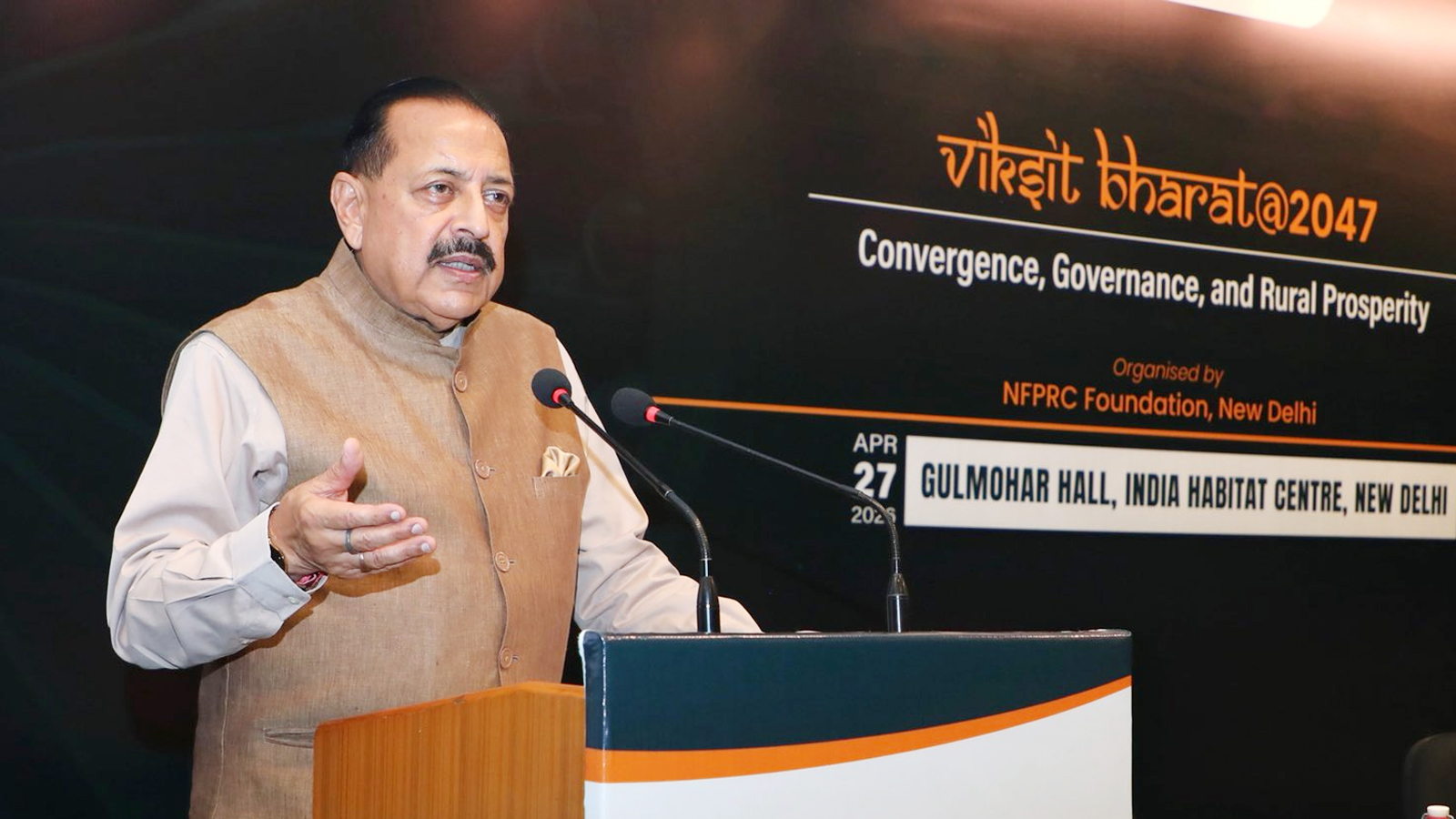
India is set to join an exclusive global club in advanced nuclear technology, with Union Minister Jitendra Singh announcing that the country will become only the second in the world after Russia to operate a commercial-level fast breeder reactor.
Addressing a workshop on Small Modular Reactors (SMRs) for MPs and MLAs, the minister highlighted that India has achieved a major milestone with its indigenously designed 500 MWe Prototype Fast Breeder Reactor (PFBR) at Kalpakkam in Tamil Nadu attaining first criticality on April 6. The development marks a crucial step forward in the country’s long-term nuclear energy ambitions.
The reactor, developed by the Indira Gandhi Centre for Atomic Research and constructed by BHAVINI, represents the beginning of the second stage of India’s three-stage nuclear programme. It uses uranium-plutonium mixed oxide fuel and is designed to generate more fissile material than it consumes, a defining feature of fast breeder reactors.
The Department of Atomic Energy said this breakthrough paves the way for the eventual utilisation of India’s vast thorium reserves in the third stage of the programme, a strategy that has long been central to the country’s nuclear vision. With the PFBR moving toward full commissioning, India is poised to strengthen its position among a small group of nations with advanced fast reactor capabilities.
Globally, while several countries—including the United States, the United Kingdom, France, Japan, Germany and China – have experimented with fast reactor technology, most of these programmes have either been scaled down or shut. At present, Russia remains the only country operating commercial fast breeder reactors, placing India’s progress in a significant international context.
The minister emphasised that nuclear energy will be a key pillar in India’s clean energy transition, particularly as the country targets 100 GW of nuclear power capacity by 2047. He noted that emerging sectors such as artificial intelligence, data infrastructure and advanced manufacturing will require reliable, round-the-clock clean energy—an area where nuclear power offers a strategic advantage.
Highlighting future plans, Singh pointed to the government’s “Nuclear Mission,” under which five Small Modular Reactors are planned by 2033 with an allocation of ₹20,000 crore. These reactors are expected to support captive power generation for industries, provide energy solutions in densely populated or remote regions, and help repurpose existing thermal power infrastructure.
He also underlined the role of policy initiatives such as the proposed SHANTI Act, aimed at enabling private sector participation in expanding India’s nuclear energy capacity. According to the government, such measures will accelerate deployment, improve efficiency and strengthen the overall energy ecosystem.
Reaffirming the broader vision, the minister said a balanced energy mix combining nuclear, renewable and other clean sources will be essential for India to meet its long-term climate commitments, including achieving net-zero emissions by 2070.


