







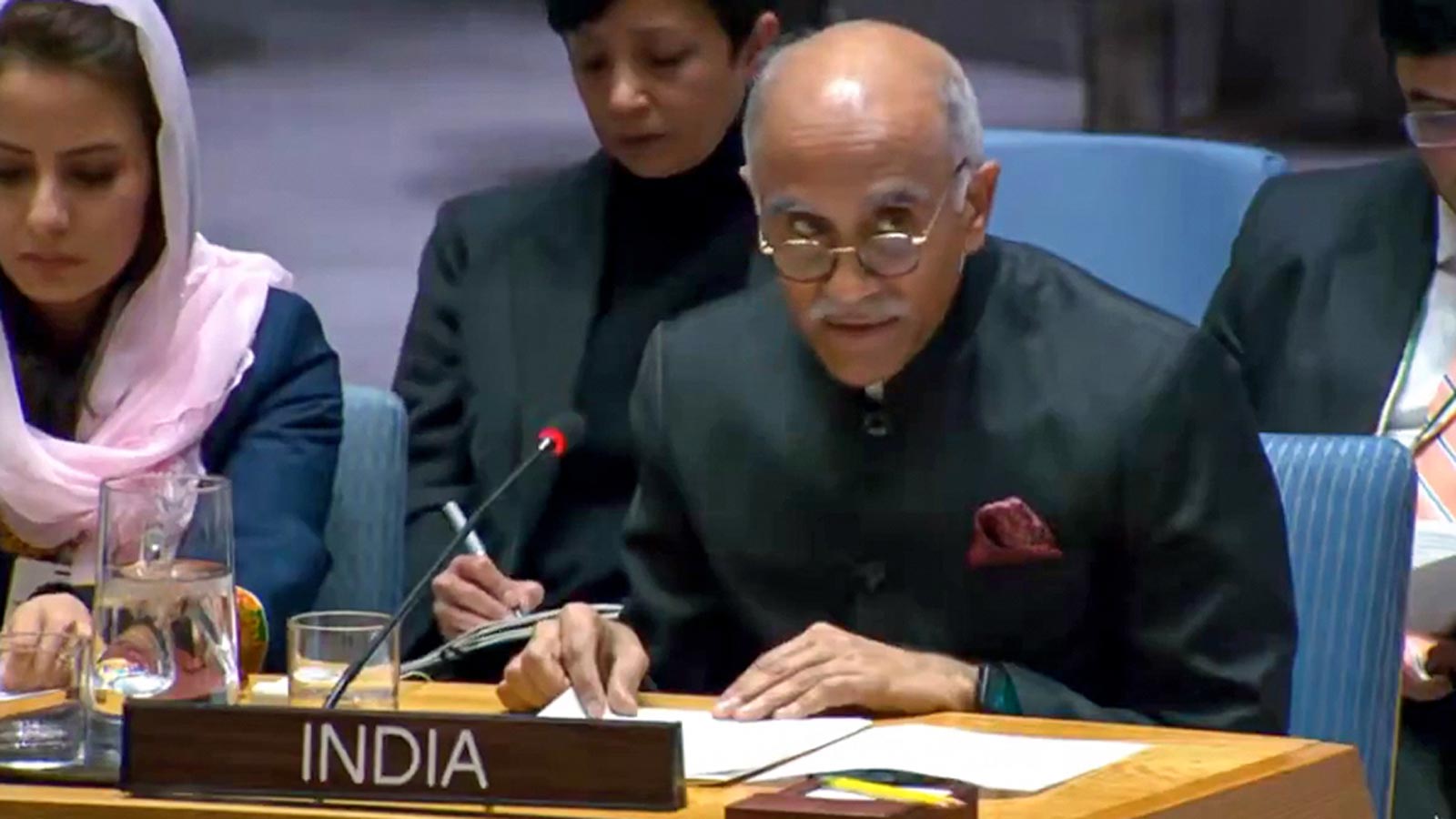
India has firmly opposed the creation of a “two-tier” system of permanent membership in a reformed United Nations Security Council (UNSC), while expressing support for a compromise proposal by the G4 group to defer veto powers for new permanent members for 15 years.
Speaking at the Intergovernmental Negotiations (IGN) on Security Council reforms, India’s Permanent Representative Ambassador P. Harish stressed that expanding the permanent category with veto powers is essential for any meaningful reform of the Council.
“Expanding the permanent category with veto is critical to real reform of the Security Council,” he said, underlining that reforms must address both the composition of the Council and the issue of veto power to correct longstanding imbalances.
India rejected proposals suggesting the creation of a new category of permanent members without veto powers, warning that such a move would complicate negotiations and institutionalise inequality. “A new category under the framework of UNSC reform with or without veto would complicate an already existing discussion that involves wide-ranging views,” Harish noted.
At the same time, India signalled flexibility by aligning with the G4 proposal – comprising India, Brazil, Germany, and Japan – which suggests that newly inducted permanent members should not exercise veto powers until a review is conducted after 15 years.
The proposal, presented by Brazil on behalf of the G4, is aimed at breaking the longstanding deadlock in negotiations. “In order to show openness and flexibility… the G4 proposes that new permanent members would not exercise the veto until a decision on the matter is reached during a 15-year review,” said Brazil’s Deputy Permanent Representative Norberto Moretti.
India emphasised that the current structure of the UNSC, designed over 80 years ago, no longer reflects contemporary geopolitical realities. Harish pointed out that the only major reform in 1965, which expanded non-permanent membership, actually increased the relative power of existing veto-wielding members.
“Any reform that is not accompanied by an expansion in the permanent category with veto would… perpetuate the existing imbalance and inequities,” he said, adding that maintaining the status quo undermines the Council’s legitimacy and representativeness.
India also reiterated its support for the African position, which demands that new permanent members should have veto powers as long as the provision exists. This aligns with broader calls from developing countries to address historical injustices in global governance structures.
Highlighting the complexities around veto reform, India noted that efforts to limit its use—such as the 2022 UN General Assembly resolution mandating discussions after a veto is cast—have not proven effective. Since its adoption, multiple vetoes have continued to be exercised, often driven by national interests.
The Indian envoy further drew attention to what he termed an “effective veto” exercised informally by both permanent and non-permanent members in blocking outcomes such as press statements and sanctions decisions.
Calling for a comprehensive approach, India stressed that piecemeal reforms focusing only on specific aspects like veto powers would not succeed. “Well-laid out timelines, concrete milestones and text-based negotiations are key ingredients” for meaningful reform, Harish said.
India reaffirmed its commitment to working constructively with member states and co-chairs of the IGN process to achieve a more representative, equitable, and effective Security Council.
The G4 nations continue to advocate for expansion in both permanent and non-permanent categories, with mutual support for each other’s inclusion as permanent members in a reformed UNSC.


