







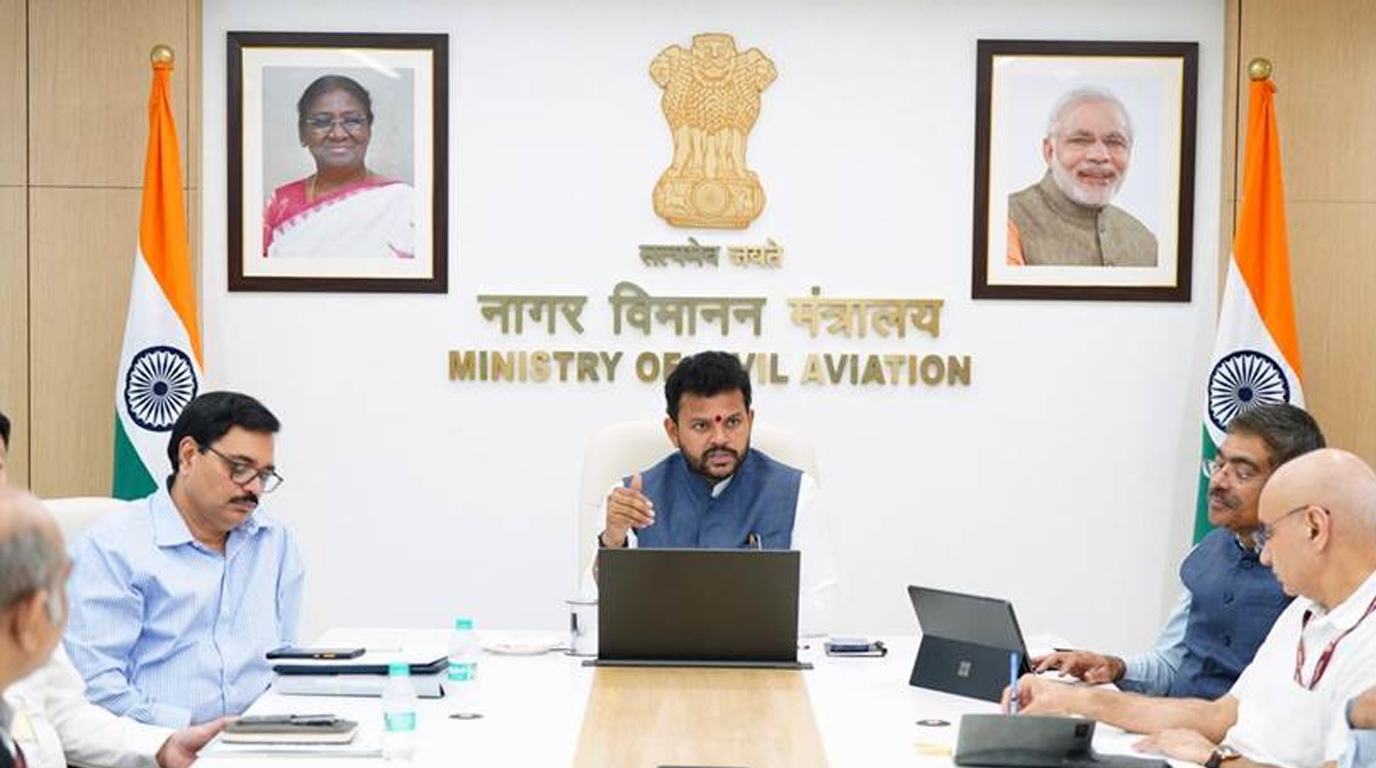
Union Civil Aviation Minister Ram Mohan Naidu has released the second phase of rankings for Directorate General of Civil Aviation (DGCA)-approved Flying Training Organisations (FTOs), marking a key step towards strengthening India’s pilot training ecosystem.
The rankings, compiled by the DGCA under the Ministry of Civil Aviation (MoCA), aim to improve transparency, enhance safety standards, and promote accountability across flying training institutes. The first phase of the ranking framework was published in October 2025.
Calling the initiative a “landmark reform,” the minister said the ranking system was designed to help aspiring pilots and their families make informed choices. “The objective is to make pilot training more transparent and to make flying a more attractive career option for the youth,” he said.
According to the latest rankings released for April 2026, one FTO – Avyanna Aviation Pvt. Ltd – has achieved the top Category ‘A’, a notable improvement from the previous phase when no institute qualified in this category.
The number of FTOs in Category ‘B’ has increased, while those in Category ‘C’ have declined, indicating an overall improvement in training standards, operational efficiency, and safety compliance across the sector.
Institutes such as the Indira Gandhi Rashtriya Uran Akademi (IGRUA) have shown significant progress in the rankings, alongside several private academies demonstrating improved outcomes.
Highlighting the sector’s rapid expansion, Naidu said India’s aviation landscape is poised for major growth over the next five years, driven by enhanced regional connectivity and infrastructure expansion.
He noted that the country is expected to see 50 new airports; induction of around 500 additional aircraft by Indian carriers; development of major airports into transit hubs under the hub-and-spoke model; and investment of ₹29,000 crore under the revamped UDAN scheme.
With these developments, India is projected to require nearly 30,000 additional pilots over the next decade, creating significant career opportunities for youth.
Since the introduction of the ranking system, the training ecosystem has witnessed measurable improvements. Training flying hours have increased from 32% to 50%, aircraft fleets at FTOs have expanded, and training efficiency has improved, reducing the time required for cadets to obtain Commercial Pilot Licences (CPLs).
The minister added that the number of CPLs issued in India has grown by more than 2.5 times over the past eight years, with record numbers recorded in 2024 and 2025. In the last 18 months alone, six new FTOs have been approved, with six more in the pipeline.
Naidu emphasised the government’s broader vision of enhancing global competitiveness and promoting self-reliance in pilot training. “Our goal is to encourage ‘Train in India, Fly in India’ while aligning Indian FTOs with global benchmarks,” he said.
Reforms such as liberalised FTO policies, removal of airport royalties, rationalisation of land rentals, and digitisation of CPL examination processes have been introduced to improve ease of doing business. The new regulatory framework under the Bharatiya Vayuyan Adhiniyam has also enabled a single-window system for pilot licensing.
The Ministry said the second phase of rankings reinforces its commitment to building a transparent, performance-driven, and quality-oriented training ecosystem, ensuring healthy competition among institutions and better outcomes for aspiring pilots.


