







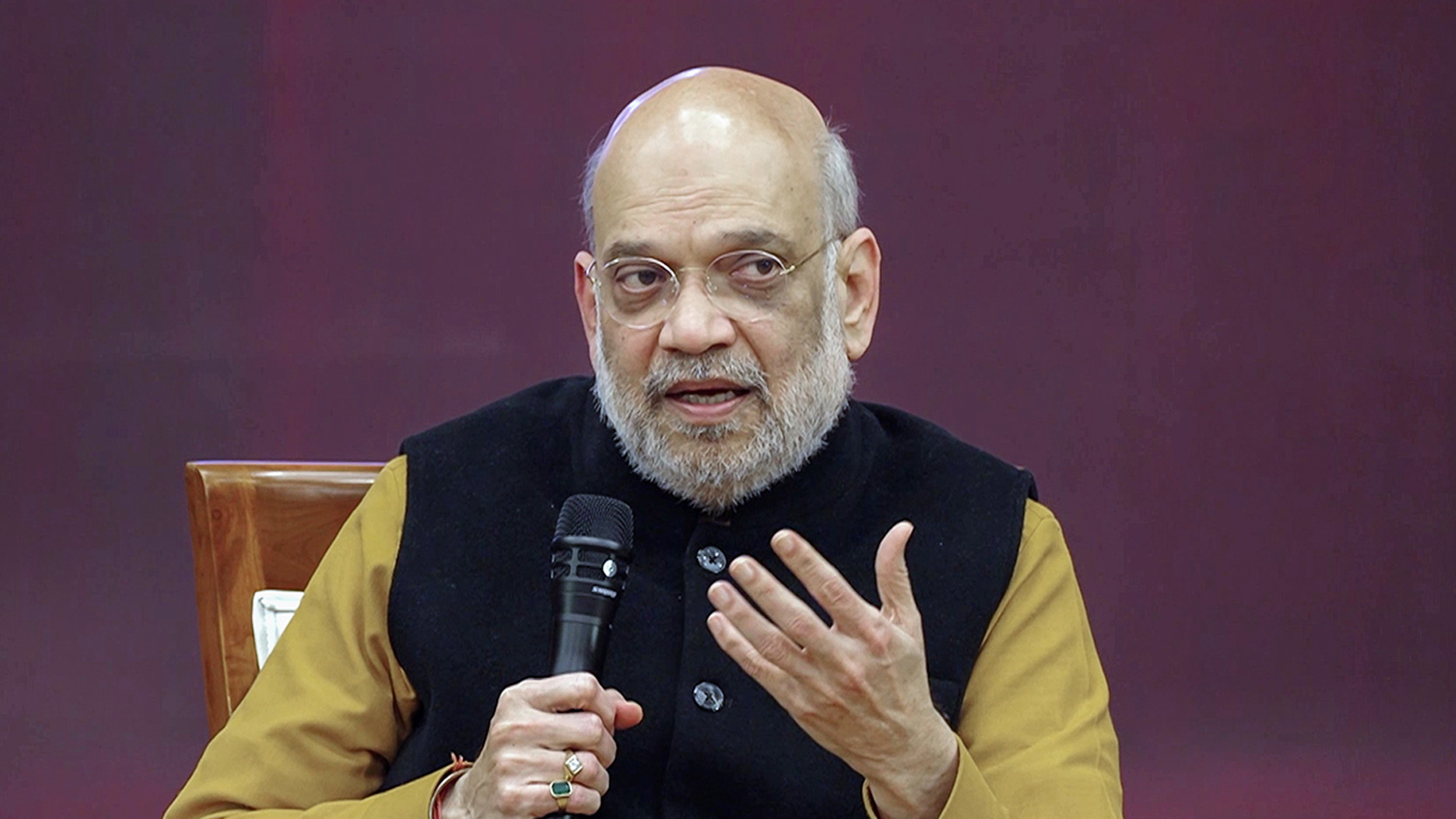
Union Home Minister Amit Shah on Wednesday chaired a high-level security review meeting in Bikaner to assess and strengthen security arrangements in Rajasthan’s border districts along the Indo-Pakistan border.
The meeting was attended by Rajasthan Chief Minister Bhajan Lal Sharma, senior state government officials, and District Magistrates and Superintendents of Police from five border districts – Bikaner, Jaisalmer, Barmer, Sri Ganganagar and Phalodi.
The discussions focused on strengthening border management through closer coordination between Central agencies and the state government.
During the meeting, it was decided to develop a comprehensive 360-degree security framework for every border district. The proposed mechanism will involve local citizens, state administration and security agencies to ensure integrated and robust border security.
HM Shah directed authorities to strictly enforce a zero-tolerance policy against illegal constructions, especially within 15 kilometres of the international border, and instructed officials to demolish all unauthorised structures in the area.
He also emphasised the need for coordinated action involving the Border Security Force (BSF), Central Board of Direct Taxes (CBDT), Narcotics Control Bureau (NCB) and state government agencies to curb infiltration, narcotics smuggling, encroachment, terror financing and other cross-border crimes.
The Home Minister asked District Magistrates to take on enhanced responsibilities, including ensuring legal and financial compliance by banks, verification of major business establishments, scrutiny of funding sources and monitoring of mule accounts and shell companies.
He also called for strict action against forged Aadhaar cards, smuggling networks and illegal financial activities operating in border regions.
HM Shah instructed district administrations to conduct in-depth studies into the sources, patterns and networks behind organised crime and drug trafficking, with a focus on developing long-term solutions to tackle the menace.
The meeting also stressed the effective use of the national cybercrime helpline ‘1930’ for faster response to cyber fraud cases and highlighted the need for proper implementation of the three new criminal laws to strengthen law enforcement and judicial processes.
The implementation of the Vibrant Village Programme-II (VVP-II) was also reviewed during the meeting, which aims to strengthen last-mile governance, bridge infrastructure gaps, curb economic crimes and support populations living in border villages.
The Ministry of Home Affairs (MHA) reiterated its commitment to achieving full saturation of welfare schemes in border areas.
According to MHA, the meeting reaffirmed that under the leadership of Prime Minister Narendra Modi, the Centre remains committed to maintaining the highest standards of border security while ensuring holistic development of border regions through coordinated efforts between Central and state agencies.


