







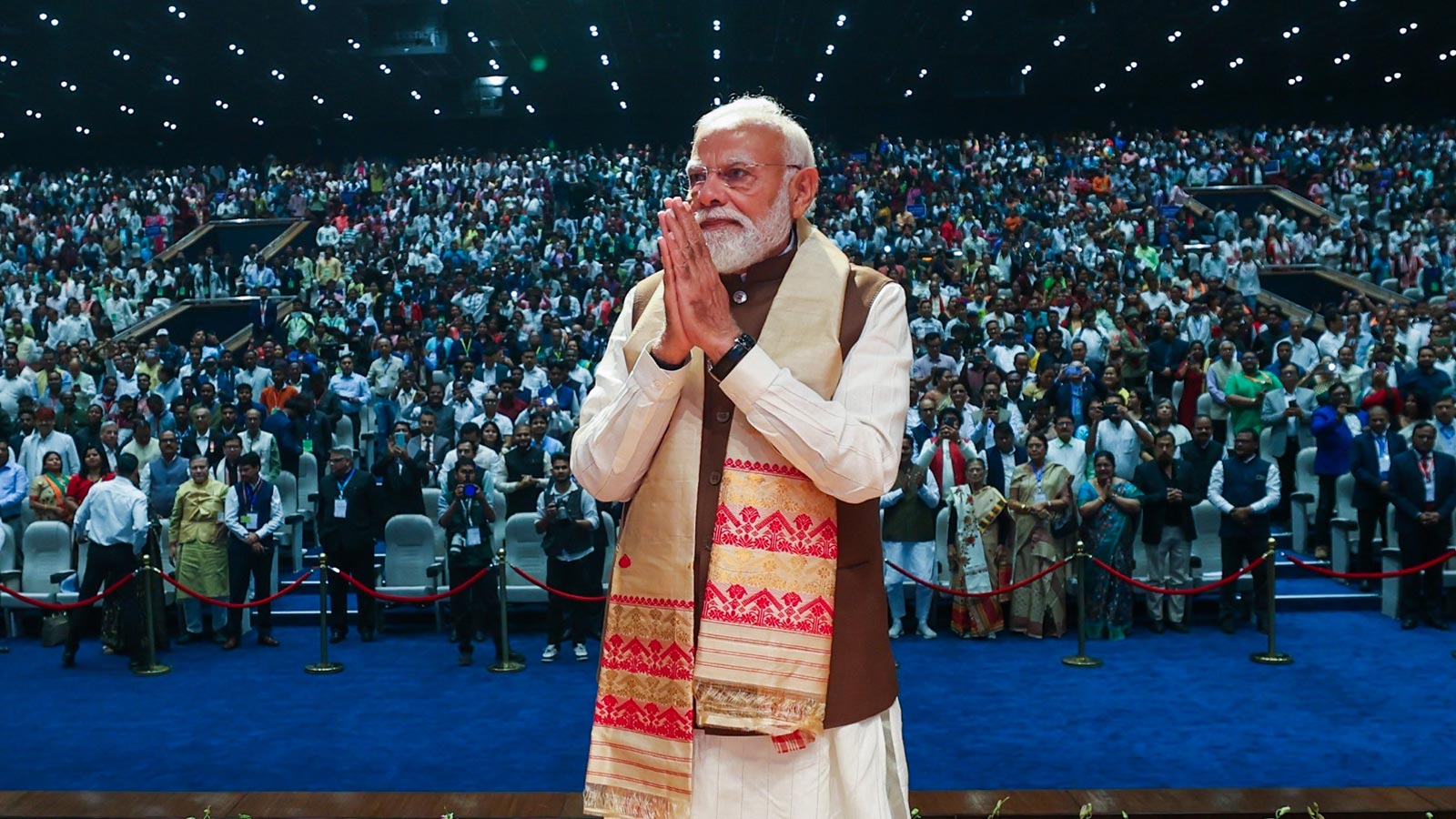
Prime Minister Narendra Modi on Monday paid tributes to Sardar Vallabhbhai Patel at the historic Somnath Temple, describing the temple’s reconstruction as a defining moment in India’s civilisational resurgence and national self-confidence.
Participating in the ongoing Somnath Amrut Mahotsav celebrations marking 75 years since the reconstructed temple was inaugurated in 1951, the Prime Minister said Sardar Patel’s vision and determination played a decisive role in restoring the sacred shrine after Independence.
In a post on X, PM Modi said, “At Somnath, paid heartfelt tributes to Sardar Vallabhbhai Patel, whose vision and resolve played a defining role in the Temple’s reconstruction. He dreamt of seeing Somnath rise again in all its glory, as a symbol of India’s civilisational pride and spiritual continuity. We will always remain committed to fulfilling his vision for our nation.”
Earlier in the day, the Prime Minister participated in the Vishesh Maha Puja, Kumbhabhishek and Dhwajarohan ceremonies at the temple complex. He also released a commemorative stamp and a commemorative coin to mark the 75th anniversary of the temple’s reconstruction and reopening.
The Somnath Amrut Mahotsav commemorates the restoration of the Somnath Temple and its inauguration by India’s first President, Rajendra Prasad, on May 11, 1951. The reconstruction initiative was led by Sardar Patel soon after Independence.
Addressing a large public gathering later in the day, PM Modi said the reconstruction of Somnath represented India’s “independent civilisational consciousness” after Independence.
“The re-establishment of the Somnath Temple 75 years ago on this very day was no ordinary occasion. If India became independent in 1947, then the consecration of Somnath in 1951 proclaimed India’s independent civilisational consciousness,” he said.
The Prime Minister said Sardar Patel’s efforts to rebuild Somnath sent a message to the world that India was reclaiming its ancient glory along with political freedom.
“At the time of Independence, Sardar Patel united more than 500 princely states to shape a modern India, and through the reconstruction of Somnath, he told the world that India had not merely become free, India had also begun its journey to reclaim its ancient glory,” PM Modi said.
He also referred to opposition faced during the reconstruction process, stating that Patel and Rajendra Prasad encountered resistance from sections of the political establishment of the time.
“After Independence, one of the first responsibilities was to restore the Somnath Temple, and therefore Sardar Vallabhbhai Patel and Dr Rajendra Prasad made immense efforts for it. But we all know how much opposition they faced from Nehru Ji,” the Prime Minister said.
Without elaborating further, PM Modi said Patel’s determination ensured that the reconstruction moved ahead despite opposition.
“It was Sardar Patel’s determination that, despite all opposition, he did not waver. The Somnath Temple was rebuilt, and the country washed away centuries of humiliation,” he added.
The Prime Minister also drew parallels with contemporary debates surrounding heritage restoration and temple reconstruction, saying that “appeasement politics” should not come before national self-respect.
“We saw this during the construction of the Ram Temple as well, when opposition was raised even against it. We must remain cautious of such thinking. We have to move forward with both development and heritage together,” he said, reiterating the government’s “Vikas Bhi, Virasat Bhi” approach.
Calling the Somnath Amrut Mahotsav more than a commemoration of history, PM Modi said the celebrations were “a festival of inspiration for India for the next thousand years.”
Located on the Arabian Sea coast at Prabhas Patan in Gujarat’s Gir Somnath district, the Somnath Temple is regarded as the first among the twelve Jyotirlingas dedicated to Lord Shiva. The temple has been rebuilt multiple times over centuries following repeated invasions and destruction, and today stands as one of India’s most significant spiritual and cultural landmarks.
(With IANS inputs)


