







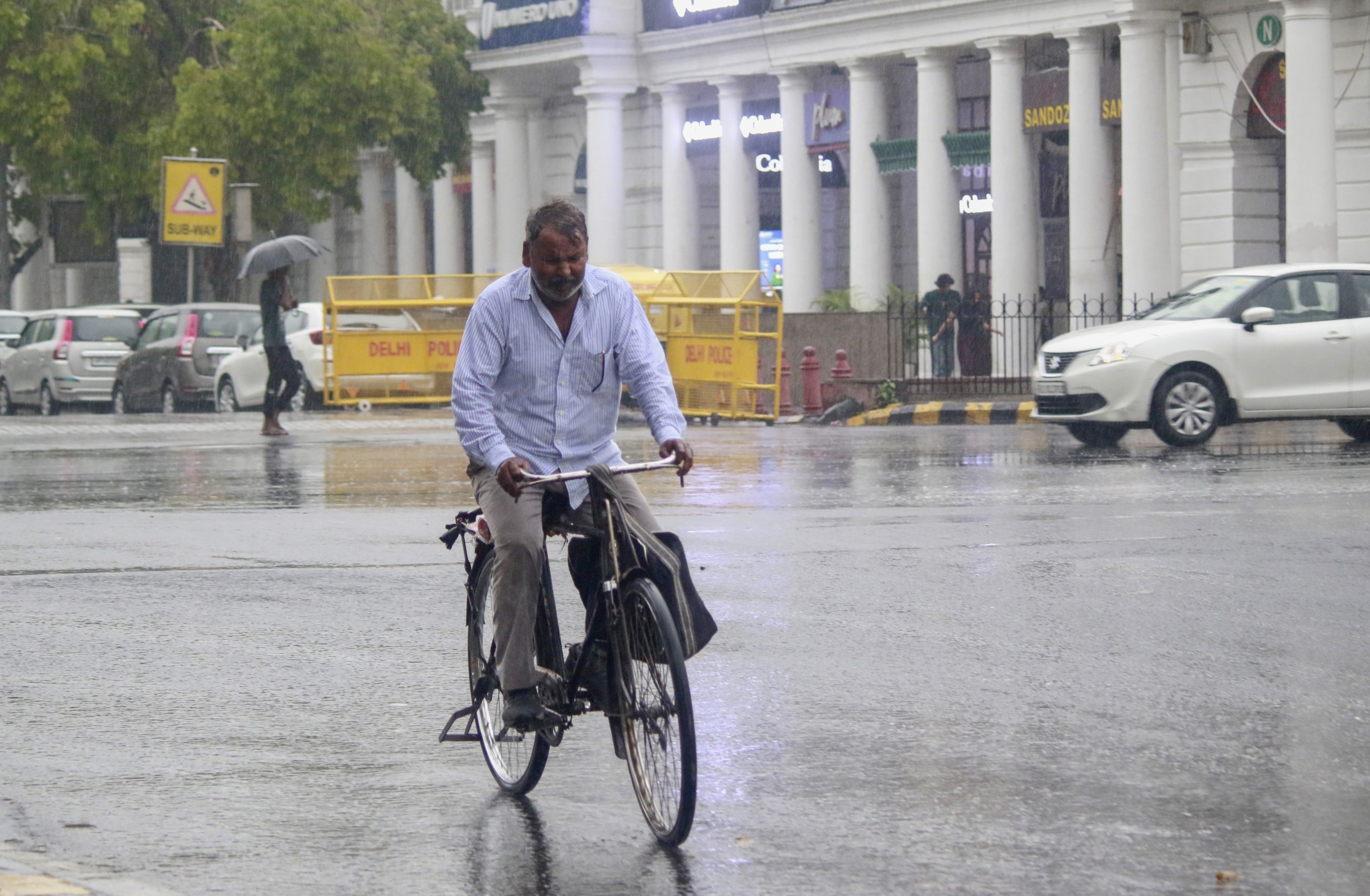
Delhi-NCR is likely to witness a week-long spell of thunderstorms and rainfall, according to the India Meteorological Department (IMD).
The weather agency has forecast that temperatures in the national capital will remain below 40 degrees Celsius until June 5.
On Tuesday, Delhi recorded a maximum temperature of 37.7 degrees Celsius, which was 2.3 degrees Celsius below the seasonal average. The relatively mild weather conditions over the past few days have provided some relief to residents from the summer heat.
According to IMD data, temperatures remained below normal across several monitoring stations in the city. Ayanagar recorded a maximum temperature of 36.1 degrees Celsius, while Safdarjung registered 37.7 degrees Celsius, with a minimum temperature of 26.8 degrees Celsius. Lodhi Road recorded 36 degrees Celsius, Palam 35.9 degrees Celsius, and The Ridge 37.2 degrees Celsius. These readings were between 2.5 degrees Celsius and 5 degrees Celsius below normal for this time of the year.
Meanwhile, the World Meteorological Organization (WMO) on Tuesday said that El Niño conditions are developing due to unusually warm ocean waters in the tropical Pacific and are expected to influence global temperature and rainfall patterns, increasing the risk of extreme weather events in the coming months.
“We need to prepare for a potentially strong El Niño event, which will exacerbate drought and heavy rainfall and increase the risk of heatwaves both on land and in the ocean,” WMO Secretary-General Celeste Saulo said at a press conference in Geneva.
Saulo noted that the most recent El Niño event, which occurred during 2023-24, was among the five strongest on record and contributed to record global temperatures in 2024, according to Xinhua news agency.
She added that the WMO community would closely monitor weather conditions in the coming months to provide timely information to governments, humanitarian agencies and climate-sensitive sectors. Advance seasonal forecasts and early warning systems, she said, are essential for saving lives and reducing the impact of El Niño.
-IANS


