







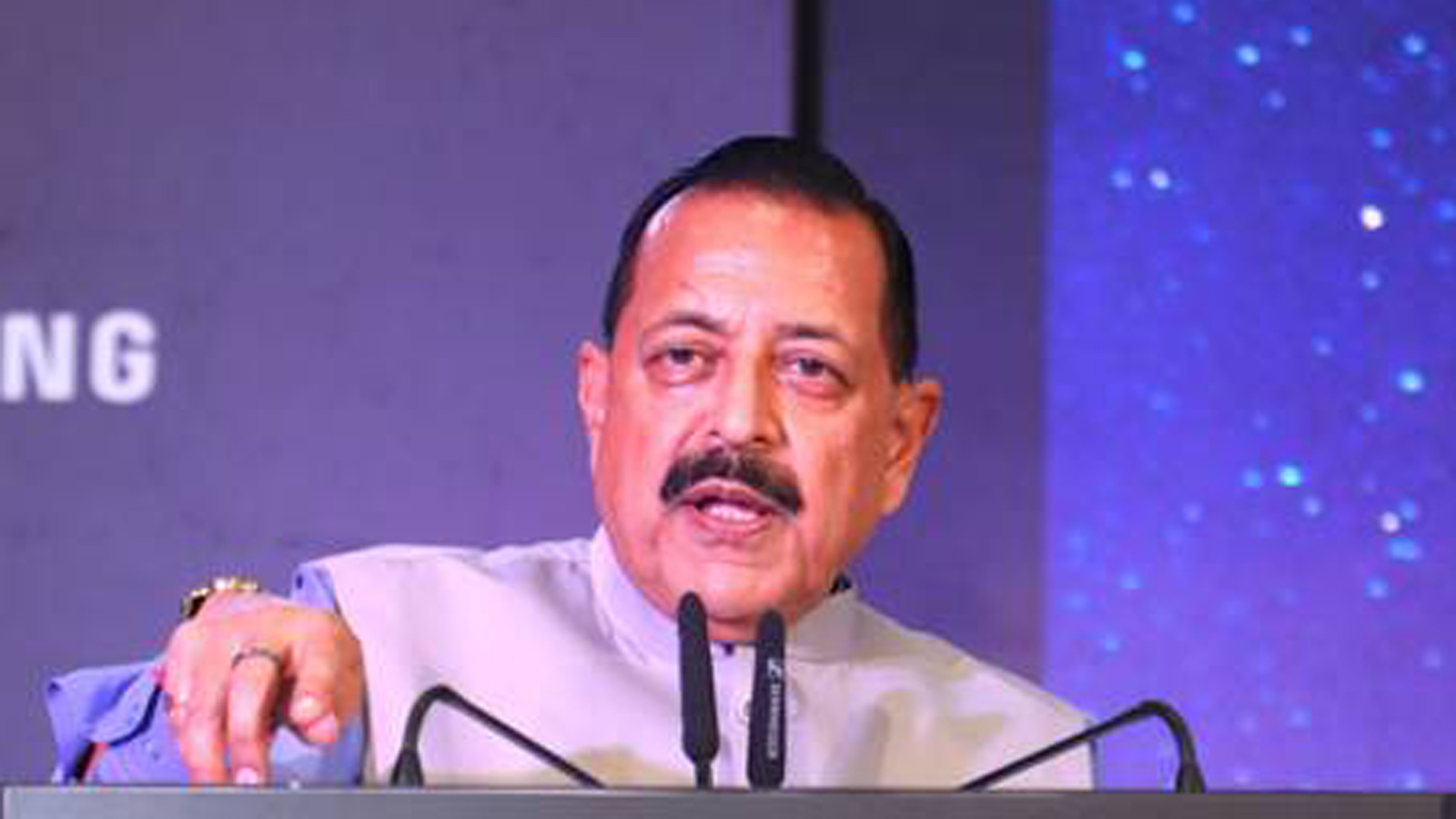
Union Minister of State for Science and Technology and Earth Sciences Dr. Jitendra Singh on Friday inaugurated India’s first “SkyCast” aviation weather monitoring system at Indira Gandhi International (IGI) Airport in New Delhi, saying the country has entered a new era of “fog-free, weather-smart aviation”.
Developed under the Centre’s “Mission Mausam” initiative, the advanced integrated atmospheric monitoring system is designed to provide real-time weather intelligence to pilots, airlines and airport operators, helping reduce flight delays, diversions and cancellations caused by fog, turbulence and poor visibility.
With the launch of SkyCast, India has become the 19th country in the world to deploy such an integrated aviation weather monitoring system, the minister said. He added that the next SkyCast facility will be established at Jewar Airport in Uttar Pradesh, followed by expansion to other airports across the country.
The inauguration took place at IGI Airport in the presence of senior officials from the Ministry of Earth Sciences (MoES), India Meteorological Department (IMD), Indian Institute of Tropical Meteorology (IITM), GMR and representatives from the aviation sector.
Addressing the gathering, Jitendra Singh said the system would significantly improve aviation safety and operational efficiency by delivering advance weather alerts to aircrew and pilots, even within short forecasting windows of around three hours.
He said passengers could expect fewer weather-related disruptions in the future as the system would help airlines and pilots take informed decisions regarding take-offs and landings during adverse weather conditions.
The minister described SkyCast as a major milestone in India’s aviation history, noting that it combines multiple atmospheric observation technologies for fog monitoring, turbulence detection and high-impact weather forecasting into a single framework.
The system integrates technologies such as Radar Wind Profiler, SODAR, Microwave Radiometer, Ground-based Fog Aerosol Spectrometer (GFAS) and CL61 Lidar-based Ceilometer to continuously monitor atmospheric conditions up to nearly three kilometres above the airport.
According to the ministry, the Radar Wind Profiler forms the core of the system and measures wind speed, wind direction, turbulence, vertical velocity and boundary-layer dynamics, all considered critical during aircraft descent and landing operations.
The Ground-based Fog Aerosol Spectrometer provides information on fog droplets, aerosols and aerosol-fog interactions, particularly relevant for Delhi where pollution particles often worsen visibility during winter fog conditions.
The CL61 Lidar-based Ceilometer monitors the vertical structure of fog and visibility conditions in real time, improving understanding of fog formation and atmospheric behaviour affecting aviation operations.
Officials said SkyCast combines real-time measurements of fog, aerosols, turbulence, moisture and visibility into a single aviation weather intelligence platform capable of supporting nowcasting and early warning services for pilots, airlines and air traffic management agencies.
The scientific foundation of the system emerged from the Winter Fog Experiment (WiFEX), launched jointly by IITM and IMD at IGI Airport in 2015 to study fog formation, aerosol-cloud interactions and visibility reduction in urban conditions.
Jitendra Singh credited Prime Minister Narendra Modi’s vision behind Mission Mausam for enabling futuristic weather infrastructure and said India was moving towards the democratisation of advanced weather services for aviation and public benefit.
Secretary, Ministry of Earth Sciences, Dr. M. Ravichandran said the facility would also strengthen India’s broader weather forecasting capabilities by generating high-quality atmospheric data related to wind, humidity and temperature profiles.
He said similar advanced observational systems, including Doppler Weather Radars, are being expanded across the country under Mission Mausam to improve forecast accuracy and disaster preparedness.
Beyond aviation, officials said SkyCast observations would support artificial intelligence-enabled forecasting systems, urban weather prediction, pollution management, transport advisories and disaster response planning.


