







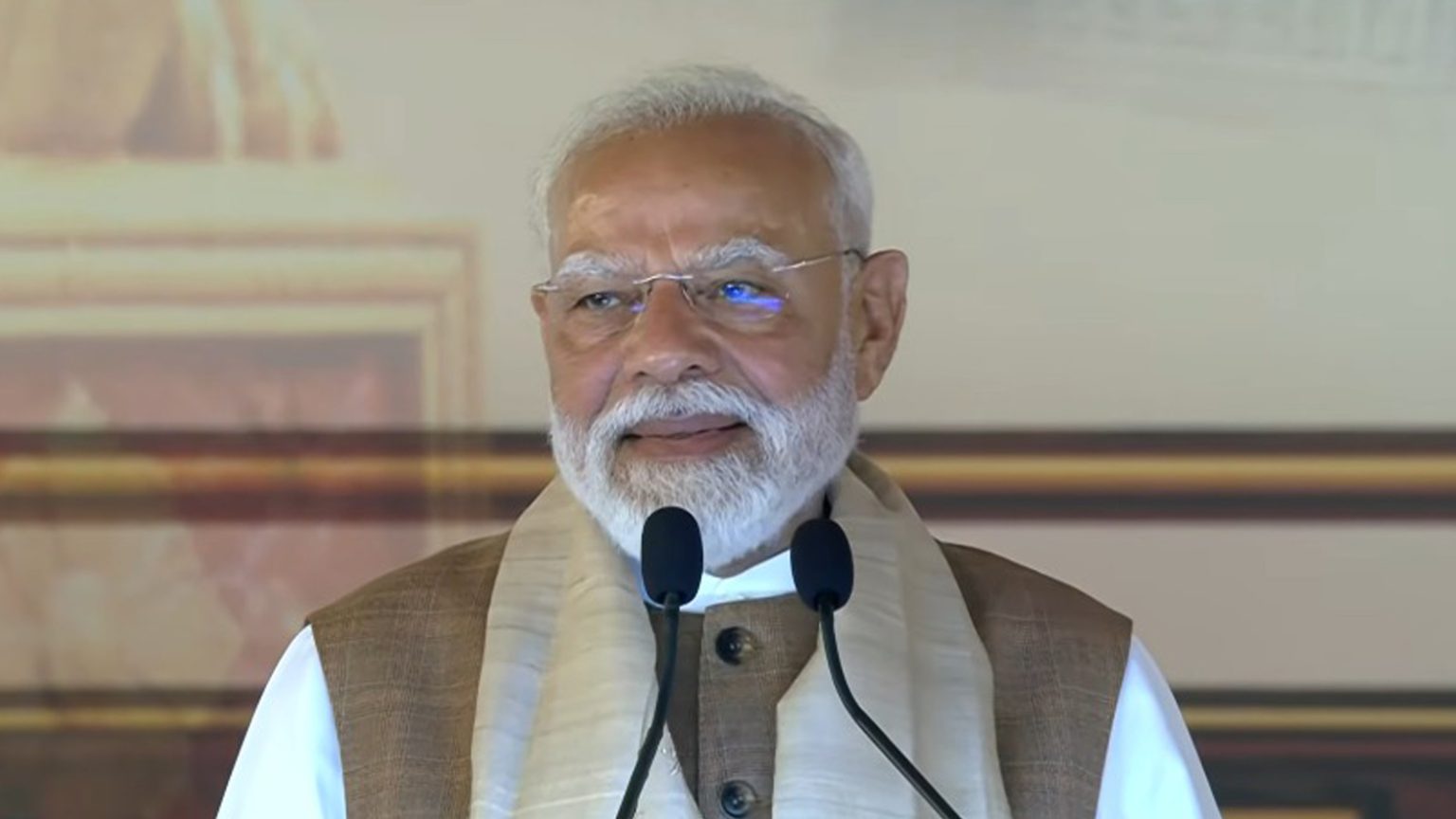
Prime Minister Narendra Modi on Monday shared an article by Union Commerce and Industry Minister Piyush Goyal describing the reconstruction of the Somnath Temple as one of the earliest expressions of national self-confidence in newly independent India.
Sharing the article on X during the ongoing Somnath Amrut Mahotsav celebrations, PM Modi said, “As the nation marks Somnath Amrut Mahotsav, Union Minister Shri Piyush Goyal describes the reconstruction of the Somnath Temple as one of the earliest expressions of national self-confidence in a newly free India. He highlights that despite facing opposition from the political establishment of the day, the reconstructed temple was inaugurated, sowing the seeds of India’s cultural renaissance and pride.”
Earlier, Piyush Goyal shared the story of Somnath’s reconstruction with India’s modern rise as a confident and resilient nation.
In his article, Goyal described the reconstruction and consecration of the Somnath Temple 75 years ago as a defining moment in the resurgence of India’s civilisational identity. He said the temple’s repeated rebuilding after centuries of invasions symbolised the resilience and determination of Indian civilisation.
Goyal recalled how Somnath, located on the Gujarat coast and revered as the first among the twelve Jyotirlingas, endured repeated attacks over centuries but continued to rise again through the faith and efforts of devotees and rulers.
Referring to PM Modi’s remarks on Somnath, Goyal said that the attacks on the temple were not merely acts of looting but attempts to erase India’s spiritual and cultural identity. He noted that despite repeated destruction, neither the temple nor India’s civilisational spirit could be defeated.
Goyal also revisited the post-Independence reconstruction of the temple led by Vallabhbhai Patel, describing it as a major symbol of national self-confidence in a newly free India.
Goyal noted that India’s first Prime Minister Jawaharlal Nehru had opposed the participation of then President Rajendra Prasad in the inauguration ceremony of the reconstructed temple. Despite this, Rajendra Prasad attended and inaugurated the temple on May 11, 1951.
Goyal said the reconstruction of Somnath laid the foundation for India’s cultural renaissance after centuries of foreign invasions and oppression. It linked the restoration of Somnath to contemporary heritage revival projects such as the redevelopment of Kashi Vishwanath, Mahakaleshwar and Kedarnath temples, as well as the construction of the Ram Mandir in Ayodhya.
Goyal said these initiatives reflect India’s efforts to reclaim its civilisational narrative with dignity and purpose while also creating employment and boosting local economies through tourism and cultural activities.
The Minister further said that India today has emerged stronger on the global stage, balancing rapid economic growth with cultural preservation. He highlighted the growing international recognition of Indian traditions such as yoga and Ayurveda, noting that recent Free Trade Agreements with countries including New Zealand, Australia and the European Union have created opportunities for Ayush practitioners and yoga instructors globally.
Drawing a parallel between the reconstruction of Somnath and Operation Sindoor, Goyal said both symbolise India’s resilience and determination in the face of challenges.
He concluded by describing Somnath as more than a temple, calling it a timeless symbol of India’s resilience, continuity and national confidence.


