







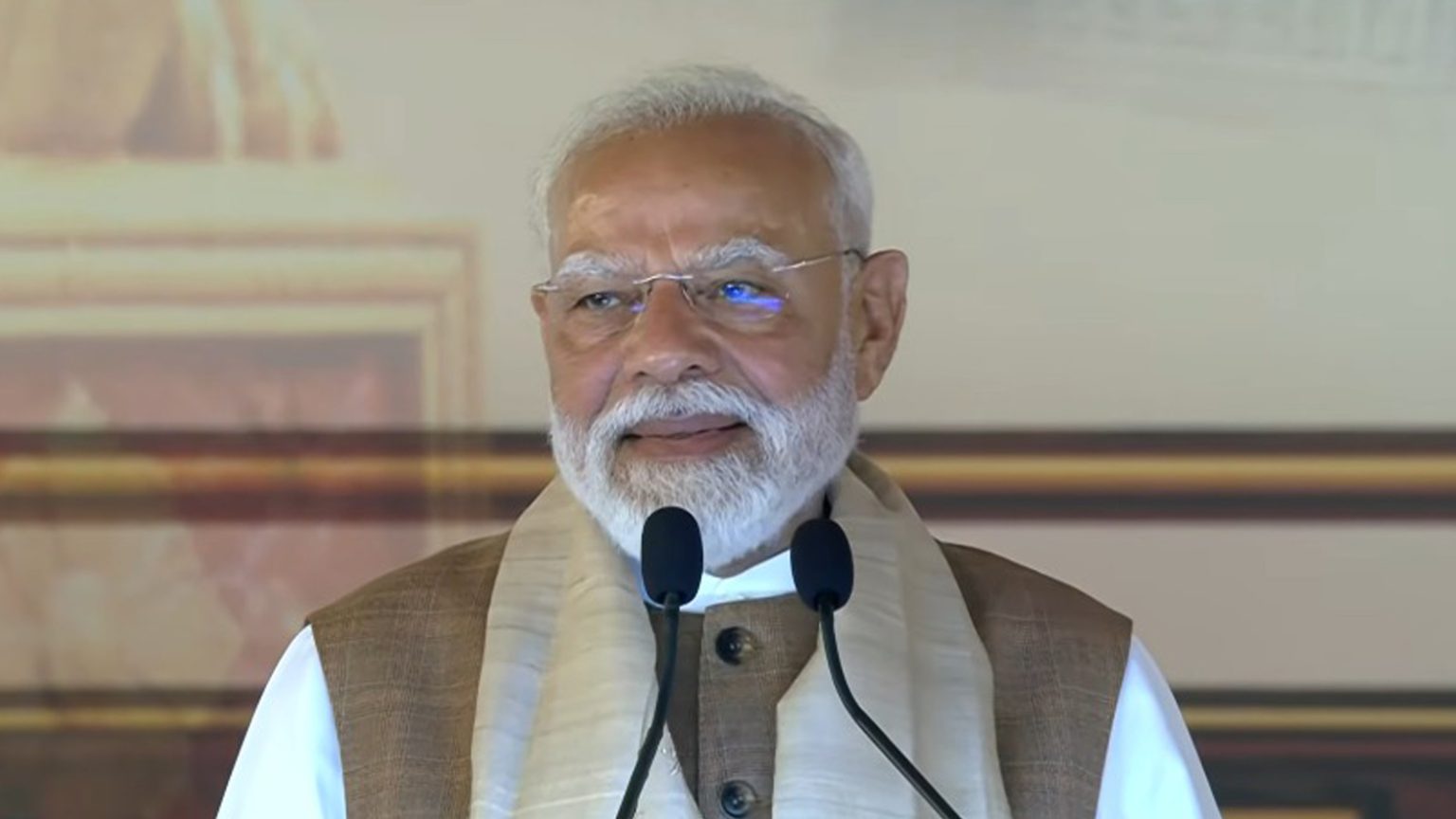
Prime Minister Narendra Modi urged citizens to take precautions against the ongoing heatwave while highlighting India’s rich culinary traditions, indigenous summer beverages and diverse mango varieties during the 134th episode of his monthly radio programme, Mann Ki Baat.
Addressing the nation, the Prime Minister cautioned people about the intense heat being experienced across several parts of the country and advised them to follow official safety guidelines.
“It is very hot in most parts of the country right now. Strong sun, hot winds, it is very important to take care of yourself in such weather. Keep drinking water. If at all you have to go out in the sun, do so with caution. Don’t forget the guidelines issued by various government departments in this regard,” PM Modi said.
The Prime Minister said India’s traditional wisdom offers simple and effective ways to cope with summer, many of which originate in household kitchens and local farming traditions.
“In our country, the way to fight the heat is many a time found in the kitchen as well,” he said.
PM Modi spoke about a wide range of regional summer drinks that are deeply embedded in local cultures. He mentioned Aam Panna from North India, lassi from Punjab and Haryana, buttermilk from Rajasthan and Gujarat, and Sattu sherbet from Bihar, Jharkhand and eastern Uttar Pradesh.
“Sattu sherbet in Bihar, Jharkhand, and Eastern Uttar Pradesh is simply amazing – it fills the stomach and provides strength,” he said.
The Prime Minister also spoke about various drinks consumed across India during summers to beat the heat.
“Panakam, Neer Mor, Sambaram in South India, and Bael Pana in Odisha aren’t just drinks, they’re a part of the traditions of different regions of India. And they also reflect the spirit of ‘Ek Bharat Shreshtha Bharat’,” he said.
Emphasising the value of indigenous food traditions, PM Modi noted that most of these beverages are prepared from locally available ingredients.
“Most of these things come from our own kitchens, from our farms and fields. There’s no big branding, but they embody the experience of generations,” he added.
The Prime Minister also spoke about India’s enduring love for mangoes, describing the fruit as an integral part of the summer season.
“As soon as summer arrives, another topic of discussion starts in every household, and that is mangoes. There’s hardly a home in India where mangoes are not talked about in summer,” he said.
Highlighting the country’s remarkable mango diversity, PM Modi named several renowned varieties from different states.
“Every region… its own mango, its own flavor, its own aroma. Maharashtra and Konkan’s Hapus, Alphonso, Gujarat’s Kesar, it’s the soul of Aamras, Uttar Pradesh’s Dussehri, and my Kashi’s Langra. Incidentally, the Langra mango has a special quality: it often remains green even after ripening,” he said.
“Bihar’s Zardalu, whose aroma can be recognized from afar. Chausa, Malda – each name has memories associated with it. Go to South India, and there’s Banganapalli, Totapuri, Neelam, Malgova, Bengal’s Himsagar, Odisha, and Andhra Pradesh’s Suvarnarekha. In other words, as the place changes, the mango’s appearance, color, and taste also change,” he added.
PM Modi also highlighted the growing global demand for Indian mangoes and praised farmers involved in mango cultivation for their contribution to the agricultural economy.
“This journey of the mango is now reaching the global market from the village,” he said.
Addressing mango growers directly, the Prime Minister added, “You are not just ordinary farmers… you are very special for the agricultural economy of the country. May you keep shining like this.”
PM Modi also shared an intriguing example of community learning that he said would interest listeners.
“Imagine a school where children, both young and old, attend, where there are no fees, no large buildings, no classrooms, and, most interestingly, classes are held in a river,” he said, hinting at a unique initiative that he planned to discuss later.


