







With concerns mounting over the possible impact of El Niño and a delayed southwest monsoon, the Central Government has intensified preparations for the upcoming Kharif season, unveiling a comprehensive contingency strategy aimed at protecting farmers and ensuring food security.
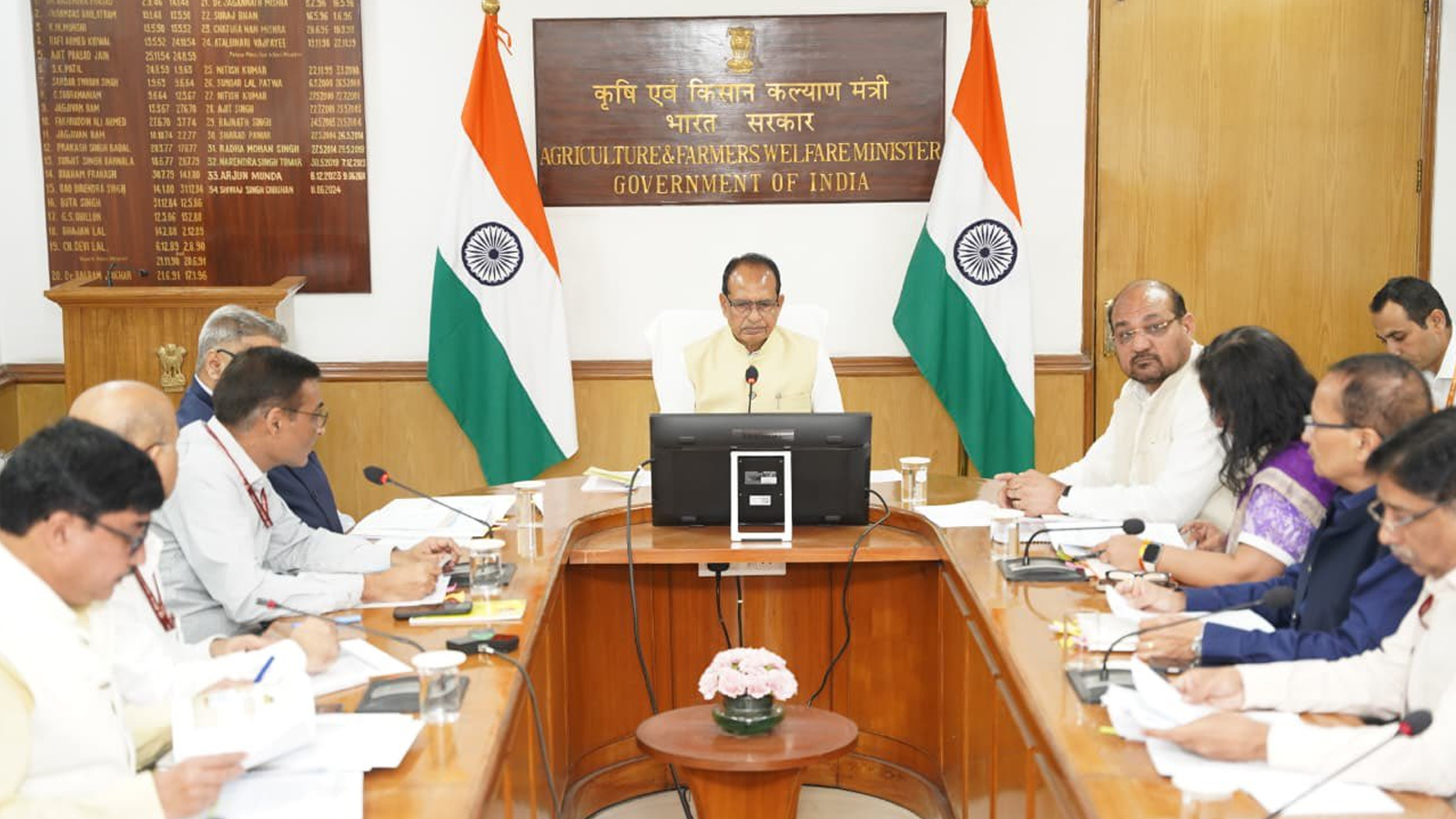
Union Agriculture and Farmers Welfare Minister Shivraj Singh Chouhan chaired a high-level virtual review meeting on Tuesday with state agriculture ministers, district collectors, senior officials, scientists from the Indian Council of Agricultural Research (ICAR), ICAR-Central Research Institute for Dryland Agriculture, and experts from the India Meteorological Department to assess preparedness for a potentially weak monsoon season.
Addressing a press conference after the meeting, Chouhan said rainfall across the country is currently around 43 per cent below normal, while IMD forecasts indicate weak precipitation may continue through the first week of July. He stressed that the government is acting proactively rather than waiting for the situation to worsen.
“We are preparing in advance, not waiting for a crisis. Every possible measure is being taken to minimise risks and protect farmers’ livelihoods,” the minister said.
315 Districts Identified as Vulnerable
The Ministry of Agriculture, in collaboration with ICAR, has identified around 315 districts that could face adverse impacts from deficient rainfall and limited irrigation coverage.
Among them, 111 districts have been categorised as high-priority areas with irrigation coverage below 25 per cent. Another 76 districts fall under the medium-priority category with irrigation levels between 25 and 50 per cent, while 128 districts have relatively better irrigation infrastructure.
Most of the vulnerable districts are located across Madhya Pradesh, Maharashtra, Gujarat, Uttar Pradesh, Rajasthan, Karnataka, Bihar, Jharkhand, Telangana, Andhra Pradesh and Odisha.
State governments and district administrations have been instructed to accelerate preparedness measures and ensure contingency plans are operational at the grassroots level.
District-Level Contingency Plans Activated
To tackle potential rainfall deficits, ICAR and ICAR-CRIDA have prepared District Agriculture Contingency Plans (DACPs) for all districts. These plans provide region-specific recommendations on crop selection, water management, crop diversification, and alternative livelihood options.
Chouhan directed state governments to ensure the plans are implemented on the ground rather than remaining as administrative documents.
“The success of contingency planning depends entirely on effective field-level execution,” he said.
Water Conservation Becomes Top Priority
With water availability emerging as a major concern, the Centre has launched an extensive conservation and storage drive.
States have been instructed to repair and strengthen ponds, reservoirs, streams, farm ponds, check dams, stop dams and temporary water-harvesting structures. Water conservation projects under the Mahatma Gandhi National Rural Employment Guarantee Act (MGNREGA) and upcoming rural development programmes will receive priority.
The minister said drinking water supply in vulnerable districts must remain the highest priority and directed states to consider transferring water from surplus regions if necessary.
Reservoir storage levels across river basins are being closely monitored, with interventions tailored to areas experiencing deficits ranging from 20 to 60 per cent.
Focus on Drought-Resilient Crops
Recognising the challenges posed by reduced rainfall, the Centre has advised states to promote short-duration and low-water-consuming crop varieties.
Farmers are being encouraged to diversify cropping patterns and adopt intercropping and mixed farming systems to reduce risk. Special emphasis is being placed on pulses, millets (Shri Anna), and oilseeds, which perform relatively well under moisture-stressed conditions.
States have also been instructed to swiftly shift to alternative crops if monsoon delays persist beyond the normal sowing window.
“We will not allow fields to remain vacant. Our strategy ensures that suitable crops can still be cultivated despite delayed rainfall,” Chouhan said.
Seeds and Fertilisers Available in Adequate Quantities
The government has assured farmers that sufficient stocks of seeds and fertilisers are available for the Kharif season.
Additional seed reserves have been earmarked for vulnerable districts, including extra stocks for potential resowing requirements. Fertiliser availability – including urea, DAP, MOP, NPK and SSP – has been reviewed and found adequate.
Special monitoring mechanisms have been established to ensure timely distribution of agricultural inputs to districts facing monsoon stress.
The minister also cautioned farmers against premature sowing, advising them to begin planting only after receiving cumulative rainfall of 75-100 mm and adequate soil moisture.
Scientific Advisories Through KVK Network
To help farmers make informed decisions, the Centre is leveraging the nationwide network of 731 Krishi Vigyan Kendras (KVKs).
KVKs, along with Agro-Meteorological Advisory Units, have been tasked with providing real-time guidance on sowing schedules, crop choices, irrigation practices and risk management.
Information will be disseminated through SMS alerts, WhatsApp messages, call centres, radio, television broadcasts and social media platforms.
Livestock Sector Also Under Watch
The government is also preparing for possible fodder shortages if rainfall remains weak.
Plans are being developed to transport fodder from surplus areas to deficit regions, while states have been instructed to monitor supply chains and prevent hoarding and black marketing.
PMFBY, KCC and PM-KISAN to Support Farmers
Chouhan highlighted that financial security is a key component of the Centre’s preparedness strategy.
The government is focusing on expanding coverage under the Pradhan Mantri Fasal Bima Yojana (PMFBY) in vulnerable districts to ensure timely compensation for crop losses.
States have also been directed to expedite the issuance of Kisan Credit Card (KCCs) to eligible farmers. The minister noted that recent instalments released under PM-KISAN can also help farmers purchase seeds, fertilisers and other agricultural inputs.
The minister said PMFBY, KCC and PM-KISAN together will act as a three-layer safety net for farmers facing weather-related challenges.
Dedicated Monitoring Mechanism Established
To ensure seamless coordination, the Centre has created a multi-tier monitoring framework spanning national, state, district, block and village levels.
An ‘El Niño Monitoring Cell’ and a ‘Crop Weather Watch Group’ have been established in New Delhi to continuously track monsoon progress, crop conditions, input availability and market indicators.
States have been instructed to establish control rooms and appoint nodal officers to coordinate with the Centre. Chouhan said secretary-level reviews are being conducted weekly, while he personally monitors the situation every Tuesday.
Food Security Remains Secure
Despite monsoon concerns, the government remains confident about food security.
The minister said production targets for several major Kharif crops in the previous season had been achieved or exceeded. For Kharif 2026, the government has set a foodgrain production target of approximately 176 million tonnes.
He also noted that buffer stocks of rice and wheat remain comfortable, ensuring there is no immediate threat to national food security.
“No Need to Panic,” Says Minister
Concluding the review, Chouhan appealed to farmers not to panic and assured them that extensive preparations are already underway.
“There is no need for fear. What is needed is preparedness and coordinated action. With cooperation among governments, scientific institutions, district administrations and farmers, we can successfully tackle the challenges posed by El Niño,” he said.
The Centre’s strategy combines water conservation, scientific advisories, crop diversification, financial protection and strong coordination mechanisms, aiming to shield India’s agriculture and rural economy from the potential impact of a weak monsoon while safeguarding farmers’ livelihoods.


