







The Centre has taken a significant step towards promoting sustainable agriculture and reducing carbon emissions by unveiling a roadmap to establish Green Urea production in India, backed by a large-scale procurement of 7.24 lakh metric tonnes (MT) of Green Ammonia under the National Green Hydrogen Mission (NGHM).
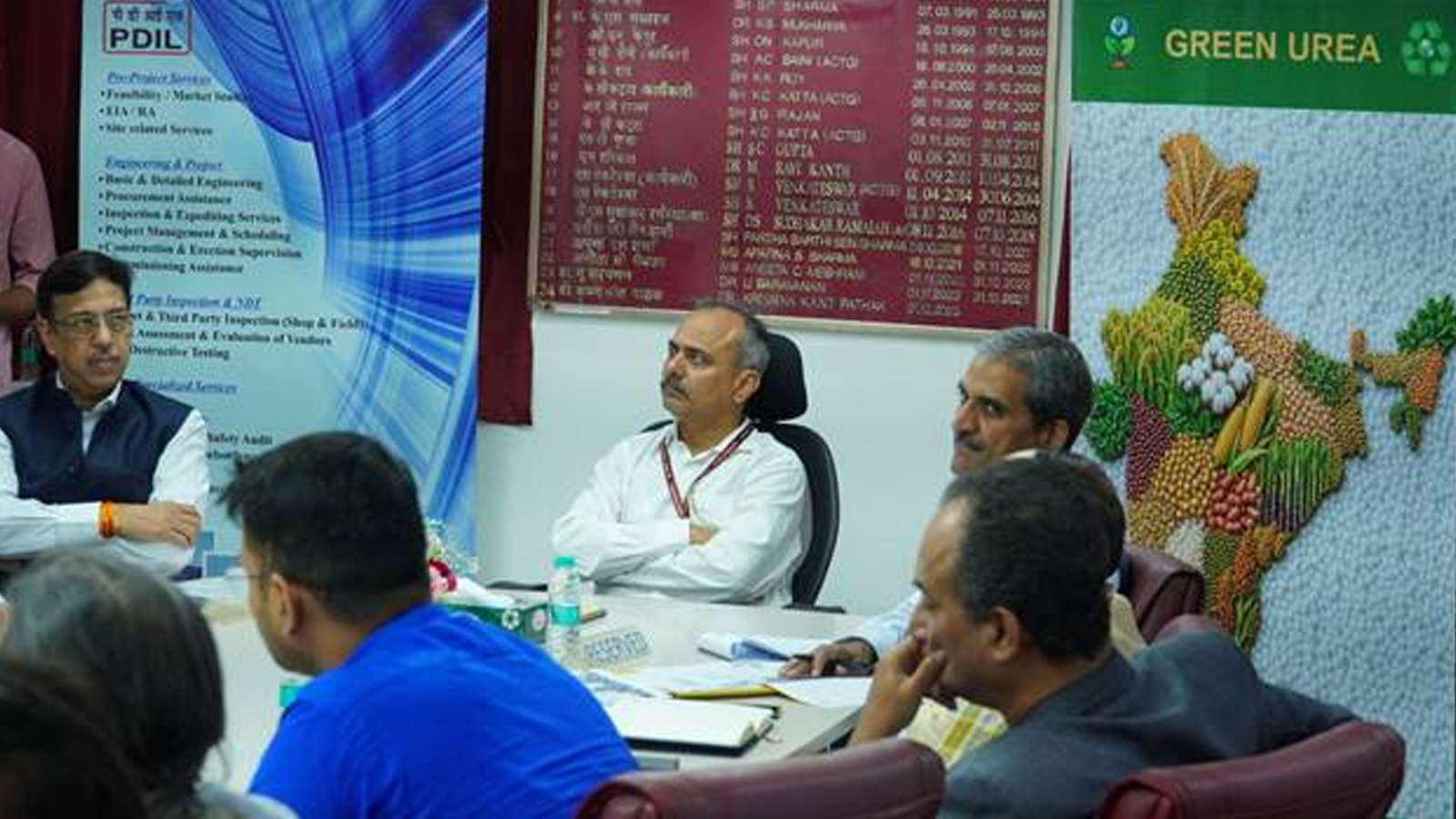
The Department of Fertilizers (DoF) recently held a high-level Pre-Expression of Interest (EOI) meeting at Projects and Development India Limited (PDIL) headquarters in Noida, bringing together stakeholders from across the public and private sectors to discuss the establishment of Green Urea plants in the country.
The meeting, chaired by Dr. K.K. Pathak, Joint Secretary, Department of Fertilizers and Chairman and Managing Director of PDIL, followed the issuance of an Expression of Interest (EOI) inviting proposals for setting up Green Urea manufacturing facilities.
Representatives from organisations including NTPC, the Solar Energy Corporation of India (SECI), leading fertilizer manufacturers, green hydrogen and ammonia technology providers, and electrolyzer manufacturers participated in the discussions, reflecting strong industry interest in the initiative.
Green Ammonia procurement to support transition
As part of the proposed framework, the government plans to procure 7.24 lakh MT of Green Ammonia annually through a transparent e-reverse auction to be conducted by SECI under NGHM Mode 2A.
The procurement aims to create a stable market for Green Ammonia, which will serve as a key feedstock for manufacturing Green Urea while encouraging investment in India’s emerging green hydrogen ecosystem.
Subsidy mechanism to ensure cost parity
Recognising that Green Ammonia is currently more expensive than conventionally produced Grey Ammonia, the government has proposed an offtaker-side differential subsidy mechanism to protect domestic fertilizer manufacturers.
Under the framework, SECI will procure Green Ammonia from producers and supply it to fertilizer companies at prevailing market-linked Grey Ammonia prices. The Department of Fertilizers will compensate the price difference, ensuring manufacturers can adopt greener alternatives without additional financial burden.
The government also plans to offer producer-side incentives for Green Ammonia developers, with financial support extending for up to ten years through long-term agreements, providing greater investment certainty for new projects.
Multi-ministerial support
The roadmap envisages coordinated support across multiple ministries.
The Ministry of New and Renewable Energy (MNRE) has earmarked ₹19,744 crore to strengthen green energy infrastructure, while the Department of Fertilizers will develop the policy framework needed to integrate Green Ammonia into India’s fertilizer production chain.
Pilot project demonstrates technology
The Ministry highlighted the 150 tonnes per day Green Urea pilot plant at Pudimadaka in Andhra Pradesh, developed by NTPC’s R&D arm NETRA, as a model for future projects.
The pilot integrates Green Hydrogen production through water electrolysis with Carbon Capture and Utilisation (CCUS) technologies, demonstrating how captured carbon dioxide can be used in sustainable urea manufacturing.
Reducing imports and boosting self-reliance
India currently imports nearly 10 million tonnes of urea annually, while several domestic fertilizer plants are more than three decades old and require capacity expansion.
The Ministry said Green Urea production offers an opportunity to strengthen fertilizer security while supporting India’s Net Zero target by 2070. Since Green Urea requires carbon dioxide as a raw material, captured CO₂ from thermal power plants, cement factories and steel plants can be utilised as a sustainable feedstock.
A world-scale Green Urea plant with an annual production capacity of 12.7 lakh tonnes would require nearly 10 lakh tonnes of captured CO₂ each year, creating a significant opportunity for integrating carbon capture with fertilizer production.
Driving clean energy and climate goals
The Ministry said integrated projects combining renewable energy, Green Hydrogen, Green Ammonia, carbon capture and urea production can simultaneously strengthen India’s fertilizer security, energy transition and climate commitments.
Organisations such as NTPC, with capabilities across renewable energy, power generation, Green Hydrogen and fertilizer production, are expected to play a key role in driving the initiative.
The Department of Fertilizers said the Green Urea roadmap represents an important step towards achieving carbon-neutral fertilizer production while promoting technological self-reliance and supporting the long-term sustainability of Indian agriculture.


