







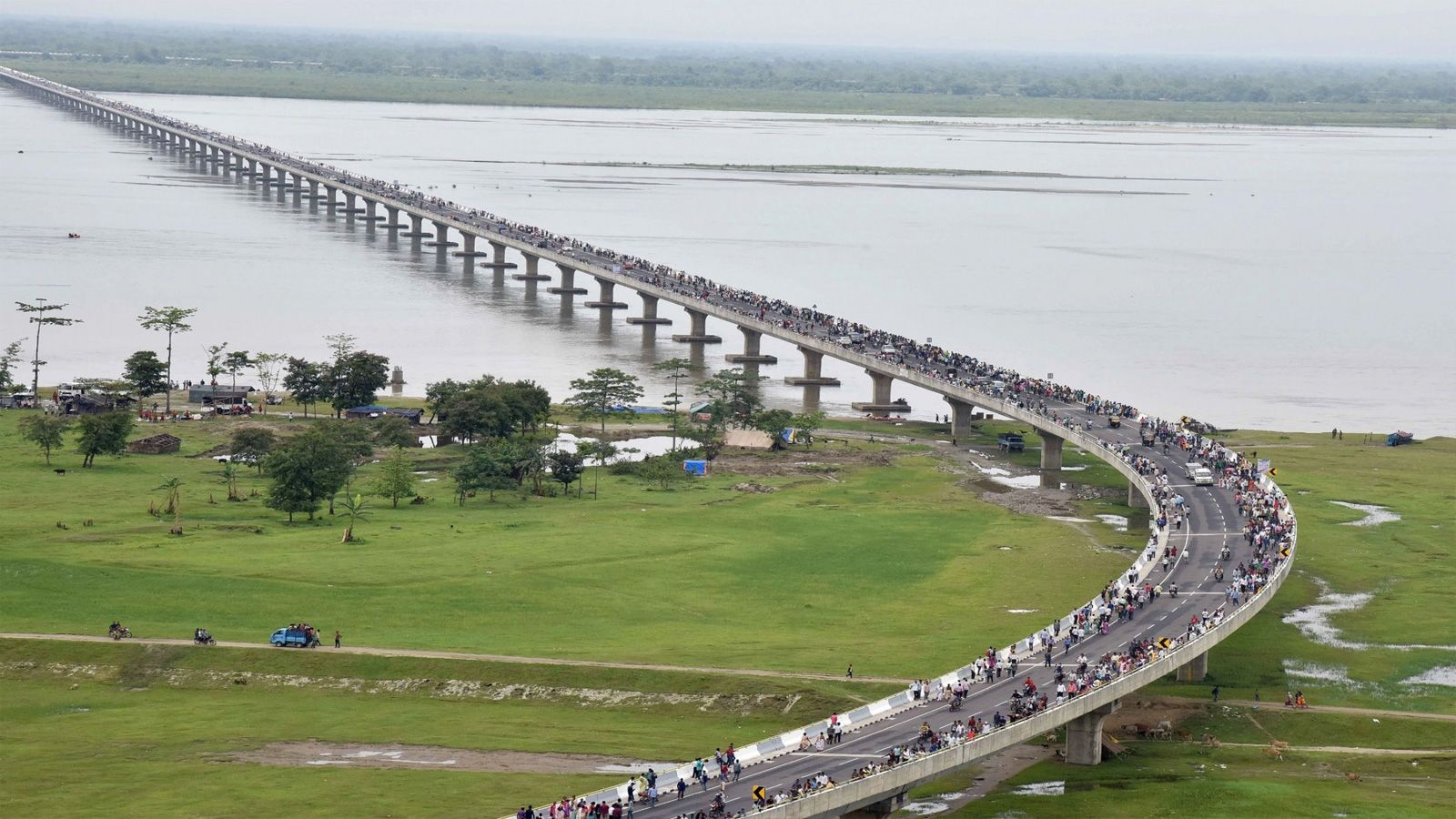
India’s infrastructure landscape has undergone a remarkable transformation over the past decade, with a series of iconic bridge projects emerging as symbols of the country’s engineering capabilities and commitment to connectivity-driven development.
According to the Ministry of Road Transport and Highways (MoRTH), several landmark bridge projects completed in recent years have significantly improved transportation networks, reduced travel time, strengthened regional integration, and boosted economic activity across the country.
The ministry said these structures reflect the government’s focus on infrastructure-led growth and have played a crucial role in connecting remote regions, enhancing mobility, and improving logistical efficiency.
Bridges Driving Economic and Regional Development
India’s vast river systems have historically posed both opportunities and challenges for connectivity. Modern bridge infrastructure has helped overcome geographical barriers, linking communities, facilitating trade, and improving access to essential services.
From cable-stayed and extradosed bridges to long-span river crossings, the country has witnessed the construction of several engineering landmarks that combine architectural excellence with advanced engineering solutions.
New Saraighat Bridge Strengthens Assam Connectivity
Among the notable projects is the New Saraighat Bridge across the Brahmaputra River in Guwahati, Assam.
The 1.49-kilometre-long bridge, constructed parallel to the historic Saraighat Bridge, has emerged as a key transportation link for the state. The structure has helped ease traffic congestion and improve connectivity between North and South Guwahati while strengthening movement along the East-West Corridor on National Highway-27.
The bridge has significantly enhanced daily commuting and freight transportation in one of the country’s most strategically important northeastern regions.
Chambal Cable-Stayed Bridge Becomes Rajasthan Landmark
In Rajasthan, the six-lane cable-stayed bridge across the Chambal River in Kota has become one of the state’s most prominent infrastructure landmarks.
Stretching 1.4 kilometres, the bridge was dedicated to the nation in 2017 and is Rajasthan’s first cable-stayed bridge. The structure features advanced engineering elements, including specially designed stay cables with multiple layers of protection and systems to reduce vibration caused by wind and weather conditions.
A key feature of the project is its environmentally sensitive design. Nearly 300 metres of the bridge span across the river without any supporting piers in the riverbed, helping protect the ecologically significant National Chambal Gharial Wildlife Sanctuary, home to endangered species such as the gharial, Ganges river dolphin, and red-crowned roof turtle.
Narmada Bridge Enhances Gujarat’s Transport Network
Another major infrastructure achievement is the 1.34-kilometre extradosed bridge over the Narmada River in Bharuch, Gujarat.
Opened to traffic in 2017, the bridge forms part of the Ahmedabad-Mumbai section of National Highway-8 and is considered one of the country’s significant long-span bridge projects. The structure has improved traffic flow, enhanced road safety, and supported economic activity along one of India’s busiest industrial corridors.
New Ganga Bridge Boosts Connectivity in Bihar
In Bihar, a six-lane, 1.8-kilometre-long bridge over the Ganga River has strengthened connectivity between northern and southern parts of the state.
Located on the Aunta-Simaria section of National Highway-31, the bridge is among India’s widest extradosed bridges, featuring a 34-metre-wide deck and advanced segmental construction technology.
The bridge was built parallel to the decades-old Rajendra Setu rail-cum-road bridge, which had become increasingly inadequate for handling growing traffic volumes. The new crossing has significantly reduced travel time and improved movement of goods and passengers across the region.
Prime Minister Narendra Modi inaugurated the bridge in August 2025.
Bhupen Hazarika Setu Strengthens Northeast Connectivity
The Dhola-Sadiya Bridge, popularly known as the Bhupen Hazarika Setu, remains one of India’s most strategically significant infrastructure projects.
Spanning 9.15 kilometres across the Lohit River, a major tributary of the Brahmaputra, the bridge connects Assam and Arunachal Pradesh and provides the first permanent road link between northern Assam and eastern Arunachal Pradesh.
The structure has substantially improved connectivity in the Northeast while also carrying strategic importance. Designed to support heavy military equipment, including 60-tonne battle tanks, the bridge enhances logistical capabilities in the region and strengthens connectivity to border areas.
Infrastructure as a Catalyst for Growth
The ministry said these bridge projects exemplify how modern infrastructure is contributing to national development by improving transportation efficiency, supporting economic growth, and fostering regional integration.
Over the past twelve years, India has witnessed significant expansion in highways, bridges, tunnels, and multimodal transport infrastructure, reflecting a broader strategy of using connectivity as a catalyst for economic progress.
The ministry noted that these engineering achievements are more than just physical structures; they represent India’s determination to overcome geographical challenges, improve mobility, and create new opportunities for communities and businesses across the country.


