







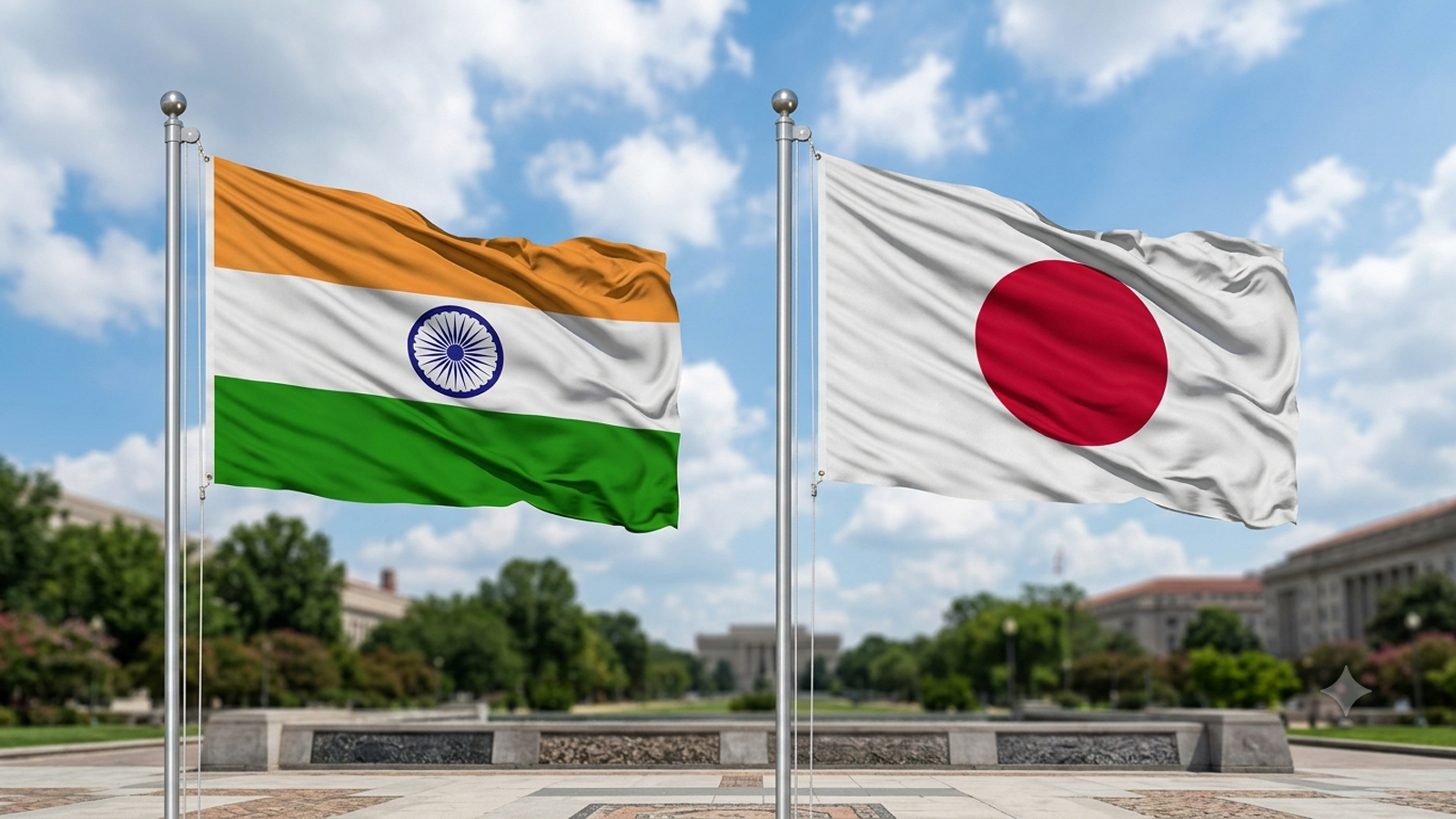
India and Japan share a Special Strategic and Global Partnership, a status accorded in 2014, built on centuries-old civilizational, cultural and spiritual links. One of the earliest recorded interactions dates back to 752 AD, when Indian monk Bodhisena performed the consecration ceremony of the Great Buddha at Todaiji Temple in Nara.
In modern history, personalities such as Swami Vivekananda, Rabindranath Tagore, J.R.D. Tata, Netaji Subhas Chandra Bose, Rash Behari Bose and Justice Radha Binod Pal played important roles in strengthening bilateral goodwill. The Japan-India Association, established in 1903, remains Japan’s oldest international friendship organisation.
Diplomatic relations formally began on 28 April 1952 after India signed a separate Peace Treaty with Japan following the Second World War.
The Ministry of External Affairs (MEA) said that India-Japan bilateral ties have steadily expanded, progressing from a Global Partnership (2000) to a Strategic and Global Partnership (2006) and finally to a Special Strategic and Global Partnership (2014). Annual Prime Ministerial Summits have been held since 2006, making the relationship one of India’s most institutionalised strategic partnerships.
The partnership today spans political dialogue, defence and security, trade and investment, science and technology, infrastructure, education, digital technologies, healthcare, energy, climate action and people-to-people exchanges. India’s Act East Policy, SAGAR (Security and Growth for All in the Region) and the Indo-Pacific Oceans Initiative (IPOI) complement Japan’s vision of a Free and Open Indo-Pacific (FOIP), creating strong strategic convergence in the Indo-Pacific region.
The MEA said that high-level engagement remains a defining feature of the partnership. Prime Minister Narendra Modi has visited Japan eight times since 2014, while Japanese Prime Ministers have regularly visited India.
During the 15th Annual Summit in Tokyo (August 2025), both countries adopted a Joint Vision for the Next Decade, a Joint Declaration on Security Cooperation, an Action Plan on Human Resource Exchange, and agreed to facilitate 10 trillion Yen (around US$67 billion) in Japanese private investment in India over the next decade. The summit also launched initiatives on economic security, artificial intelligence, mobility, critical minerals, clean energy and SME cooperation.
Today, India-Japan relations are supported by over 70 bilateral dialogue mechanisms covering areas ranging from defence, cyber security and semiconductors to healthcare, transport, space, finance and energy, making the partnership one of the most comprehensive in the Indo-Pacific.
According to the MEA, Japanese Prime Minister Sanae Takaichi will undertake an official visit to New Delhi, from July 1 to 3, for the 16th India-Japan Annual Summit, which will provide an opportunity for both sides to review and strengthen the full spectrum of bilateral cooperation as well as exchange views on regional and global issues of mutual interest.
The MEA added that Takaichi’s visit reflects the shared commitment of the two countries to further enhance India–Japan Special Strategic and Global Partnership.


