







India has defended the Financial Action Task Force (FATF), the global watchdog on terror financing and money laundering, against criticism from Pakistan, asserting that attempts to undermine the body’s credibility stem from a fear of scrutiny rather than genuine concerns over its functioning.
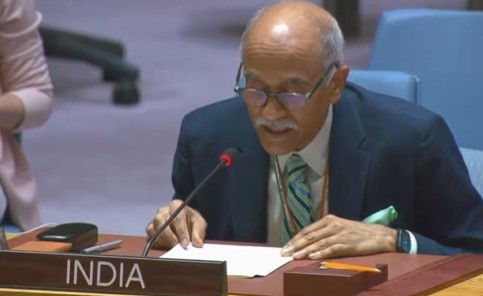
Speaking at an event on the sidelines of the UN’s Counter-Terrorism Week on Monday, India’s Permanent Representative to the United Nations, P. Harish, described the FATF as “an indispensable pillar of the global counterterrorism financing and anti-money laundering architecture.”
“Attempts to question its credibility often reflect fear of scrutiny rather than genuine process-related concerns,” Harish said.
Although he did not name Pakistan, his remarks came against the backdrop of Islamabad’s repeated allegations that the FATF was politically weaponised when the country was placed on its “grey list” for increased monitoring.
“Our history shows that critical terrorist financing risks have not emerged anonymously. They have been sponsored, including by some state actors,” Harish said.
He was addressing the event, “Joining Forces to Counter Terrorism Financing in the Context of Evolving Threats and Emerging Technologies,” co-sponsored by India and France.
Highlighting India’s experience in combating terrorism, Harish said the country has faced cross-border terrorism for decades and that emerging digital technologies have made the sources, methods and channels of terror financing increasingly complex.
Defending the FATF’s functioning, he said its work is “technical, evidence-based, and rooted in internationally accepted standards.”
“Countries facing adverse assessments should address the deficiencies identified, strengthen domestic enforcement, improve financial transparency, and demonstrate irreversible action against terror financing networks,” he said.
“The answer to FATF scrutiny is not politicised activism in UN forums, but credible compliance,” Harish added.
He further said that states allowing their territory, institutions or financial systems to be misused for terrorism “must stop exporting instability and start fulfilling their obligations towards international peace and security.”
The 40-member FATF leads global efforts to combat terrorist financing, money laundering and related financial crimes, including drug trafficking, illegal arms trade and cyber fraud. It monitors jurisdictions for compliance with international standards aimed at preventing the misuse of financial systems.
Harish also highlighted India’s cooperation with the FATF and the country’s efforts to address emerging financial technologies that could be exploited by criminal and terrorist networks.
“We have brought virtual asset service providers within our anti-money laundering framework” and “tightened verification requirements for centralised exchanges and users,” he said.
He added that India has contributed case studies to FATF updates and shared best practices to help mitigate terror financing risks.
Pakistan, which was previously placed on the FATF’s “grey list” for deficiencies in tackling terror financing and money laundering, implemented measures prescribed by the watchdog before being removed from the list. It continues to remain under monitoring by the FATF and its regional affiliate, the Asia/Pacific Group on Money Laundering (APG).
(With IANS inputs)


