







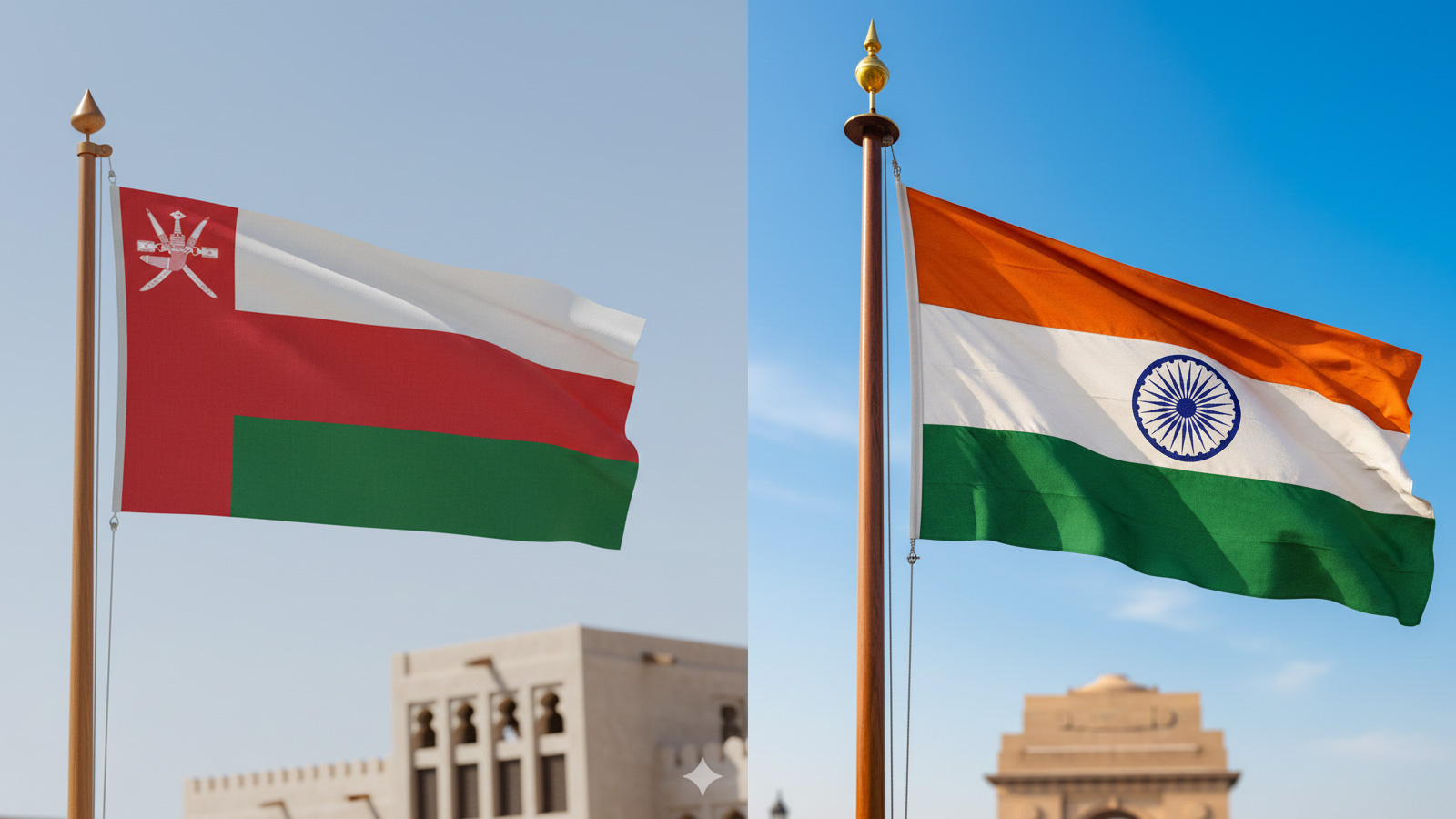
India and Oman on Monday formally operationalised the landmark Comprehensive Economic Partnership Agreement (CEPA), marking a major milestone in bilateral economic relations and opening a new chapter of trade, investment and strategic cooperation between the two countries.
The agreement, which came into force on June 1, is expected to significantly boost bilateral trade, exports, employment generation and economic integration between India and Oman. The CEPA was signed in Muscat on December 18, 2025, in the presence of Prime Minister Narendra Modi and Sultan Haitham bin Tarik Al Said of Oman.
Union Commerce and Industry Minister Piyush Goyal and Oman’s Ambassador to India, Issa Saleh Al Shibani, marked the operationalisation of the agreement by flagging off the first consignments of agricultural products and gems and jewellery exports from Mumbai, Kolkata and Chennai under the preferential tariff framework.
Major Market Access for Indian Exports
Under the agreement, Oman will provide duty-free access to 99.38 per cent of India’s exports by value, covering 98.08 per cent of Oman’s tariff lines. The move is expected to enhance the competitiveness of Indian goods in Oman’s nearly USD 28 billion import market.
India has become only the second country after the United States to secure such a comprehensive bilateral trade agreement with Oman.
The CEPA is expected to deliver substantial benefits to labour-intensive sectors including agriculture, marine products, textiles, gems and jewellery, pharmaceuticals, engineering goods, automobiles and footwear. All tariff concessions granted by Oman will take effect immediately.
Strategic Gateway to Gulf and East Africa
Oman, India’s second-largest trading partner in the Gulf region, serves as a strategic gateway to the Gulf Cooperation Council (GCC) and East African markets through its key logistics hubs at Sohar, Duqm and Salalah ports.
Bilateral trade between India and Oman reached USD 11.18 billion during FY 2025-26, up from USD 10.61 billion in the previous fiscal year.
The Commerce & Industry Ministry said the agreement aligns with India’s broader strategy of building resilient global trade partnerships and integrating more deeply into regional and global value chains under the vision of Viksit Bharat 2047.
Boost for Agriculture, Fisheries and Food Exports
The agreement is expected to significantly strengthen India’s position in agricultural and food exports.
Products such as honey, basmati rice, cashew kernels, onions, potatoes, butter, sweet biscuits and processed foods will receive duty-free access. India already accounts for more than 94 per cent of Oman’s bovine meat imports and over 98 per cent of fresh egg imports.
All marine products, including shrimp, fish and cuttlefish, will also enjoy immediate duty-free access, creating new opportunities for exporters from coastal states such as Andhra Pradesh, Kerala, Tamil Nadu and Gujarat.
Competitive Edge for Gems, Jewellery and Engineering Goods
Import duties of up to five per cent on gems and jewellery have been eliminated, giving Indian exporters a significant price advantage in Oman’s USD 1.07 billion jewellery market.
Industry projections suggest India’s gems and jewellery exports to Oman could increase nearly six-fold to USD 150 million within three years. Manufacturing hubs such as Surat, Jaipur, Mumbai, Kolkata and Chennai are expected to benefit from increased demand.
Engineering products, automobiles, electrical equipment, machinery, iron and steel goods will also receive full duty-free access, enhancing export prospects for Indian manufacturers.
Fast-Track Access for Indian Pharmaceuticals
One of the most significant features of the agreement is the fast-track approval mechanism for pharmaceutical products.
Medicines and vaccines approved by major international regulators, including the USFDA, European Medicines Agency (EMA), UK’s MHRA and Australia’s TGA, will receive marketing authorisation in Oman within 90 days, significantly reducing compliance burdens and accelerating market access.
Major Opportunities for Services and Professionals
The CEPA includes Oman’s most comprehensive services commitments to India, covering 127 services sub-sectors including information technology, healthcare, engineering, education, finance, telecommunications, tourism and professional services.
The agreement provides enhanced mobility provisions for Indian professionals. Business visitors will be allowed stays of up to 90 days, independent professionals up to 180 days and intra-corporate transferees up to four years.
Special commitments have also been made for engineers, doctors, IT professionals, teachers, accountants and consultants.
Protection for Sensitive Sectors
While opening new opportunities, India has safeguarded sensitive sectors by excluding dairy products, cereals, fruits, vegetables, edible oils, oilseeds, spices, rubber and leather from market access commitments.
Tariff rate quotas and minimum import price mechanisms have also been incorporated to protect domestic industries and farmers.
Strengthening Economic Integration
The agreement includes provisions on investment facilitation, regulatory cooperation, trade facilitation, sanitary and phytosanitary measures, technical barriers to trade and mutual recognition of certifications.
Oman will accept certificates issued by India’s Export Inspection Council (EIC), reducing duplication of testing and improving ease of trade.
Speaking on the occasion, Goyal described the CEPA as a “force multiplier” for India’s engagement with the Gulf region.
He said the agreement would create new opportunities for farmers, fishermen, youth, women entrepreneurs, MSMEs and professionals while strengthening India’s integration into regional and global value chains.
The Ministry expects the India-Oman CEPA to serve as a strategic economic agreement connecting South Asia, the Gulf and East Africa, while accelerating bilateral trade, investment and long-term economic cooperation between the two nations.


