







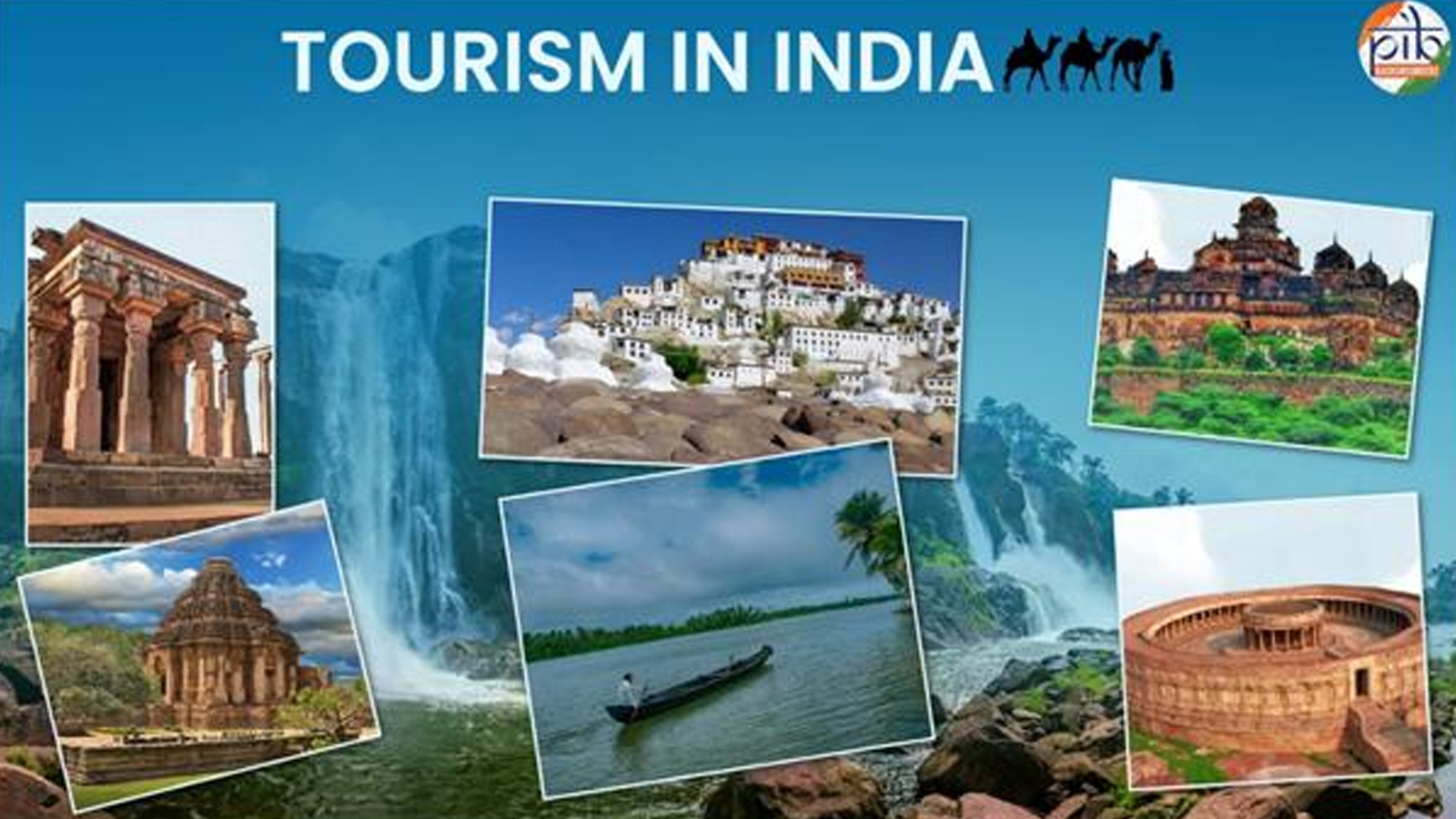
Over the past decade, tourism has emerged as one of the strongest drivers of India’s economic transformation, creating jobs, boosting local economies, strengthening infrastructure, and showcasing the country’s rich cultural and natural heritage to the world. Backed by large-scale investments, policy reforms, improved connectivity, sustainability initiatives, and destination-focused development, India is steadily positioning itself among the world’s leading tourism economies.
From bustling metropolitan cities and spiritual centres to remote villages, mountain landscapes, beaches, forests, and heritage destinations, tourism is increasingly becoming a catalyst for inclusive growth and regional development. The sector’s expansion aligns closely with India’s broader vision of Viksit Bharat@2047, where economic growth is accompanied by cultural preservation, community empowerment, and sustainable development.
Tourism’s Expanding Economic Footprint
Tourism’s impact extends far beyond leisure travel. Every visitor supports a vast ecosystem that includes hotels, restaurants, transport operators, guides, artisans, homestay owners, handicraft producers, and countless small businesses.
In a country as geographically and culturally diverse as India, tourism has become a major source of livelihood generation. Investments in tourism infrastructure are helping channel economic activity into emerging destinations, including rural and remote regions that historically remained outside mainstream development corridors.
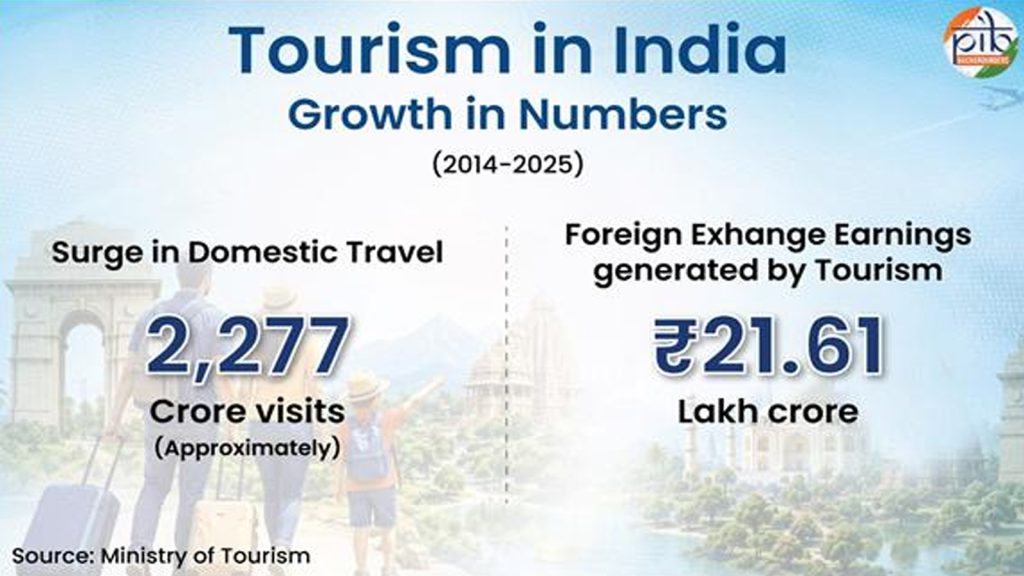
Between 2014 and 2025, India recorded 181.25 million international arrivals and 93.35 million foreign tourist arrivals, reflecting the country’s growing attractiveness as a global travel destination. International arrivals include both foreign nationals and Non-Resident Indians (NRIs), while foreign tourist arrivals comprise only foreign citizens visiting India.
Improved highways, airport expansion, railway modernization, regional air connectivity through the UDAN scheme, and the introduction of Vande Bharat trains have significantly enhanced accessibility across the country. These developments are making tourism destinations easier to reach and helping spread economic benefits across regions.
Building Tourism Infrastructure Through Swadesh Darshan
Recognising that world-class tourism experiences depend heavily on quality infrastructure, the Government launched the Swadesh Darshan Scheme in 2014 to develop tourism circuits across the country.
The programme marked a shift from isolated interventions to integrated destination development.
Under the first phase of Swadesh Darshan 76 tourism projects were sanctioned; investments exceeded ₹5,000 crore; projects covered 15 thematic tourist circuits nationwide; and 75 projects have already been physically completed.
These projects have strengthened visitor amenities, improved connectivity, enhanced tourist facilitation centres, and upgraded tourism infrastructure across multiple destinations.
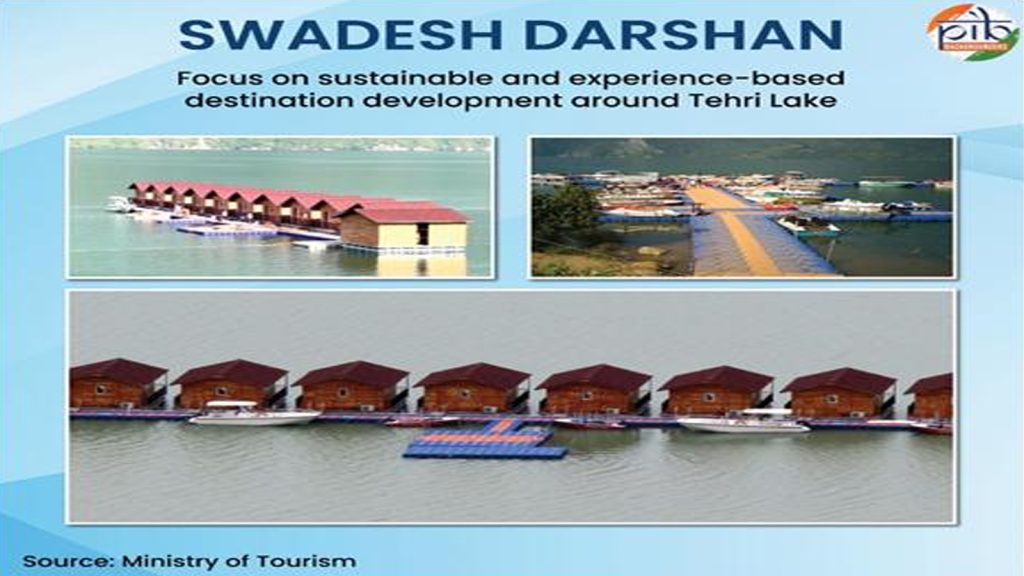
Building on this foundation, the Government introduced Swadesh Darshan 2.0 in 2022, focusing on sustainable and experience-based tourism.
Rather than simply creating infrastructure, the new phase seeks to transform destinations into immersive tourism experiences.
Notable projects include – floating log huts around Tehri Lake in Uttarakhand, creating unique waterfront tourism experiences, and development of Mahabharata-themed attractions in Kurukshetra, Haryana, using storytelling and cultural interpretation to enrich visitor engagement.
The emphasis is now on creating memorable experiences that combine heritage, culture, nature, and modern tourism facilities.
Spiritual Tourism Emerges as a Growth Engine
Spiritual tourism remains one of India’s strongest tourism segments, attracting millions of pilgrims annually.
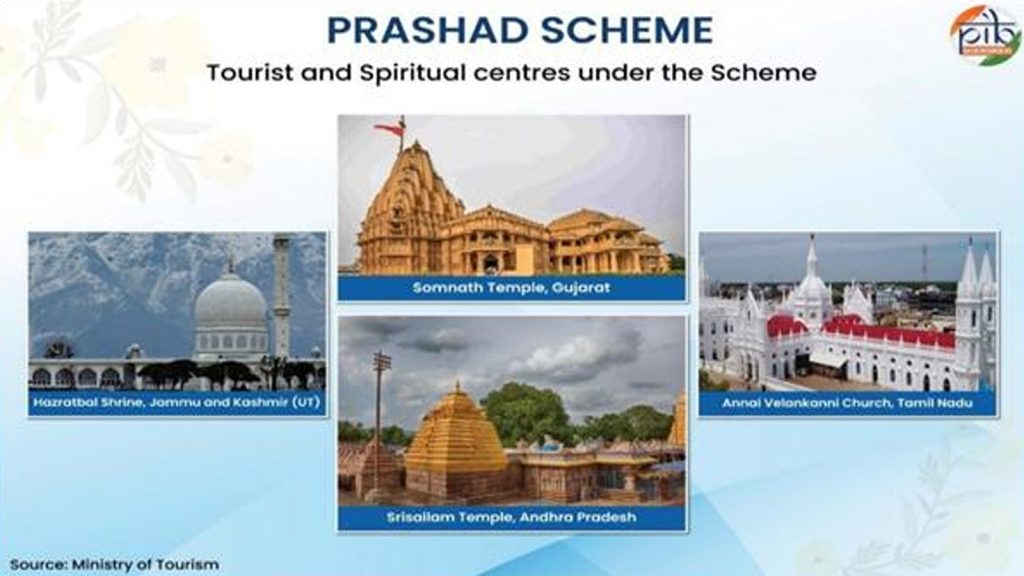
Recognising its economic and cultural significance, the Government launched the PRASHAD Scheme (Pilgrimage Rejuvenation and Spiritual Heritage Augmentation Drive) to upgrade pilgrimage destinations and improve visitor facilities.
Under PRASHAD, 54 projects have been sanctioned, investments exceed ₹1,700 crore, and major destinations such as Somnath, Srisailam, and Govardhan have benefited from improved infrastructure and visitor services.
These projects have enhanced accessibility, safety, sanitation, accommodation, and public amenities while supporting local economies that depend heavily on pilgrimage-related tourism.
The initiative has also helped preserve and showcase India’s spiritual heritage while ensuring that growing visitor numbers translate into sustainable economic opportunities for local communities.
Tourism Aligned With Regional Development Goals
Tourism development is increasingly being integrated with broader national development priorities.
The Government is using tourism as a tool to unlock the potential of the Northeast, promote rural tourism, accelerate development in eastern states under the Purvodaya vision, generate employment in underserved regions, and encourage community-led economic growth.
Recent Union Budget announcements have further strengthened this approach by supporting the development and maintenance of iconic tourist destinations across the country.
These investments are helping create tourism ecosystems that generate long-term economic opportunities while improving local infrastructure and services.
Boosting Iconic Destinations Through SASCI
To accelerate the creation of globally competitive tourism destinations, the Government operationalised the Special Assistance to States for Capital Investment (SASCI) – Development of Iconic Tourist Centres to Global Scale.
Announced in the Union Budget 2024-25, the initiative aims to transform high-potential tourism destinations into world-class attractions.
Under the programme, 40 projects across 23 states have been approved and total sanctioned investment stands at ₹3,295.76 crore.
The initiative focuses on enhancing destination quality, visitor experience, and global competitiveness while creating local employment and economic opportunities.
Sustainability Takes Centre Stage
As tourism expands rapidly, sustainability has become a central pillar of India’s tourism strategy.
Policymakers increasingly recognise that long-term growth depends on protecting natural ecosystems, cultural heritage, biodiversity, and local traditions.
One major challenge facing tourism globally is overtourism, where excessive visitor numbers strain infrastructure and environmental resources.
To address this issue, India is promoting niche and alternative tourism products, including Himalayan trekking circuits, birdwatching trailsm turtle tourism experiences, eco-tourism destinations, and community-based rural tourism.
These initiatives help distribute tourist flows more evenly while generating income in lesser-known regions.
The Government is also promoting responsible tourism through the Travel for LiFE (Lifestyle for Environment) initiative, encouraging tourists, businesses, and communities to adopt environmentally sustainable practices.
Global Recognition for Sustainable Tourism
India’s efforts in sustainable destination management are receiving international recognition.
A significant milestone was achieved when Mamallapuram became the first UNESCO World Heritage Site in South Asia to receive the prestigious Green Destinations Silver Certification, highlighting its commitment to sustainable tourism practices.
Meanwhile, under the Challenge-Based Destination Development (CBDD) initiative 38 projects have been sanctioned and total investment stands at ₹697.94 crore.
Notable projects include Panidihing Bird Sanctuary in Assam and Nizam Sagar Reservoir Eco-Tourism Project in Telangana.
These initiatives are designed to balance economic growth with ecological conservation and cultural preservation.
Digital Transformation and Global Competitiveness
India’s tourism sector is also benefiting from digital innovation and travel facilitation reforms.
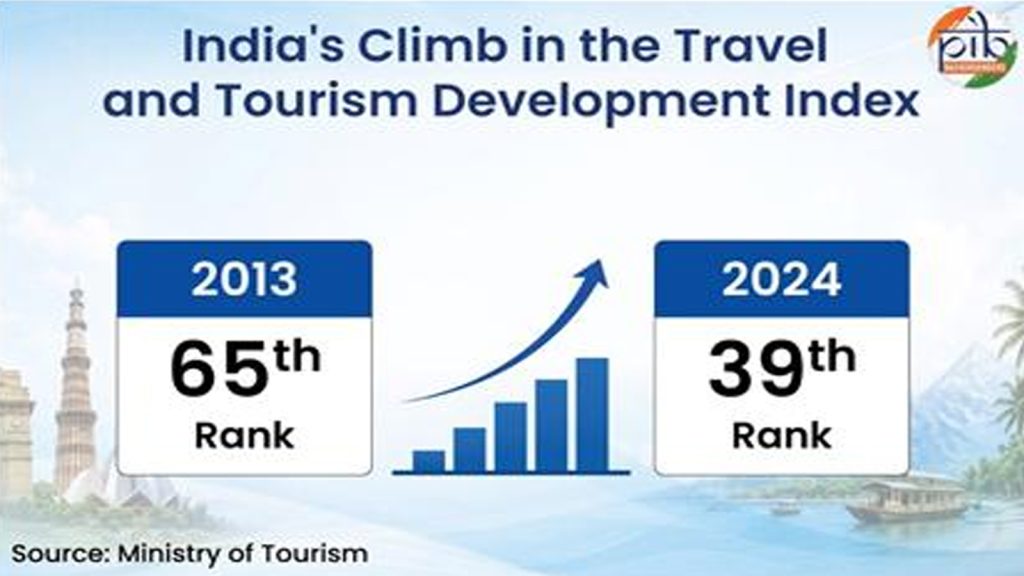
The country’s global tourism standing has improved significantly over the past decade.
In 2024, India recorded 20.6 million international arrivals and the country ranked 20th globally, compared to 25th position in 2016.
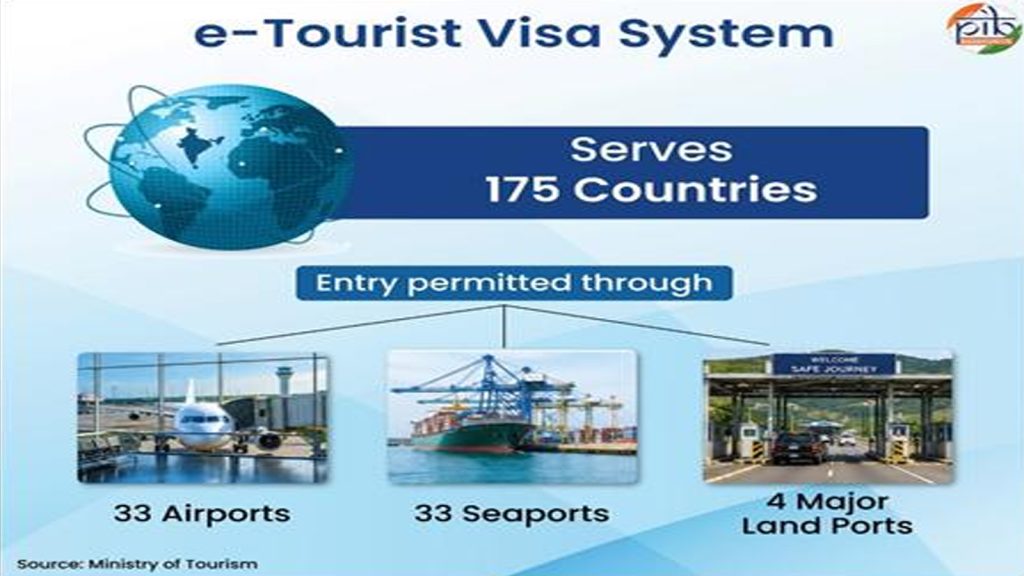
One of the most impactful reforms has been the expansion of the e-Tourist Visa system, making travel to India easier and more convenient for international visitors.
Digital platforms such as NIDHI and NIDHI Plus.
have streamlined registration and compliance processes for accommodation providers and travel businesses, improving transparency and efficiency within the tourism ecosystem.
G20 Presidency Showcases India’s Tourism Potential
India’s G20 Presidency provided an unprecedented opportunity to showcase the country’s tourism assets to the world.
By hosting events across multiple destinations, India highlighted heritage sites, cultural traditions, local crafts, natural landscapes, and culinary diversity.
The G20 also strengthened India’s position as an emerging destination for MICE tourism – Meetings, Incentives, Conferences and Exhibitions.
The initiative demonstrated how tourism can serve not only as an economic driver but also as a powerful instrument of diplomacy, international cooperation, and cultural exchange.
Investing in People Behind Tourism
While infrastructure remains important, tourism ultimately depends on the people who create memorable experiences for visitors.
Recognising this, the Government has invested heavily in skill development and workforce training.
Between 2014 and 2025, more than 4.5 lakh individuals received training under the Capacity Building for Service Providers Scheme.
The training programmes have focused on improving service standards, employability, and professionalism across tourism-related sectors.
The Union Budget 2026-27 further strengthened this agenda through proposals for a National Institute of Hospitality and upskilling of 10,000 tourist guides at iconic destinations.
These measures aim to build a highly skilled workforce capable of supporting India’s growing tourism ambitions.
The Road Ahead
India’s tourism transformation is already visible across the country.
More than 100 destinations have been upgraded through various tourism infrastructure schemes over the last decade, resulting in improved visitor experiences and stronger local economies.
The Government now plans to further develop 50 key destinations, enhancing tourism readiness, amenities, and global competitiveness.
India currently ranks as the world’s eighth-largest tourism economy, contributing approximately US$231.6 billion to the national economy. According to projections by the World Travel & Tourism Council (WTTC), India is expected to rise to the fourth-largest tourism economy globally over the next decade.
A revitalised Incredible India campaign, enhanced digital outreach, participation in international travel exhibitions, roadshows, and strategic partnerships are helping strengthen India’s presence in key tourism markets worldwide.
As the country moves forward, tourism is increasingly being viewed not merely as an industry but as a vehicle for economic growth, cultural preservation, environmental stewardship, and community empowerment.
With continued investments in infrastructure, sustainability, digital innovation, and human capital, India is steadily building a tourism ecosystem that is more resilient, inclusive, and globally competitive. The journey is well underway, and the next phase promises to further cement India’s position as one of the world’s most dynamic and diverse tourism destinations.


