







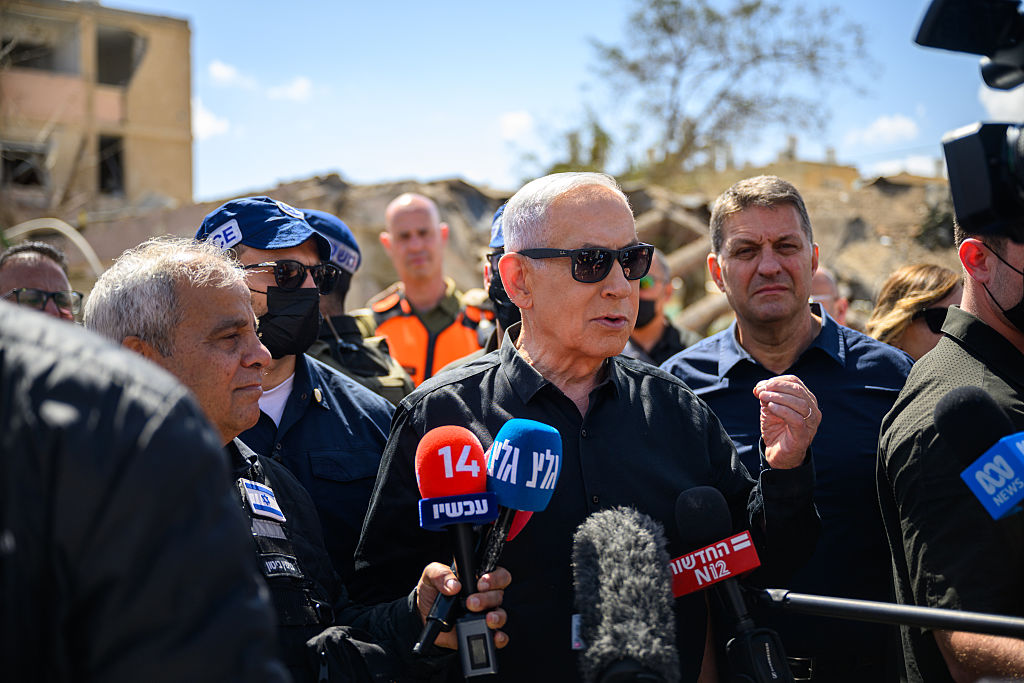
Israeli Prime Minister Benjamin Netanyahu’s office on Thursday said that US President Donald Trump has assured Israel that any future agreement between Washington and Tehran would require Iran to relinquish its stockpile of enriched nuclear material and place limits on its nuclear and missile programmes.
In a statement posted on X following a conversation between the two leaders, Netanyahu’s office said the proposed agreement would include the removal of enriched material, the dismantling of enrichment infrastructure, restrictions on missile production, and an end to Iran’s support for armed groups in the region.
The statement noted that while Israel is not a party to the ongoing negotiations, Netanyahu welcomed Trump’s commitment to ensuring that the final agreement addresses key security concerns.
The remarks come amid continued uncertainty over the status of negotiations between the United States and Iran. While Trump has repeatedly indicated that a breakthrough is near, Iranian officials have said that no final agreement has yet been reached.
Iranian Foreign Ministry spokesperson Esmaeil Baqaei on Friday rejected suggestions that a deal had already been concluded, stating that Tehran had not reached a final decision on the proposed agreement.
The comments were in response to Trump’s assertion that a comprehensive agreement could be finalised soon and formally signed in Europe.
Iranian media outlets have also urged caution regarding claims of an imminent breakthrough.
The Tasnim news agency noted that Trump had repeatedly predicted progress in negotiations over the past two months and said any developments should be treated cautiously until officially confirmed by Iran.
Speaking to reporters in the Oval Office on Thursday, Trump said he believed Iran’s Supreme Leader had approved the framework currently under discussion. “I understand the answer is yes,” he said when asked whether approval had been granted.
Trump described the draft as a “very strong memorandum of understanding” and said negotiations had advanced significantly.
He expressed confidence that the remaining documentation could be completed within days, paving the way for a formal signing ceremony, possibly in Europe.
He said the proposed framework would ensure that Iran never acquires a nuclear weapon, though he did not provide details on how such commitments would be verified.
Trump also said he had been consulting regional leaders, including Netanyahu, throughout the negotiation process.
Among the expected outcomes of the agreement, Trump cited the reopening of the Strait of Hormuz, a critical route for global energy shipments. He said the development would be welcomed across the Middle East and beyond.
The negotiations come against the backdrop of heightened regional tensions that have contributed to volatility in global energy markets and concerns over inflation.
Trump’s comments marked a notable shift from his earlier warnings of possible military action against Iran. Hours before expressing optimism about the negotiations, he had threatened severe strikes against Iranian targets, including energy infrastructure.
In a social media post, Trump said the United States could take control of key Iranian oil and gas assets, including facilities on Kharg Island, Iran’s main crude oil export hub.
However, he later announced that planned military operations had been cancelled due to progress in diplomatic efforts, claiming that key points under discussion had received approval from all parties involved.
Despite these assertions, Tehran has not publicly confirmed such approval. Earlier on Thursday, Iran’s Fars news agency, citing an unnamed source, reported that no draft agreement with the United States had yet received official approval.
The conflict involving the United States, Israel and Iran began on February 28. Although a fragile ceasefire was reached in April, recent exchanges have underscored the continuing tensions in the region.
-ANI


