







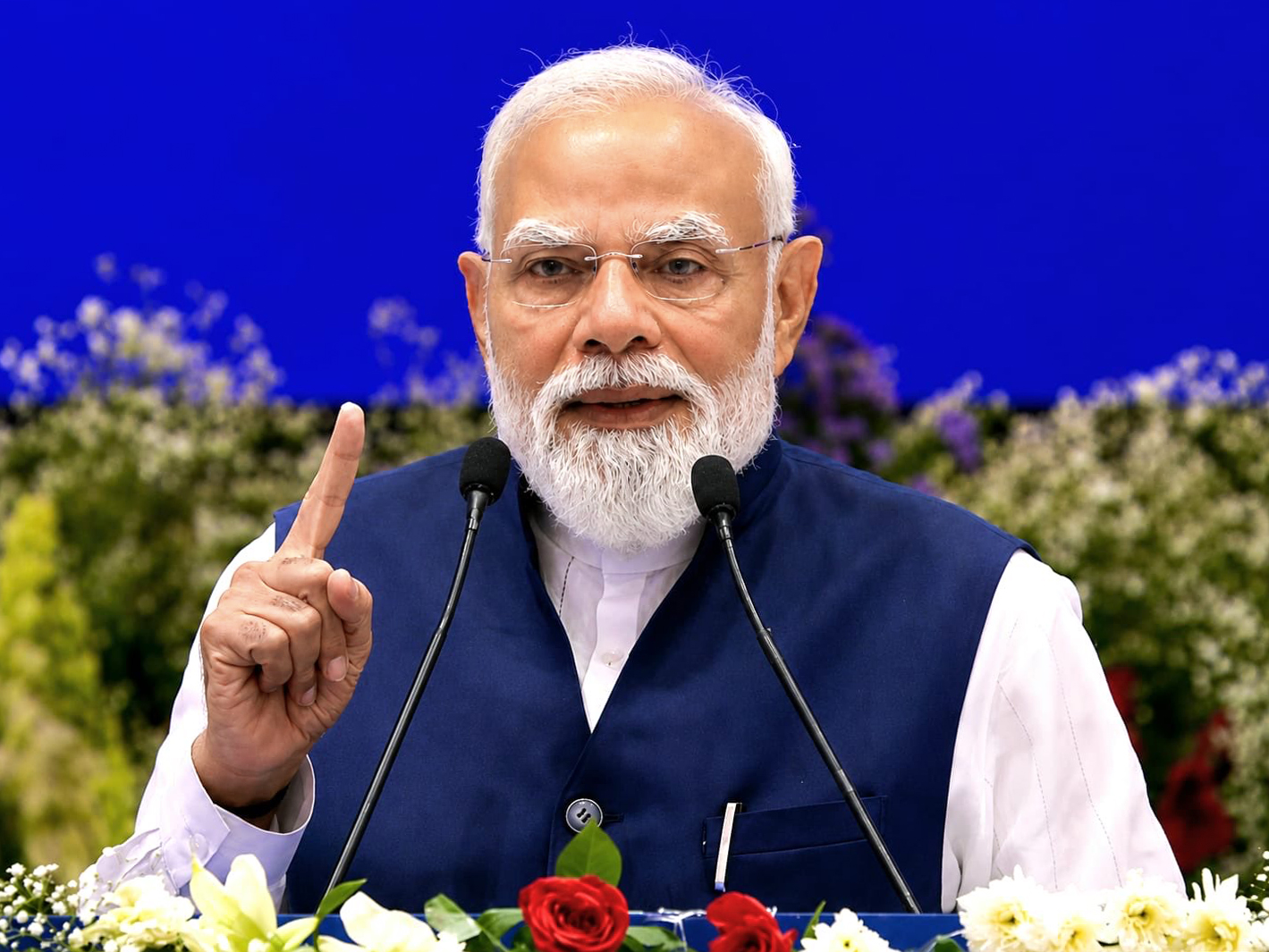
Prime Minister Narendra Modi on Thursday shared an article authored by Union Culture and Tourism Minister Gajendra Singh Shekhawat on the Emergency, highlighting its impact on the freedoms and aspirations of the people and underscoring the importance of preserving democratic values through historical awareness.
In a post on X, PM Modi said, “As the nation commemorates Samvidhan Hatya Diwas, Union Minister Shri Gajendra Singh Shekhawat reflects on the Emergency and how it affected the freedoms and aspirations of the people. He emphasises that the government’s initiatives, such as Seva Parv and Azadi Ka Amrit Mahotsav, reinforce constitutional values by fostering historical awareness, preserving cultural memory and deepening a sense of national belonging.”
Sharing his article, Shekhawat invited citizens to engage with its message, describing it as a reflection on India’s democratic commitment and the lessons of the Emergency period.
Emergency Remembered as a Test of Indian Democracy
In his article, Shekhawat described the Emergency of 1975-77 as one of the darkest chapters in India’s democratic history.
Quoting Dr. B.R. Ambedkar’s observation that the Constitution is “a vehicle of life,” Shekhawat argued that India’s Constitution represents far more than a legal document. He said it embodies a living covenant between citizens and institutions, balancing rights with responsibilities and liberty with accountability.
The Minister notes that India’s democratic traditions are deeply rooted in its civilisational heritage, tracing a legacy of consultation, collective decision-making and public participation from ancient times to the modern parliamentary system.
Shekhawat said that the Emergency demonstrated how democratic institutions could come under strain when constitutional safeguards are weakened and public freedoms curtailed. He emphasized that the impact of the period extended beyond politics and affected the daily lives of ordinary citizens.
He added that the Emergency serves as a reminder that constitutional rights are not merely legal provisions but safeguards that directly influence the dignity, liberty and aspirations of citizens.
Democratic Resilience and the Power of the Ballot
Despite the challenges posed during the Emergency, Shekhawat highlighted India’s democratic resilience, noting that citizens ultimately reaffirmed constitutional values through peaceful participation and the electoral process.
He described the restoration of democracy through the ballot box as one of the greatest strengths of the Indian democratic system, demonstrating its ability to self-correct and emerge stronger after periods of challenge.
Shekhawat also underlined the importance of public participation and civic responsibility in modern democracies, arguing that informed and engaged citizens remain central to preserving democratic institutions.
Exhibition and Memorial Lecture Mark Commemoration
As part of the national commemoration of Samvidhan Hatya Diwas, a curated exhibition has been organised to present archival material, stories of resistance, constitutional milestones and accounts of citizens’ experiences during the Emergency period.
The event also includes a memorial lecture by veteran journalist and author Ram Bahadur Rai, aimed at highlighting the continued relevance of constitutional vigilance and democratic renewal.
Preserving Freedom Through Cultural Memory
A significant portion of the article focuses on the role of culture and historical remembrance in strengthening democracy.
Shekhawat highlighted the Digital District Repository (DDR) initiative launched under Azadi Ka Amrit Mahotsav, which documents lesser-known stories of sacrifice, courage and public participation from across the country. According to the article, the repository currently contains more than 19,500 narratives.
The Ministry of Culture has also produced a series of short films based on these stories to bring the contributions of unsung heroes of India’s freedom struggle to wider audiences.
Shekhawat stresses that democracy is strengthened when constitutional values are reinforced through cultural memory, historical awareness and a shared sense of national identity.
Tribute to Living Freedom Fighters
Shekhawat also paid tribute to two living freedom fighters attending the commemoration: Sheshrao Laxmanrao Khot of Maharashtra, who participated in the Hyderabad Liberation Movement, and Eddula Suryanarayana Reddy of Andhra Pradesh, who became involved in the freedom movement at a young age.
Their presence, he said, serves as a reminder that the struggle for freedom is not merely history but a living legacy carried forward through generations.
Culture and Democracy Go Hand in Hand
The Minister highlighted cultural initiatives such as the 11th edition of Virasat, which celebrates India’s artistic and cultural traditions, and performances showcasing the diversity of the North-East through music and dance.
Shekhawat said India’s cultural heritage reflects values such as continuity, diversity, dialogue and creative freedom – principles that are equally essential for a vibrant democracy.
He also referred to the proposed Maharshi Dayanand Saraswati Kala Gurukul & Kalagram, envisioned as a centre for preserving and promoting India’s artistic traditions through the Gurukul model.
Concluding his article, Shekhawat asserted that democracy is not merely a political arrangement but a living tradition sustained by public participation and protected by an informed and vigilant citizenry. He said the observance of Samvidhan Hatya Diwas serves as an opportunity not only to remember the past but also to renew the nation’s commitment to constitutional values and democratic ideals.


