







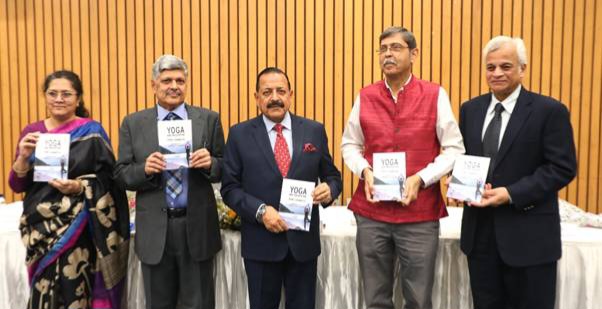
Ahead of International Day of Yoga on June 21, Union Minister Jitendra Singh on Wednesday released a book that highlights the role of yoga in preventing Type 2 diabetes, citing evidence from a major Indian study that found the practice can reduce the risk of developing the disease by nearly 40 per cent.
The book, Yoga and Prevention of Type 2 Diabetes: An Integrated Approach to Wellness, edited by endocrinologist Dr S V Madhu, draws on findings from the Indian Prevention of Diabetes Study (IPDS), a three-year multicentric trial involving nearly 1,000 participants.
According to the study, a structured 40-minute yoga regimen, when combined with standard lifestyle measures, significantly lowered the chances of progression from prediabetes to Type 2 diabetes among high-risk individuals.
Speaking at the launch, Singh said yoga has moved beyond being viewed as a traditional wellness practice and is increasingly being recognised as an evidence-based tool for preventive healthcare. Referring to this year’s International Day of Yoga theme, “Yoga for Healthy Ageing”, he said healthy ageing is not just about longer life expectancy but also about reducing the burden of chronic diseases such as diabetes.
The minister said the findings reinforce Prime Minister Narendra Modi’s push to integrate yoga into mainstream healthcare and promote it as a tool for preventive health and holistic well-being. He added that India is uniquely placed to lead a shift towards preventive healthcare by combining modern medicine with scientifically validated traditional practices.
The book reviews scientific evidence on yoga’s role in diabetes prevention and management, explores the biological mechanisms behind its benefits, and offers practical guidance on yogic practices that may help lower diabetes risk.
Prof. Nikhil Tandon, Director of AIIMS New Delhi, who attended the event as guest of honour, stressed the importance of rigorous scientific research in establishing the role of yoga in preventive healthcare.
The publication is expected to serve as a resource for healthcare professionals, researchers and students, while also raising awareness about tackling one of the world’s fastest-growing lifestyle diseases.


