







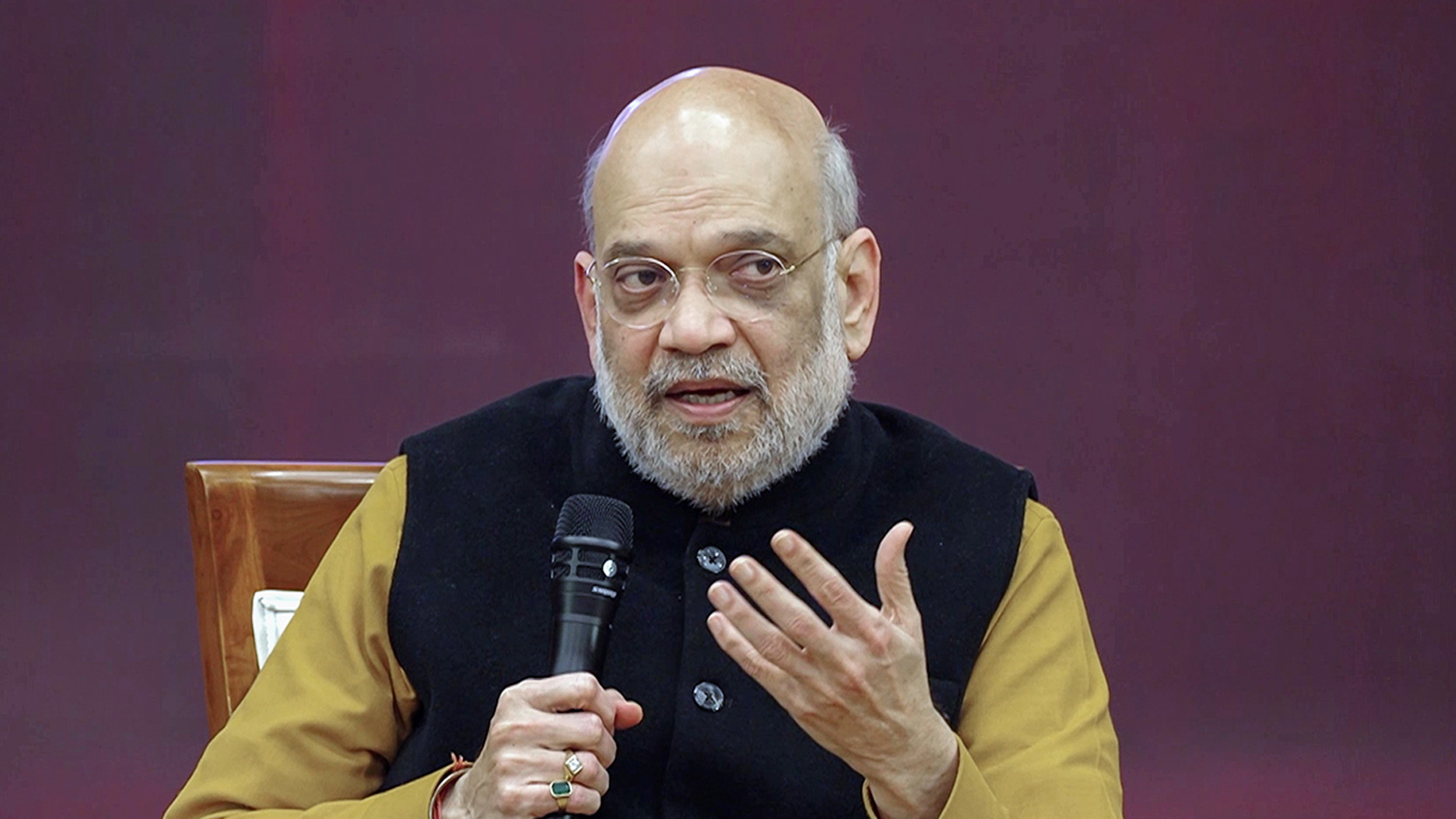
Union Home Minister and Minister of Cooperation Amit Shah on Tuesday virtually inaugurated ‘Sahakar Bhavan’, the newly constructed headquarters of the Jamnagar District Cooperative Bank in Gujarat, describing it as another significant step towards modernising India’s cooperative banking sector and strengthening financial services for farmers.
The inauguration, held under the Centre’s vision of ‘Sahkar Se Samriddhi’, marks an effort to make cooperative institutions more transparent, technology-driven and farmer-centric. Built at an estimated cost of ₹25 crore, the new headquarters has been designed in accordance with the standards prescribed by the Reserve Bank of India (RBI) and the National Bank for Agriculture and Rural Development (NABARD).
Addressing the event virtually, HM Shah said the Ministry of Cooperation, established under the leadership of Prime Minister Narendra Modi, has infused “new energy and momentum” into the country’s cooperative movement.
“Modernisation is essential for strengthening the cooperative system, and this process begins with modernising the headquarters and functioning of cooperative institutions,” he said.
Spread over 25,000 square feet of land with nearly 47,000 square feet of built-up space, the new Sahakar Bhavan has been designed to meet the bank’s operational requirements for the next 15 years. The building houses a training centre, farmers’ hostel, modern conference and meeting halls, secure locker facilities and dining arrangements. It also features a 200-kilowatt solar power plant as part of efforts to develop it into a green building.
HM Shah said the technologically advanced headquarters would enable the bank to provide safer, faster and more efficient banking services to farmers, service cooperative societies and dairy cooperative institutions in Jamnagar and Devbhumi Dwarka districts.
Tracing the bank’s growth, the Union Minister noted that the Jamnagar District Cooperative Bank was established in 1969 with a capital of just ₹2.5 lakh and has since grown into a major cooperative financial institution with business exceeding ₹215 crore.
Highlighting its financial performance, HM Shah said the bank has deposits of around ₹135 crore, has disbursed loans worth ₹780 crore, earned a profit of ₹24 crore, and maintains zero gross non-performing assets (NPA), describing these achievements as a reflection of sound management and adherence to cooperative principles.
The bank currently operates through 40 branches and is linked with 431 service cooperative societies, six dairy unions and 652 milk producers’ societies, serving more than 1.5 lakh cooperative members. HM Shah said the new headquarters would strengthen the bank’s ability to expand cooperative services across villages in the region.
Emphasising the Centre’s broader vision for the cooperative sector, HM Shah said the creation of a separate Ministry of Cooperation has accelerated reforms aimed at revitalising rural institutions. He highlighted initiatives such as the establishment of more than two lakh new Primary Agricultural Credit Societies (PACS) and dairy cooperative societies, the introduction of over 20 new business activities for PACS, the digitisation of cooperative audits and greater integration among cooperative institutions.
He said these measures would strengthen the rural economy, improve access to financial services and create new opportunities for farmers across the country.
HM Shah also announced that during a future visit to Jamnagar, he would tour the newly inaugurated headquarters and hold discussions with representatives of service cooperative societies and dairy cooperatives on expanding the cooperative sector and enhancing farmers’ prosperity.
The programme was attended virtually and in person by Gujarat Chief Minister Bhupendra Patel, Gujarat Cooperation Minister Jitubhai Vaghani, state ministers, Member of Parliament Poonamben Maadam, MLA Rivaba Jadeja, Gujarat State Cooperative Bank Chairman Ajaybhai Patel, Jamnagar District Cooperative Bank Chairman Jitubhai Lal, senior government officials, cooperative leaders and a large number of farmers.


