







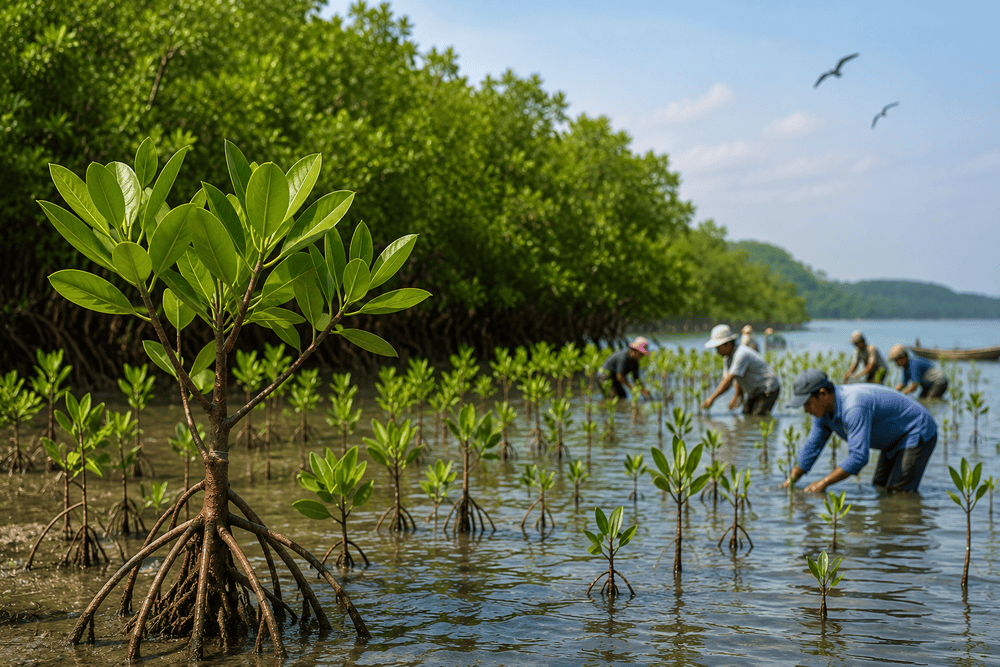
Andhra Pradesh has secured second place among Indian states under the Centre’s MISHTI (Mangrove Initiative for Shoreline Habitats and Tangible Incomes) scheme, with the state emerging as a leading performer in mangrove restoration, the Forest Department said on Sunday.
The department said the state continues to strengthen coastal ecosystem restoration and biodiversity conservation through large-scale mangrove development under its Great Green Wall of Andhra Pradesh initiative.
According to the department, Andhra Pradesh developed mangrove plantations across 2,047.70 hectares during 2025-26, with an investment of Rs 18.04 crore in coastal ecosystem restoration.
The department also adopted the Fish Bone Technique, an innovative restoration method designed to improve tidal water circulation, increase mangrove survival rates and enhance long-term ecological resilience.
For 2026-27, the state has set a target of restoring 1,618 hectares of mangrove ecosystems across Andhra Pradesh.
The Forest Department said its science-based restoration measures, sustainable coastal management practices and continued conservation efforts are aimed at building climate-resilient coastlines, protecting biodiversity and strengthening the livelihoods of coastal communities.
Welcoming the achievement, Deputy Chief Minister and Forest Minister Pawan Kalyan said Andhra Pradesh securing second place under the MISHTI scheme marked an important milestone in the state’s efforts towards ecological restoration and climate resilience.
“I extend my heartfelt appreciation to the Principal Chief Conservator of Forests and Head of Forest Force (PCCF & HoFF), all senior officers, field officers, frontline forest personnel, and every member of the Andhra Pradesh Forest Department for their relentless efforts, dedication and unwavering commitment in achieving this remarkable achievement,” he said.
He noted that the restoration of more than 2,047 hectares of mangroves, adoption of innovative conservation practices and sustained efforts to protect coastal ecosystems reflected the department’s vision and commitment.
“Let us continue this collective mission to build a greener, more resilient Andhra Pradesh while safeguarding biodiversity and securing sustainable livelihoods for future generations,” the Deputy Chief Minister added.
Earlier, in a message marking the International Day for the Conservation of the Mangrove Ecosystem, Pawan Kalyan described mangroves as “the guardians of our coast, the lungs of our shoreline, and one of nature’s greatest gifts to humanity.”
He said the state’s 1,053-km coastline relies on mangroves as a natural barrier against cyclones, storm surges, coastal erosion and the growing impacts of climate change. Mangroves also support marine biodiversity, sustain coastal livelihoods and store significant amounts of blue carbon, making them critical for long-term ecological resilience, he said.
Highlighting the state’s conservation efforts, the Deputy Chief Minister said nearly 7,000 acres of mangroves had been restored and developed over the past two years under the Great Green Wall of Andhra Pradesh initiative. The government has set a target of restoring another 4,000 acres during 2026-27 to further strengthen the state’s natural coastal defences and protect vulnerable communities.
“Let us protect the forests that protect us. Every mangrove restored strengthens our coastline. Every mangrove conserved secures lives, livelihoods and the future,” he said.
(With inputs from IANS)


