







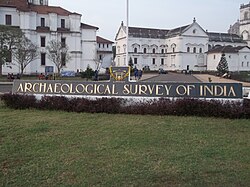
The Archaeological Survey of India (ASI) is currently undertaking excavations at 16 archaeological sites across the country, with discoveries including structural remains, burials, pottery and a range of antiquities, the government informed the Lok Sabha on Monday.
According to the Ministry of Culture, the excavations have yielded artefacts such as coins, beads, ornaments, agricultural tools and bone objects. Wherever required, samples recovered during excavations are sent to specialised institutions for scientific validation.
The government said the ASI issued 121 excavation permissions over the last five years. The highest number of permissions was granted in 2022-23, with 31 approvals, followed by 25 in 2025, 24 in 2021-22, 22 in 2024 and 19 in 2023.
The ongoing excavations cover several historically significant sites across multiple States, including Rakhigarhi and Agroha in Haryana, Lothal, Dwarka and sites in Bhavnagar district of Gujarat, Brahmagiri and Kamalapura in Karnataka, Elephanta Island in Maharashtra, Sari Deul Complex and Jaugada in Odisha, Piprahwa (Ganwaria) in Uttar Pradesh, Balirajgarh in Bihar, Janampet in Telangana and Kumarikkalpalayam in Tamil Nadu.
Among the ongoing projects, the excavation at Rakhigarhi in Haryana has recorded the highest expenditure of ₹2.16 crore, followed by Agroha (₹1.26 crore), Dwarka (₹1.01 crore) and Elephanta Island in Maharashtra (₹99.17 lakh). Other sites are at different stages of excavation with expenditure varying according to the scope of work.
The Ministry also informed Parliament that no court orders have been issued regarding the continuation or closure of any archaeological excavation projects undertaken by the ASI during the last five years.
The information was shared by Union Minister for Culture and Tourism Gajendra Singh Shekhawat in a written reply in the Lok Sabha.


