







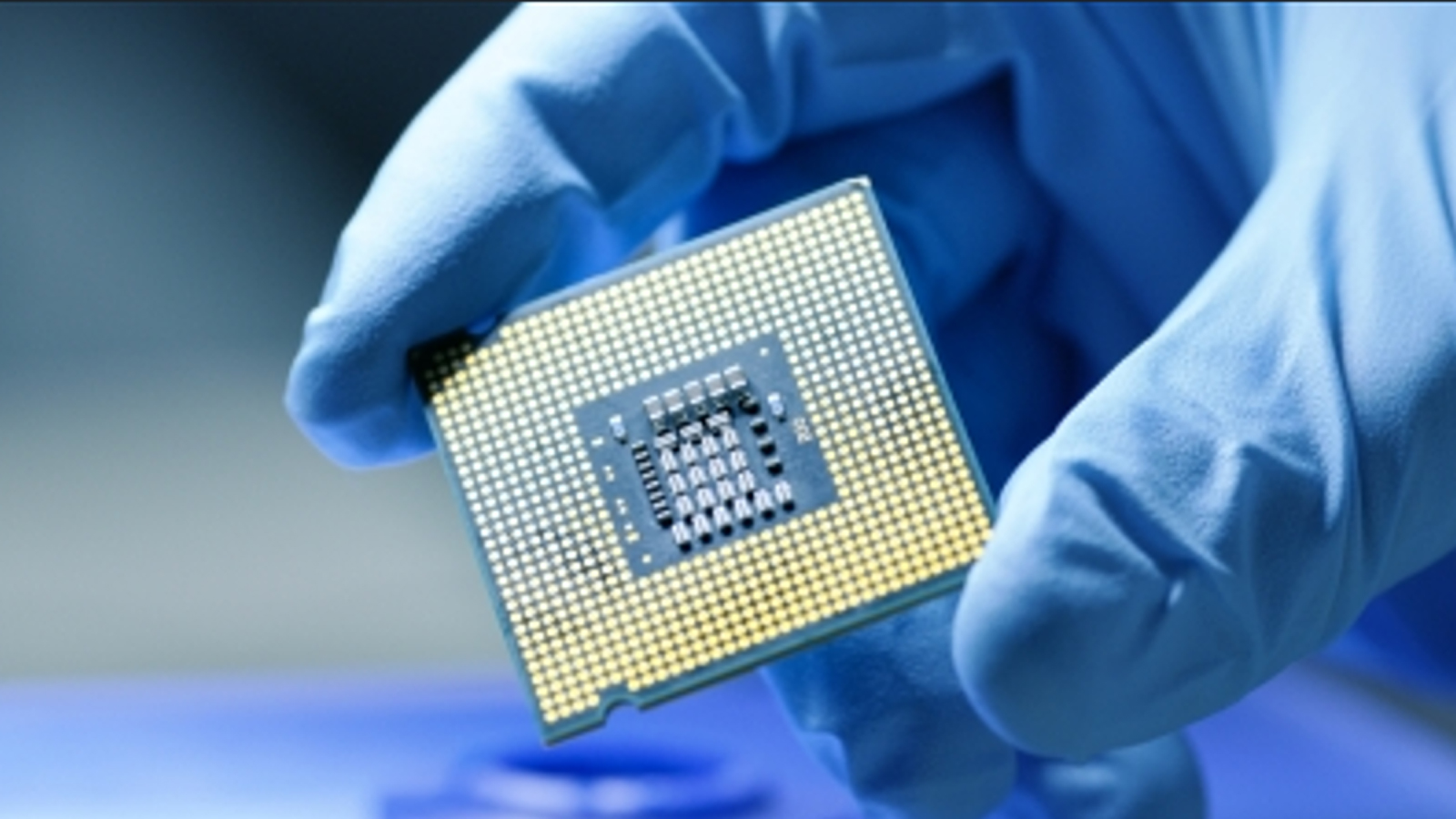
The Centre has approved two Electronics Manufacturing Clusters (EMCs) in Tamil Nadu with a combined investment of over ₹1,012 crore, aiming to strengthen the state’s electronics manufacturing ecosystem and further India’s push towards self-reliance in the sector. The announcement was made by Union Minister for Electronics and Information Technology Ashwini Vaishnaw in a written reply in the Lok Sabha on Wednesday.
The two clusters will be developed at Manallur and Pillapaikkam. The Manallur EMC will span 474.3 acres with a project cost of ₹587.47 crore, while the Pillapaikkam EMC will cover 379.3 acres at an investment of ₹424.55 crore. Together, the projects are expected to enhance electronics manufacturing capacity and attract further investments to the state.
The government said India’s electronics manufacturing sector has witnessed significant growth over the past decade, supported by reforms such as Production Linked Incentive (PLI) schemes, liberalised FDI norms, tax reforms and labour reforms. Electronics production has increased from nearly ₹1.9 lakh crore in 2014-15 to around ₹13.11 lakh crore in 2025-26, while exports have risen from about ₹38,000 crore to ₹4.24 lakh crore during the same period. Mobile phone production has grown more than thirty-fold to ₹6.27 lakh crore, with exports touching ₹2.59 lakh crore. India now manufactures nearly 99.2 per cent of the mobile phones sold domestically, and the sector provides employment to nearly 25 lakh people, according to industry estimates.
Tamil Nadu has emerged as one of the country’s key electronics manufacturing hubs, with manufacturing facilities spread across districts including Kancheepuram, Chennai, Chengalpattu, Krishnagiri, Tiruvallur and Coimbatore.
Highlighting progress under the Semicon India Programme, the government said it has approved 12 semiconductor manufacturing projects across six states with investment commitments of about ₹1.64 lakh crore, of which three have already commenced commercial production. The programme also supports semiconductor design through the Design Linked Incentive (DLI) Scheme, under which 24 semiconductor design projects and 105 startups and MSMEs have received financial or Electronic Design Automation (EDA) tool support. Several Chennai-based companies, along with a Coimbatore-based firm, are among the beneficiaries.
To build a skilled semiconductor workforce, the government is supporting talent development in 315 institutions across the country, including 61 institutes in Tamil Nadu. These include premier institutions such as IIT Madras, NIT Tiruchirappalli, IIITDM Kancheepuram, VIT, Anna University and several engineering colleges across the state.
The government also noted that the recently approved Semicon 2.0 programme expands support across the semiconductor value chain, creating additional investment opportunities for all states, including Tamil Nadu.
On artificial intelligence, the Centre said the IndiaAI Mission is supporting indigenous AI innovation through seven focus areas, including AI models, applications, datasets, talent development and affordable computing infrastructure. So far, 20 sovereign AI model proposals—comprising 12 Large Language Models (LLMs) and eight Small Language Models (SLMs)—have been identified for government support. Two Artificial Intelligence Centres of Excellence have also been approved for Tamil Nadu.
The government further highlighted the role of Common Services Centres (CSCs) in promoting digital inclusion. As of May 31, 2026, Tamil Nadu has 18,632 functional CSCs, including 12,379 operating in rural areas, delivering more than 800 citizen-centric services.


